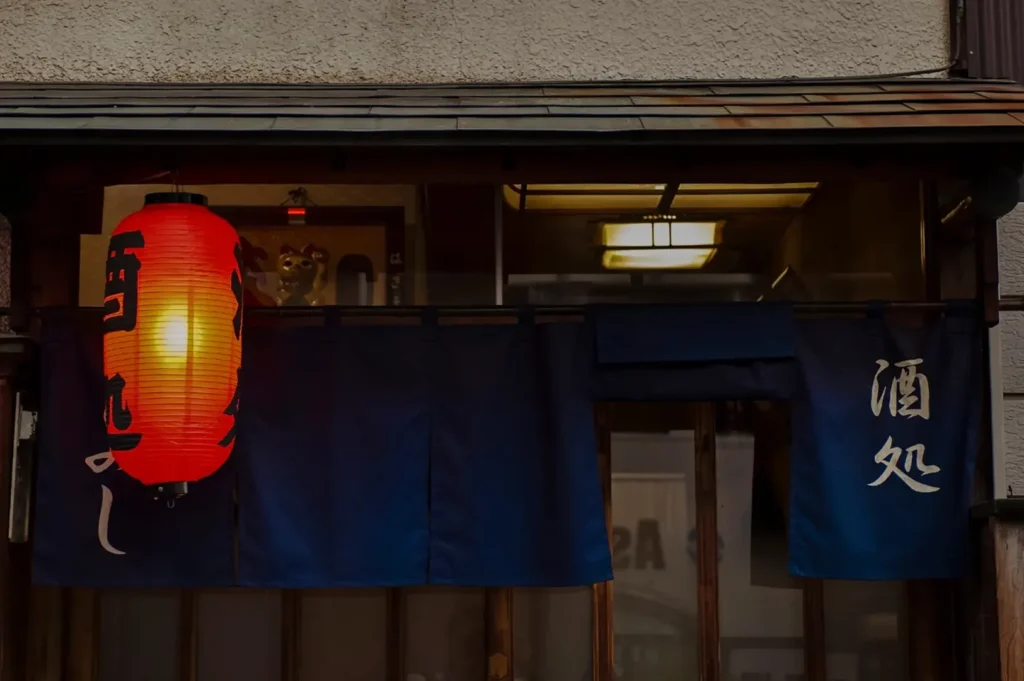
The first sound is not always the greeting.
Sometimes, it is the fabric.
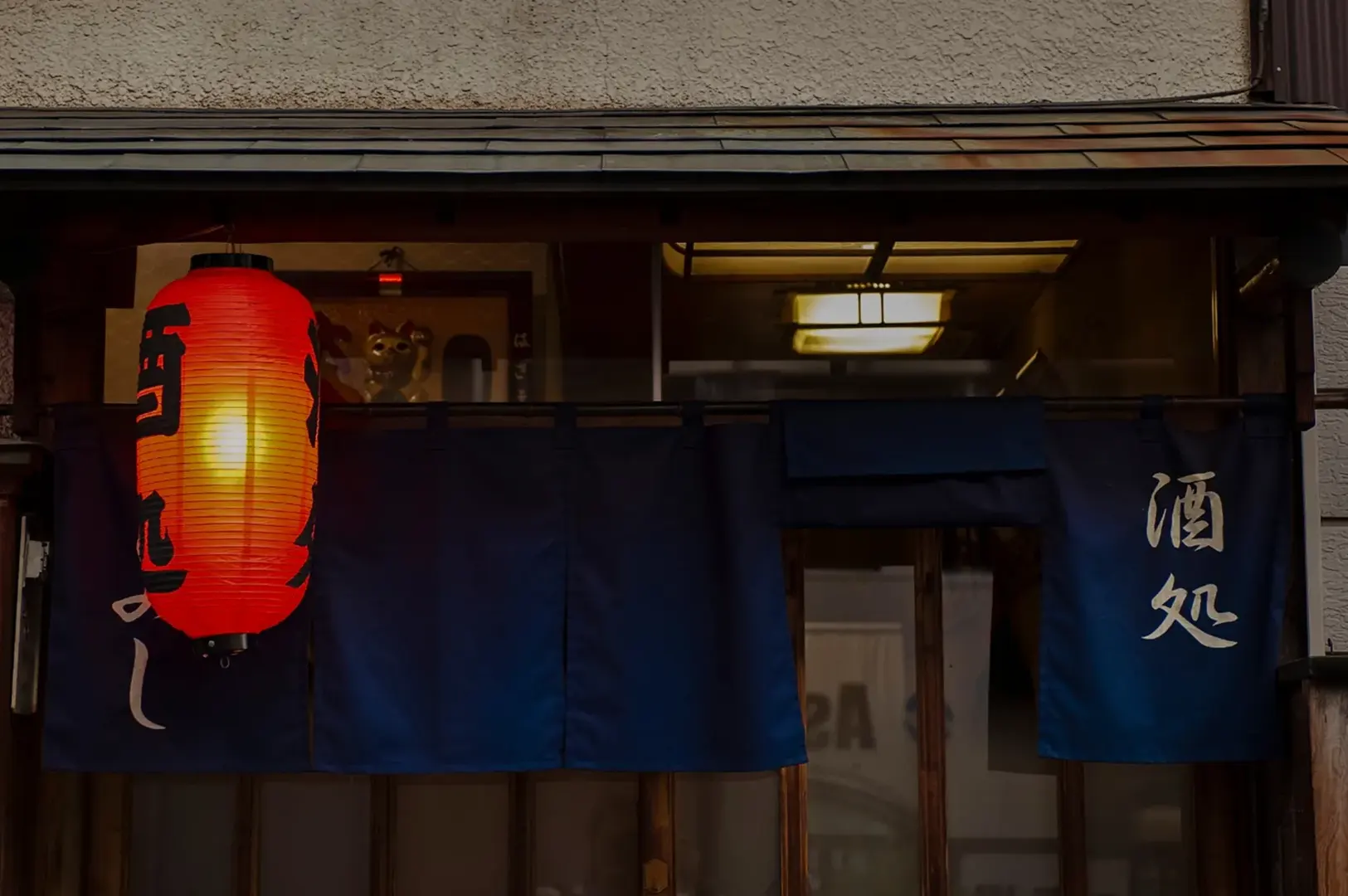
A noren curtain moves gently as someone enters, brushing against a shoulder before falling back into place. Behind it, the room continues for a second as if nothing has changed. Glasses touch the table. A grill hisses softly. Someone laughs from the far end of the counter.
Then comes the call.
“Irasshaimase.”
It is a familiar word, but in an izakaya, it does more than welcome you. It marks the crossing from one rhythm into another.
That shift in rhythm is not only about the greeting or the room — it continues once the drinks arrive, something we explore more deeply in how sake changes the rhythm of an izakaya night.
Outside, Singapore is still moving. Cars pass. Office lights remain bright. People check their phones while waiting at crossings. But inside, after that first greeting, the evening changes shape.
The Door Closing Behind You
There is a small sound when the door closes.
It is easy to miss, but I always notice it. That soft click separates the street from the room. For a moment, you are no longer between appointments, messages, and traffic lights.
You are simply standing there, waiting to be seated.
In Tokyo, I have felt the same pause in narrow alleyway izakayas, where the outside world disappears almost immediately. In Singapore, the effect can feel even sharper because the city outside is so bright, efficient, and fast.
The izakaya does not remove you from the city.
It gives you a quieter way to return to yourself within it.
The Greeting as a Signal
“Irasshaimase” is often translated as “welcome,” but the feeling is broader than the word.
It is not only a greeting. It is a signal that the staff have seen you. That the room has made space for you, even if the space is small. That you have entered a shared setting with its own pace.
In a good izakaya, the greeting is not overly polished. It does not need to be.
It is practical, warm, and immediate.
The chef may not look up for long. The server may already be carrying drinks. Still, the sound reaches you, and something settles.
The Pause Before Sitting
Before the menu arrives, there is usually a brief pause.
A staff member checks the table. A counter seat is cleared. Someone shifts a stool. These movements may seem ordinary, but they help set the tone of the night.
This is where an izakaya begins to feel different from a regular restaurant.
You are not rushed into performance. You are not asked immediately to choose, order, and proceed. Instead, there is a short moment of adjustment.
You notice the room first.
The light.
The smell of charcoal.
The handwritten specials.
The quiet confidence of regulars already seated.
Only then does the meal begin.
Why That First Sound Matters
The first sound after the noren moves matters because it changes expectation.
A good izakaya does not begin with a dish. It begins with entry. With being received. With the small reassurance that the night will unfold at a different speed.
That is why the first minute matters so much.
It teaches you how to enter the evening.
Not quickly.
Not loudly.
But with enough attention to hear the room before tasting anything at all.