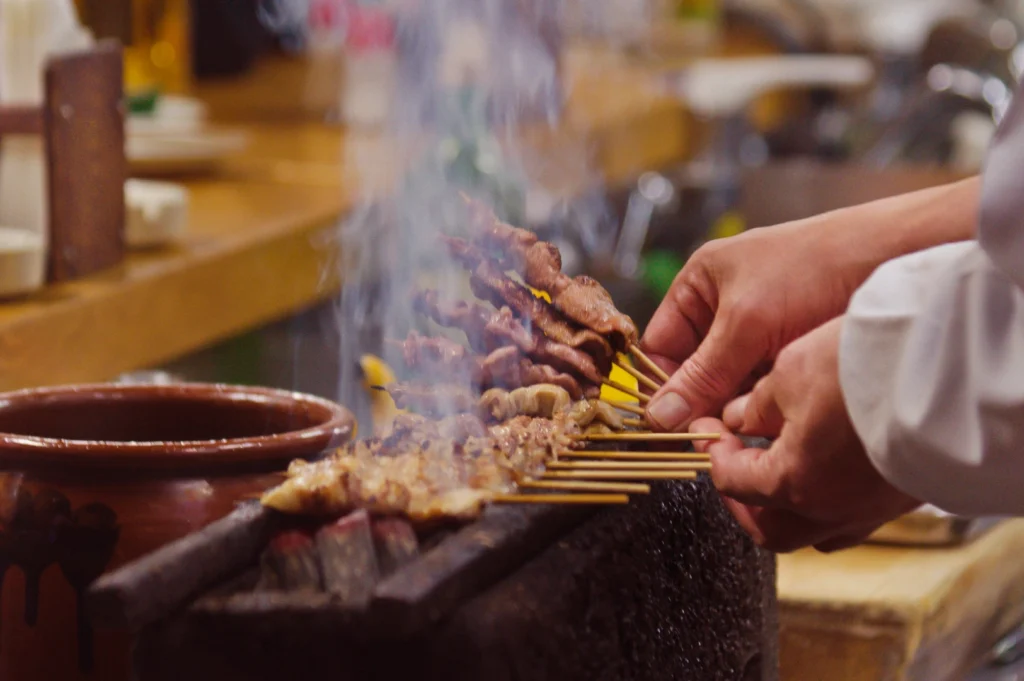
The smell reached us before the sign did.
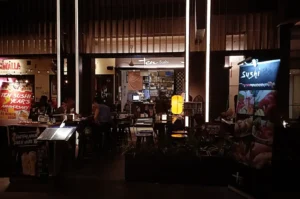
That is often how an izakaya announces itself in Singapore. Not through a bright frontage or a perfect menu photograph, but through smoke slipping into the warm air outside. A little miso. A little tare. Charcoal underneath it all.
On a humid evening, the scent feels heavier. It does not disappear quickly. It stays near the doorway, along the pavement, beside people deciding where to eat after work. That pull is exactly why the smell of a charcoal grill makes food feel better long before the first skewer reaches the table.
I have followed that smell more than once.
Smell Arrives Before Decision
Menus ask us to choose with our eyes.
Izakayas often begin earlier than that.
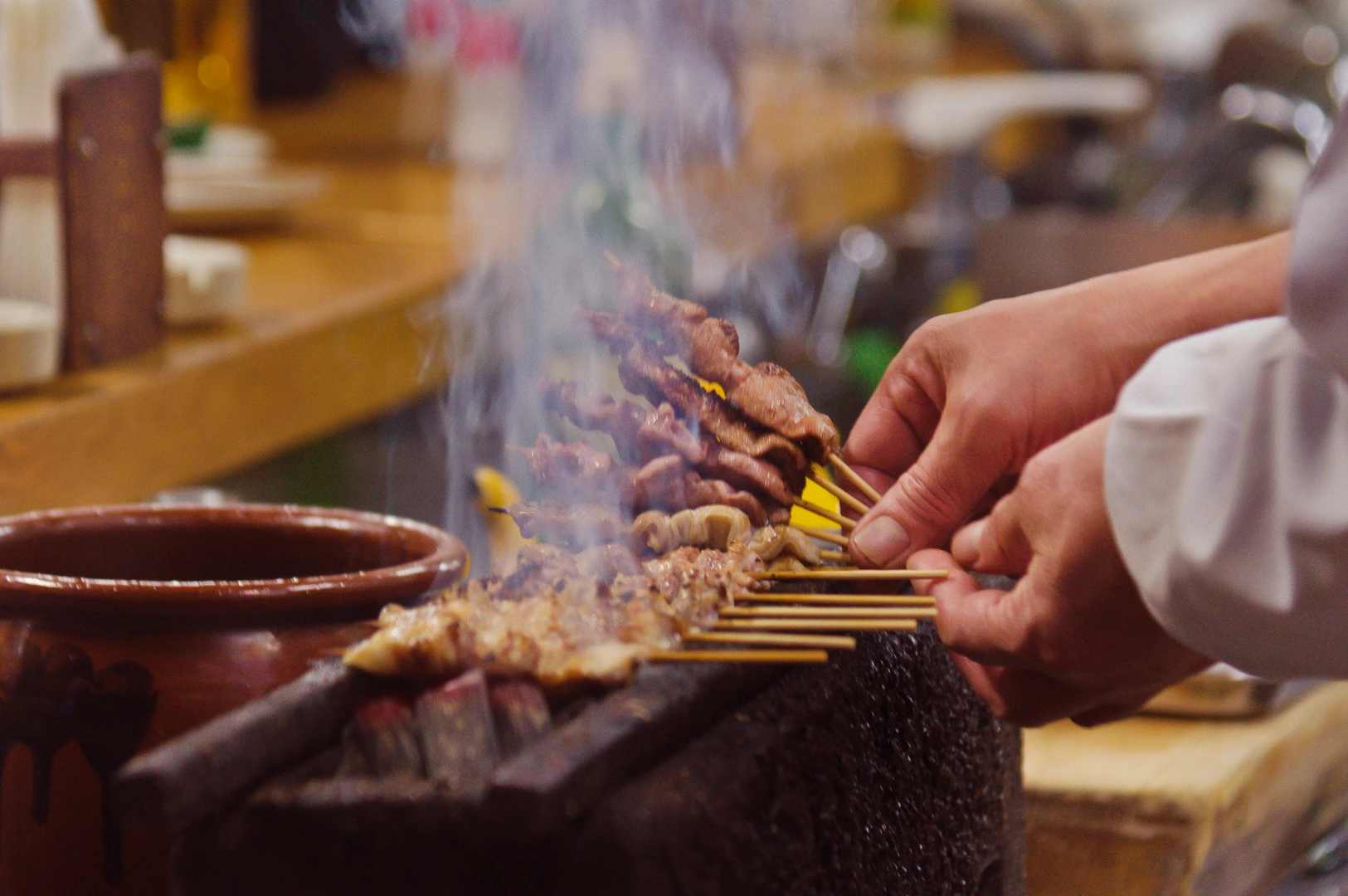
Before the first page is opened, before the staff says irasshaimase, the grill has already spoken. Tare, the sweet-savoury sauce brushed over skewers, darkens over heat. Miso catches at the edges. Fat falls onto charcoal and sends up a brief, sharp smoke.
That smell does not explain the dish.
It simply makes the body pay attention.
In Singapore, where streets are warm even after sunset, aroma travels differently. It lingers near shophouses, mall exits, and narrow lanes. Sometimes it reaches diners before they know the restaurant name.
Heat Inside, Heat Outside
There is something strange about stepping from humid air into an izakaya already warmed by a grill.
The body expects relief from air-conditioning. Instead, it notices another kind of heat. Controlled heat. Useful heat. Heat that turns chicken skin crisp, softens miso, and gives grilled vegetables their dark edges.
This is not the same warmth as the street.
Outside heat surrounds you. Grill heat works in front of you.
That difference is part of the comfort.
The room may be cool enough to sit in, but the food still carries fire. A skewer arrives with smoke still close to it. A plate of grilled fish holds the smell of the grate. The contrast makes the meal feel immediate.
Memory Forms Through Scent
We often remember what we ate by naming dishes.
Yakitori. Grilled squid. Miso eggplant. Karaage.
But memory is less organised than a menu.
Sometimes what returns first is the smell near the entrance, or the way charcoal clung faintly to clothes after dinner. Sometimes it is the sweetness of tare in the air, mixed with rain, traffic, and the salt of late-night conversation.
That is why izakaya scent matters.
It gives the night a trace.
Following the Smoke
Good signage helps. Clear menus help. Reviews help too.
But some izakaya decisions begin more simply.
A door opens. Smoke moves out. Someone slows down.
In that small pause, the meal has already started.
Miso, tare, charcoal, humid air. Nothing complicated. Just enough to pull people from the street into a room where the evening can change shape.
Sometimes the best invitation is not written anywhere.
It is carried by smoke.
And by the time the first skewer arrives, you realise the choice was made before anyone sat down, before anyone ordered, before anyone needed to speak at all, with certainty.