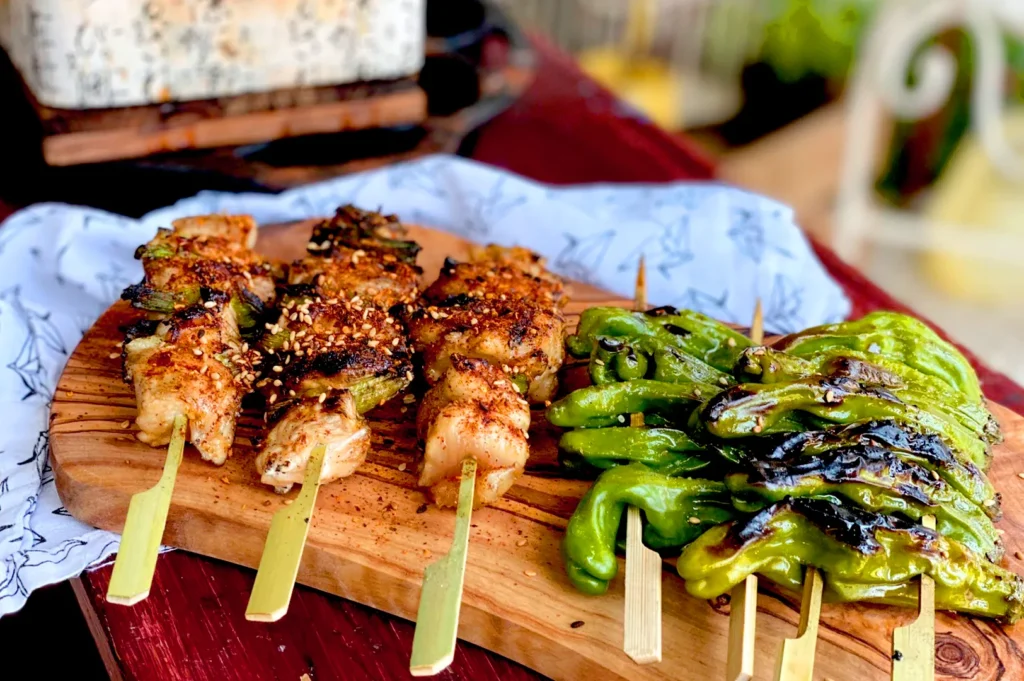
I used to think this too.
That slightly smoky, almost bitter edge on a skewer? Must’ve been overcooked. Maybe the chef got distracted. Maybe the grill ran too hot.
It felt like a flaw I was politely ignoring: the same kind of misunderstanding that leads people to think izakaya food is simple or careless, when it’s anything but, as we’ve explored in why izakaya food is far more than just bar snacks.
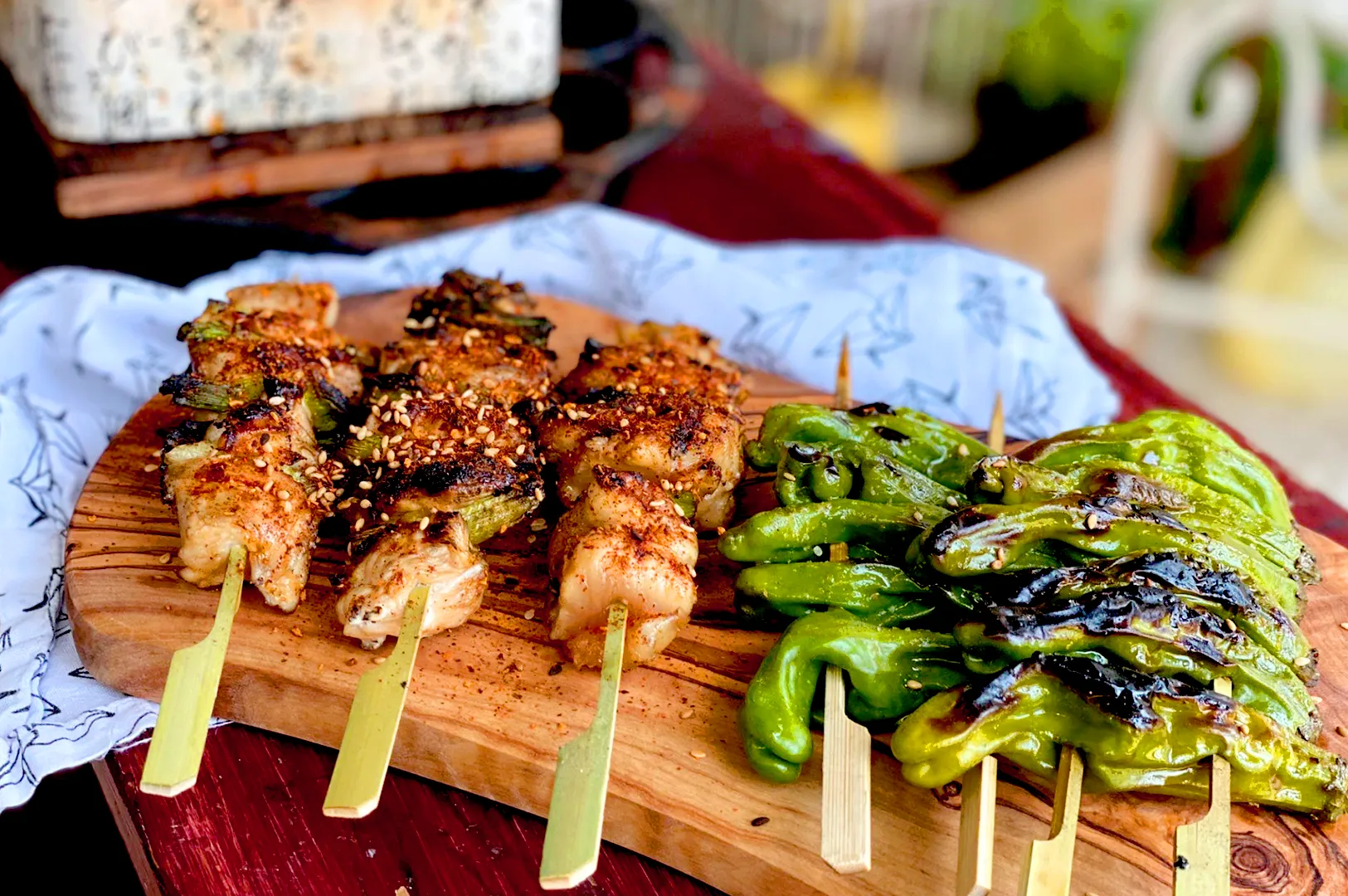
Then I had a proper yakitori skewer — the kind where the outside carries a light char, but the inside stays impossibly juicy. Smoky, yes. But clean. Deep. Almost addictive.
That’s when it clicked.
That “burnt” taste we think we’re noticing?
It’s not burnt.
It’s intentional.
Smoke Isn’t a Mistake
Here’s the thing most of us don’t realize: good yakitori isn’t about avoiding smoke.
It’s about controlling it.
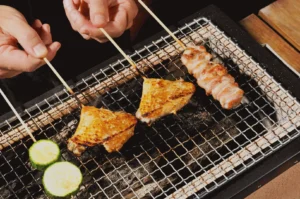
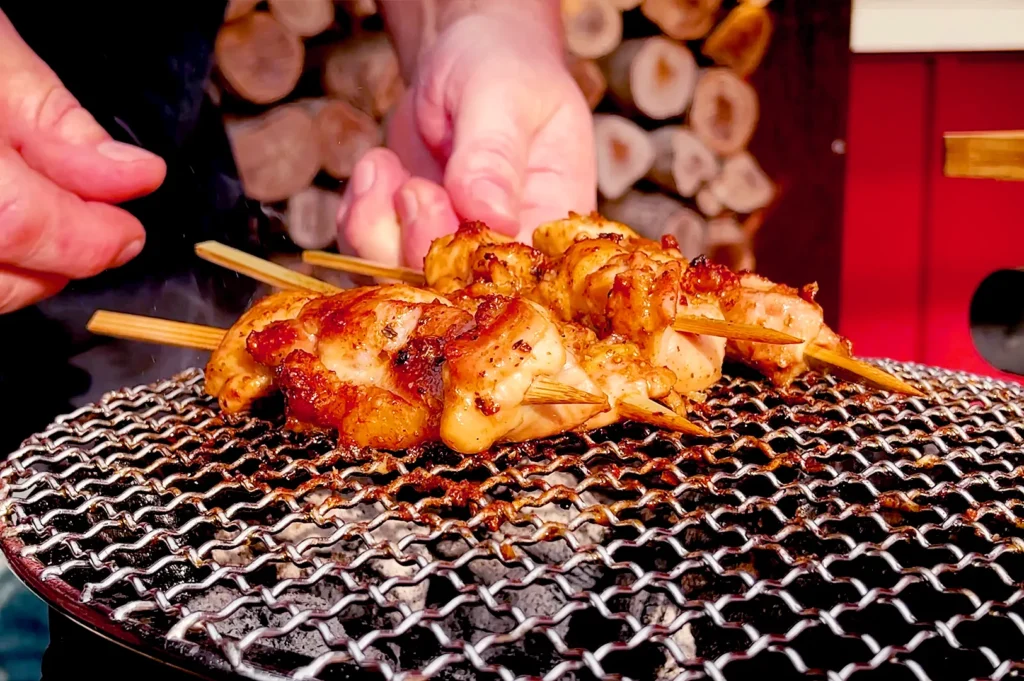
In a proper izakaya, skewers are grilled over binchotan charcoal — a type of Japanese charcoal that burns hotter and cleaner than the kind you’d use at a backyard BBQ. It doesn’t produce thick, aggressive smoke.
Instead, it creates a steady, intense heat.
So where does the smokiness come from?
Not from burning the meat.
But from what happens when the meat cooks.
The Moment Fat Hits the Charcoal
As the chicken heats up, fat begins to render.
And then it drips.
Straight onto the hot charcoal below.
For a brief moment, that fat vaporizes. It turns into aromatic compounds — the kind your brain instantly recognizes as “grilled,” “savory,” “comforting.”
That vapor rises back up and lightly coats the meat.
What you’re tasting isn’t burnt protein.
It’s vaporized fat.
And when it’s done right, it’s controlled, balanced, and incredibly precise.
Too much dripping and you get harsh smoke. Too little, and the skewer tastes flat.
Good yakitori lives in that narrow space in between.
Charcoal vs “Burnt”
This is where most of us get confused.
Burnt food tastes bitter, dry, and one-dimensional. It overwhelms everything else.
Charcoal flavor, on the other hand, should feel integrated.
You still taste the chicken. The seasoning. The juices. The smoke sits around it — not on top of it.
It’s the difference between something being damaged… and something being transformed.
A well-grilled skewer should never make you think, this is burnt.
It should make you think, this tastes deeper than it looks.
Why It Feels So Addictive
There’s also a reason that smoky flavor keeps pulling you back for “just one more skewer.”
It’s not just taste — it’s smell.
Before the food even reaches your table, your brain has already registered the aroma of charcoal and fat in the air. That scent triggers appetite in a way most cooking methods don’t.
By the time you take your first bite, you’re already halfway convinced it’s going to be good.
And when the flavor delivers, your brain locks it in.
Smoky equals satisfying.
So you order another.
The Skill Behind It
From the outside, yakitori looks simple.
Stick. Meat. Fire.
But controlling charcoal heat, managing fat drips, and knowing exactly when to pull a skewer off the grill takes experience.
Too early, and you miss that layer of flavor.
Too late, and it actually does become burnt.
The line is thin.
And the best chefs walk it effortlessly.
It Was Never Burnt
So the next time you taste that subtle smokiness on a skewer, pause before writing it off.
That flavor didn’t happen by accident.
It came from heat, timing, and a very specific moment when fat met charcoal and turned into something more than just smoke.
Not burnt.
Just controlled.
And once you start noticing the difference, you’ll realize — that’s the flavor you’ve been chasing all along.