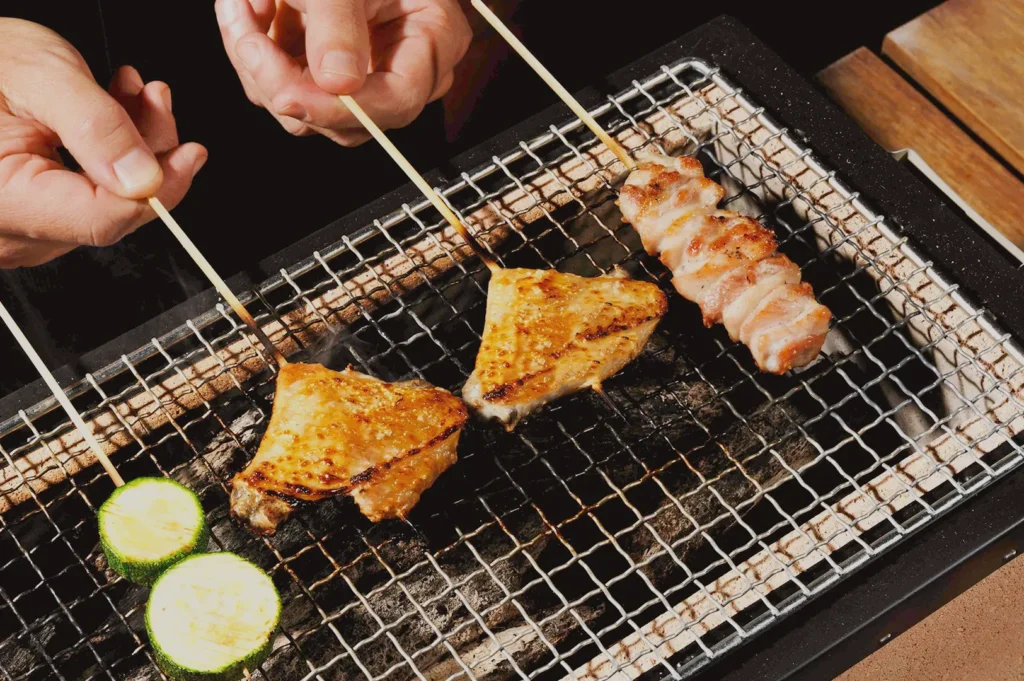
It’s a moment that makes people pause.
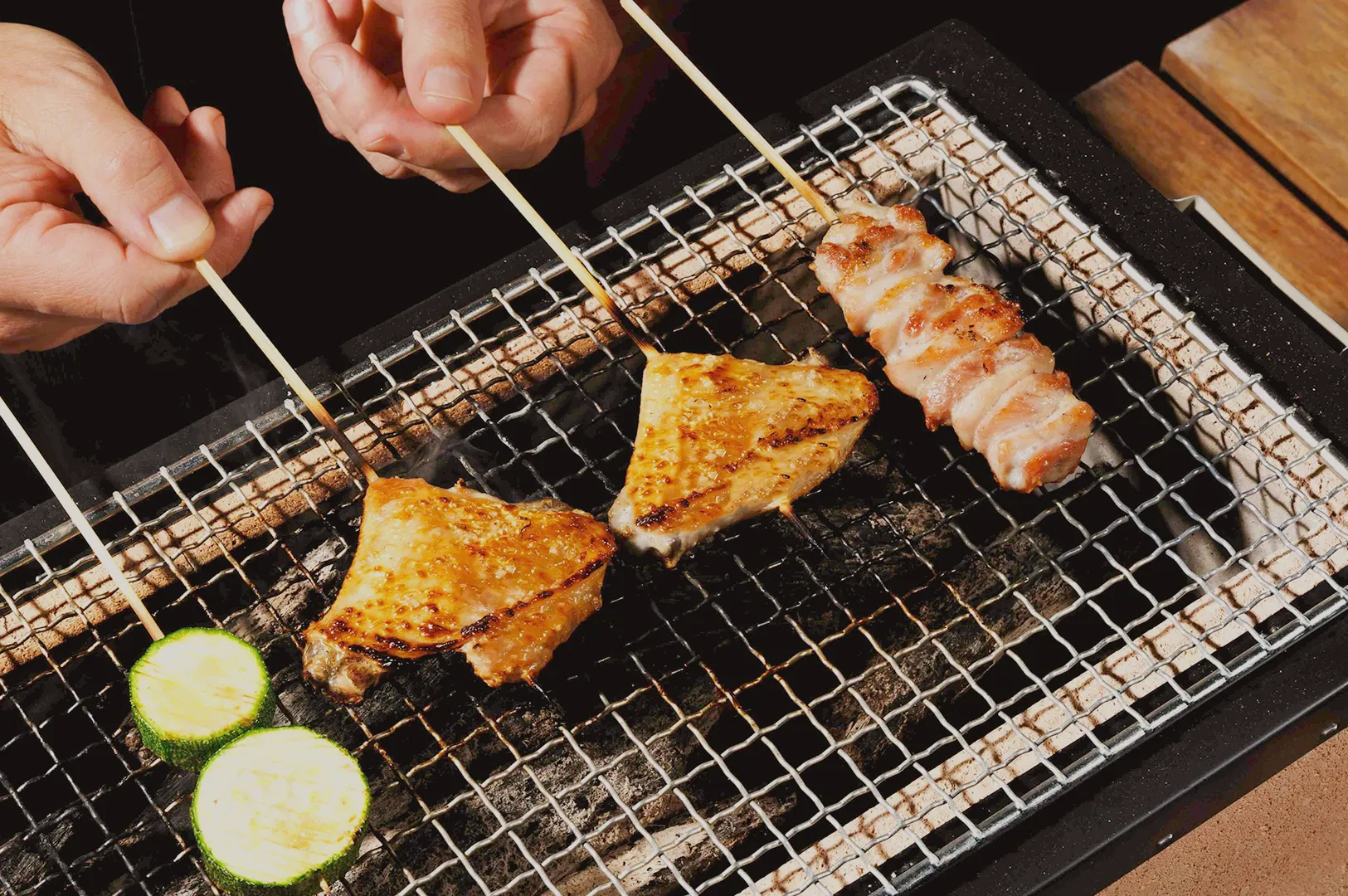
The skewer arrives, still warm from the grill. The outside looks lightly charred, perfectly cooked. But then you take a bite — or look a little closer — and notice it.
A faint blush of pink inside.
Someone at the table will always say it:
“Is this fully cooked?”
It’s a fair question. We’ve been taught to associate fully cooked meat with a uniform color — no pink, no doubt.
But in a proper izakaya, that slight pink isn’t a mistake.
It’s usually a sign the chef got it exactly right.
Doneness Isn’t About Color
One of the biggest misconceptions about meat is that color determines whether it’s cooked.
It doesn’t.
What actually matters is temperature and timing.
When meat cooks, proteins tighten and moisture is pushed out. The longer it stays on heat, the more moisture it loses. That’s why overcooked meat feels dry — not because it’s “more done,” but because it’s lost its natural juices.
A skilled yakitori chef cooks meat just enough to make it safe and tender, without pushing it into dryness.
Sometimes, that leaves a slight pink center.
And that’s exactly the point.
The Balance Between Heat and Moisture
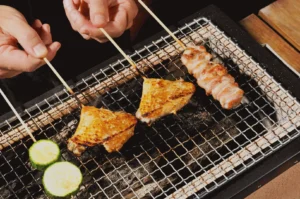
Yakitori is cooked over high heat, often using binchotan charcoal.
The goal isn’t to cook the meat evenly all the way through as quickly as possible. It’s to create contrast — a lightly charred exterior with a juicy interior.
That balance is delicate.
Too much heat, too long, and the skewer dries out.
Too little, and it lacks structure and depth.
So chefs aim for a narrow window where the meat is cooked through but still retains moisture.
That window doesn’t always produce a fully white interior.
It produces something better: tenderness.
It Mirrors the Rhythm of Drinking
Why Overcooking Feels “Safer”
Many diners instinctively trust dry meat more.
It feels firm. It looks fully cooked. There’s no visual uncertainty.
But that sense of safety often comes at the cost of quality.
In izakaya cooking, especially with chicken, precision matters more than excess caution. The meat is handled carefully, sourced properly, and cooked with attention.
Overcooking isn’t a safety measure.
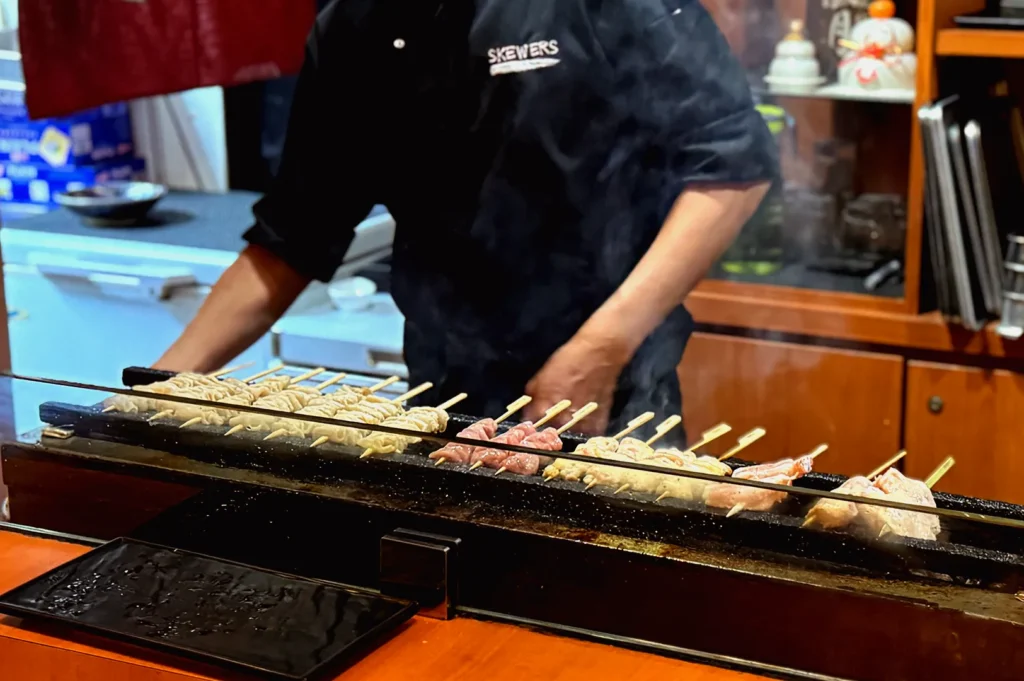
It’s a compromise.
And once you’ve had properly cooked yakitori — juicy, lightly charred, with just enough softness in the center — it’s hard to go back.
Reading the Skewer
There’s a difference between undercooked and precisely cooked.
Undercooked meat feels soft in an unpleasant way. The texture is uneven. The flavors don’t fully develop.
Well-cooked yakitori, even with a slight pink center, feels structured. The outside holds its shape. The inside remains juicy. Each bite has a contrast.
That contrast is intentional.
It’s what makes a simple skewer feel complete.
Trusting the Process
Part of enjoying izakaya food is learning to trust the kitchen— to understand that what looks simple often carries far more intention than expected, much like the idea behind why izakaya food isn’t just bar snacks.
Not blindly, but with an understanding that technique often looks different from expectation.
The slight pink in a skewer isn’t carelessness.
It’s restraint.
It means the chef chose not to cook the meat any further than necessary. Not to sacrifice texture for appearance. Not to push it past its optimal point just to make it look uniformly done.
That choice takes confidence.
What You’re Actually Tasting
The next time you notice that faint pink inside a skewer, pause before questioning it.
Take another bite.
Notice the moisture. The way the meat holds together without feeling dry. The balance between char and tenderness.
That’s not undercooked.
That’s control.
And in an izakaya, where so much of the food looks simple, it’s often these small, precise decisions that separate a good meal from one you remember.