The first time someone hands you a proper izakaya menu, it can feel excessive.
Pages of skewers. Pages of sashimi. Fried dishes. Simmered dishes. Grilled vegetables. Rice. Noodles. Daily specials tucked into corners. Seasonal additions written on separate slips of paper.
You flip. And flip. And flip again.
At some point, you may even wonder: Is this necessary?
It is.
And it is entirely intentional.
Izakaya Is Not Built for One Perfect Meal
We are used to restaurants curating experiences.
A tight menu suggests focus. A limited selection signals confidence. In many dining cultures, brevity equals refinement.
Izakaya culture follows a different philosophy.
An izakaya is not designed to deliver one flawless, self-contained experience. It is designed for repetition. For routine. For becoming part of someone’s weekly rhythm.
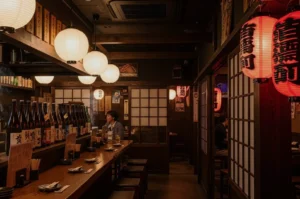
Historically in Japan, izakayas functioned as neighborhood after-work spaces. Regulars would return multiple times a week. A concise menu would quickly become predictable. A long menu, however, invites exploration over time.
The abundance is not clutter.
It is continuity.
Variety Encourages Return
When I first began paying attention to menu length, I noticed something subtle: regulars rarely study it.
They already know.
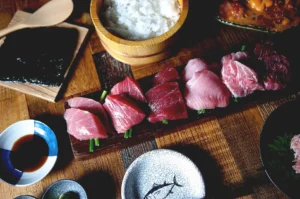
They have favorites — perhaps a particular skewer, a simmered dish, a specific sashimi cut — but they also experiment. One new item each visit. One seasonal addition. One special scribbled on the board.
A long menu allows for this flexibility.
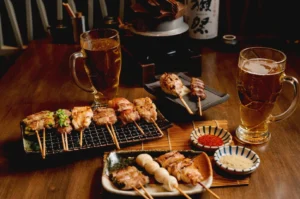
You can visit weekly and never repeat the same sequence. One evening might revolve around grilled items and sake. Another around fried comfort dishes and beer. A third might lean toward lighter plates and seasonal vegetables.
The structure supports mood.
And mood changes.
It Mirrors the Rhythm of Drinking
An extensive menu also supports the pacing of alcohol.
Unlike tasting menus, izakayas do not dictate a fixed progression. The length allows diners to build their meal gradually, ordering in waves.
Start with something light. Add skewers. Perhaps something fried midway. End with rice.
A short menu would force decisions too quickly. A long one gives breathing room. It encourages staying.
The design is psychological.
You do not feel pressured to finish. You feel invited to continue.
Familiarity Without Boredom
There is another reason izakaya menus remain expansive: familiarity thrives on options.
If a place becomes part of your routine, repetition must not become monotony. The variety ensures that comfort does not turn into predictability.
I have returned to certain izakayas in Singapore enough times to recognise this pattern. The menu feels reassuringly consistent, yet there is always something I have not tried. A new cut of fish. A seasonal vegetable. A limited skewer.
The length creates a sense of abundance without urgency.
You do not need to conquer it in one visit.
You are meant to grow into it.
Simplicity Within Abundance
Ironically, the long menu does not signal chaos in the kitchen.
In fact, most izakaya dishes share foundational techniques: grilling, simmering, frying, slicing. The variation comes from ingredients and seasoning rather than entirely separate systems.
This allows the kitchen to maintain consistency while offering breadth.
It is an ecosystem rather than a collection.
The Menu as a Relationship
When I now hold an izakaya menu, I no longer see excess.
I see an invitation.
An invitation to return. To evolve my order. To build familiarity with the staff and the space. To discover that the best nights are rarely the ones where you try everything, but the ones where you try just enough — and know you can come back for more.
The length of the menu is not about overwhelming you.
It is about ensuring that no two evenings need to feel the same.
And perhaps that is the quiet genius of izakaya culture: it does not ask for one perfect meal.
It offers you a relationship instead.
If you enjoy understanding the quiet details behind izakaya culture, you’ll find more stories like this at Best Izakaya Singapore.