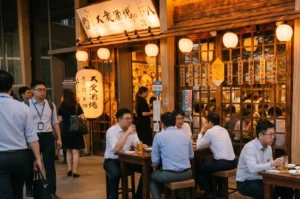


Cleared plates are not just housekeeping.
In an izakaya, they are part of the pacing system.
At first, plate clearing may seem like a simple service task. A dish is finished, the staff removes the plate, and the table looks neater. But in a small izakaya setting, especially in Singapore where tables are often compact, plate clearing affects more than appearance.
It changes how the table orders, how food arrives, and how the evening continues.
Empty Plates Tell Staff What the Table Needs
In izakaya service, staff do not only listen for orders. They also read the table.
An empty plate can signal that:
- The dish was well received
- The table may be ready for another order
- Another round of drinks may be appropriate
- The kitchen can prepare the next set of dishes
This matters because izakaya dining usually happens in waves. Diners order, eat, drink, pause, and order again.
Cleared plates help staff understand where the table is in that rhythm.
If several plates are empty, it may be the right moment to suggest another skewer, fried dish, or final rice item.
Small Tables Need Frequent Clearing
Many izakaya tables are intentionally small.
That limited space is not just a layout choice; it shapes how diners share, pause, and order, which is why the real reason izakaya tables are small matters more than it first appears.
This supports sharing and discourages over-ordering, but clutter builds quickly. Two drinks, a few skewers, a sauce dish, and one fried plate can already fill most of the space.
If staff do not clear efficiently, the table becomes harder to use.
Diners may hesitate to order more because there is no space. Hot dishes may arrive and sit awkwardly at the edge of the table.
Frequent clearing prevents this.
It keeps the table active without making it feel crowded.
Clearing Creates the Next Ordering Window
Plate clearing often signals the next stage of the meal.
Once the table has space again, diners naturally start checking drinks, looking at the menu, or discussing what to order next.
Good izakaya service uses this moment carefully.
Staff may ask:
“Would you like anything else from the grill?”
“Another drink?”
“Would you like rice or noodles to finish?”
These questions feel natural because the table has just reset.
Without plate clearing, that moment is delayed or missed.
Clutter Disrupts Pacing
Clutter affects more than comfort. It affects timing.
When a table is full of empty plates, diners often slow down without meaning to. They stop reaching for food easily. They delay additional orders. The meal loses momentum.
In an izakaya, this matters because the experience depends on rhythm.
Food should arrive gradually. Drinks should move with the meal. The table should feel active, but not overloaded.
A Small Detail With a Big Role
Plate clearing may look minor, but it helps shape the larger experience.
It helps staff read the table. It protects limited space. It creates room for the next order. It prevents clutter from interrupting the meal.
Clearing plates is not just about cleaning the table.
It is about maintaining the rhythm of the night.