Japanese Food at CHIJMES on Victoria Street
CHIJMES Singapore, located on Victoria Street, is a historic dining and lifestyle complex originally the Convent of the Holy Infant Jesus.
The heritage setting is part of what distinguishes dining here from a conventional mall. The former chapel, Caldwell House and other surviving historic buildings remain integrated into the present-day CHIJMES complex.
For Japanese food, we would narrow the choice to five very different formats: The Modern Izakaya, Tatsu, Gyu-Kaku Japanese BBQ Restaurant, Kome Bar and Hakata Ikkousha Ramen. All five are currently listed at CHIJMES.
Rather than treating them as five versions of the same Japanese restaurant, we think it is more useful to separate them by what they actually do: izakaya-style drinking and sharing plates, teppanyaki, yakiniku, sushi and donburi, or Hakata ramen.
If you want more Japanese dining options, discover Singapore’s best izakayas nearby by clicking here.
CHIJMES Singapore
CHIJMES gives diners several Japanese formats within the same Victoria Street complex, but the restaurants differ significantly in menu style, price and occasion. That distinction matters more than trying to identify one restaurant that suits every meal.
1. Modern Izakaya – A Casual Japanese Dining Destination Inspired by Tokyo Izakaya Bars
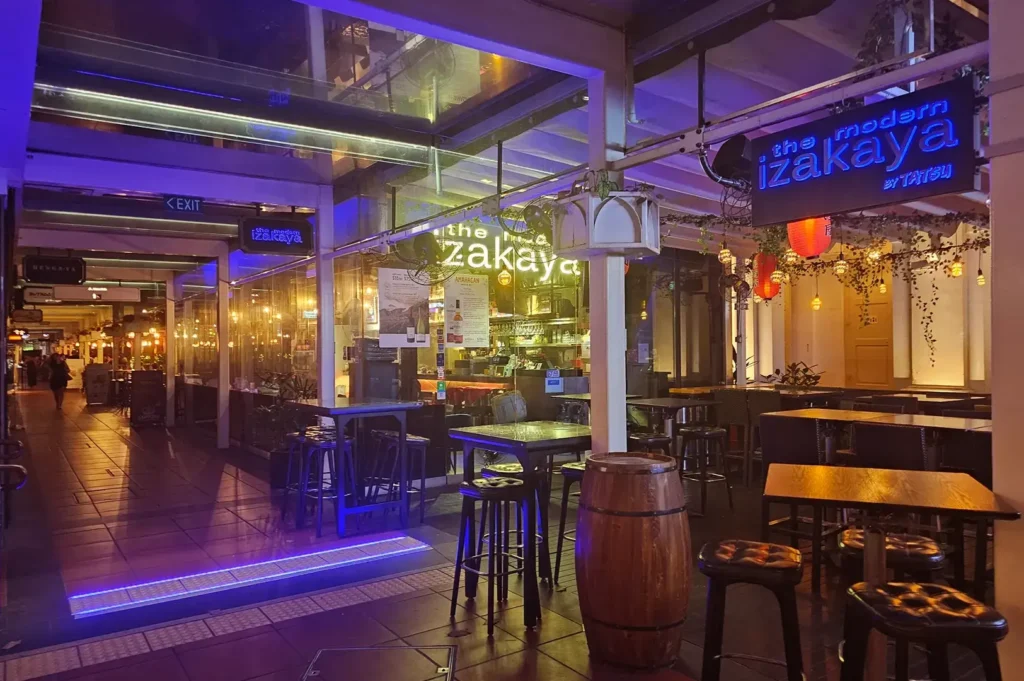
Nearest MRT: City Hall or Bras Basah, approximately 4–7 minutes on foot
Price: Lunch sets currently start from S$25++; dinner spend varies according to skewers, sharing plates and drinks.
Signature dishes: Yakitori and kushiyaki skewers, oysters, grilled squid, pork belly, and speciality maki
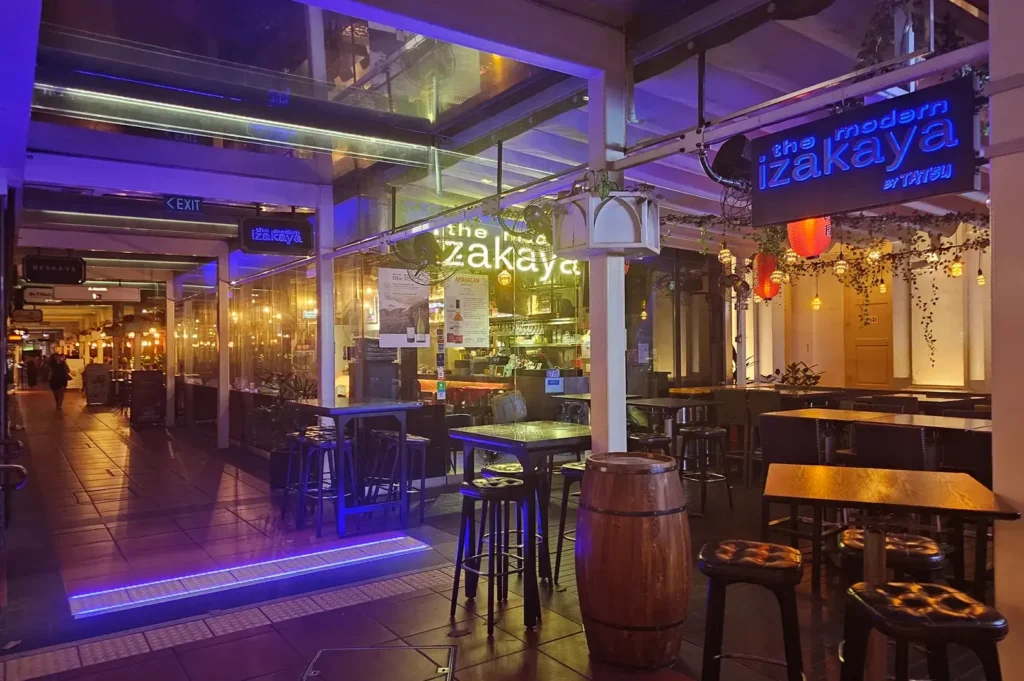
If you typed “CHIJMES izakaya” into a search bar, this is the door you were probably looking for.
CHIJMES officially describes The Modern Izakaya as a casual Japanese dining destination styled after the izakaya bars of Tokyo, with a chill atmosphere, sake, beer and Japanese cuisine. That makes the izakaya positioning here unusually easy to verify rather than something we have to infer from the menu.
For us, that is the strongest reason to separate it from the other Japanese restaurants in this guide. Tatsu focuses on teppanyaki, Gyu-Kaku on yakiniku, Kome Bar on sushi and donburi, and Ikkousha on ramen. The Modern Izakaya is the one explicitly built around an izakaya-style identity.
Lunch Menu
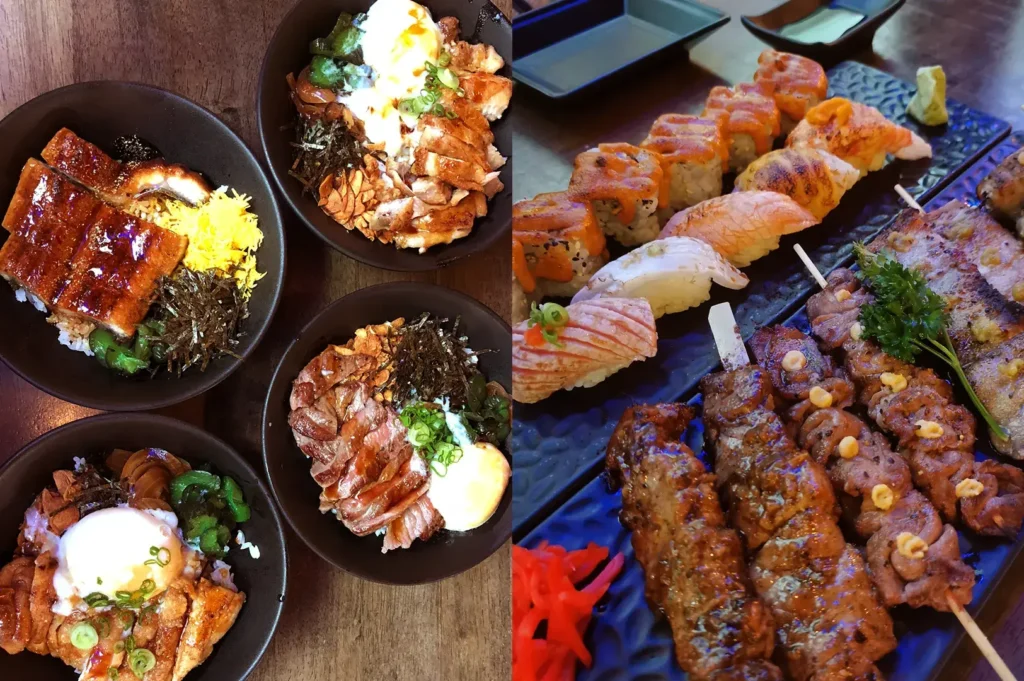
Lunch currently includes Japanese sets from S$25++, with choices across tempura, sushi, udon and donburi. CHIJMES lists the lunch offer as available daily from noon to 2.30pm.
We would still view lunch as the practical side of the restaurant rather than the clearest expression of its izakaya format. Dinner gives more room for the sake, beer, and sharing-food structure highlighted in the restaurant’s own positioning.
Those dishes may be practical, but they are not the main reason we would choose this restaurant over the other Japanese options at CHIJMES. Current CHIJMES promotions also list 1-for-1 Asahi Super Dry Beer on weekends and public holidays for Kome Bar and The Modern Izakaya, subject to the venue’s terms and conditions.
Current published food coverage identifies yakitori, charcoal-grilled platters and speciality maki among the restaurant’s established offerings. One recent CHIJMES guide lists yakitori from S$7, a bincho charcoal-grilled platter from S$36 and Hotate Miso Maki at S$18. Because menu prices can change, we would check the current menu before treating those figures as fixed.
If we were building a first order, we would make the grill the starting point and add maki or another sharing dish rather than ordering the meal like a conventional set dinner.
The night it suits: After-work drinks, casual Japanese plates, and an unhurried sake-and-skewers evening.
Probably not your table if: You are looking for a traditional smoke-heavy yakitori room, omakase-level precision, or a particularly quiet dinner.
How we would order: Start with a round of skewers and craft beer, then add oysters or a warm sharing plate once the table settles into its appetite. Don’t miss their speciality maki rolls for a satisfying finish.
2. Tatsu
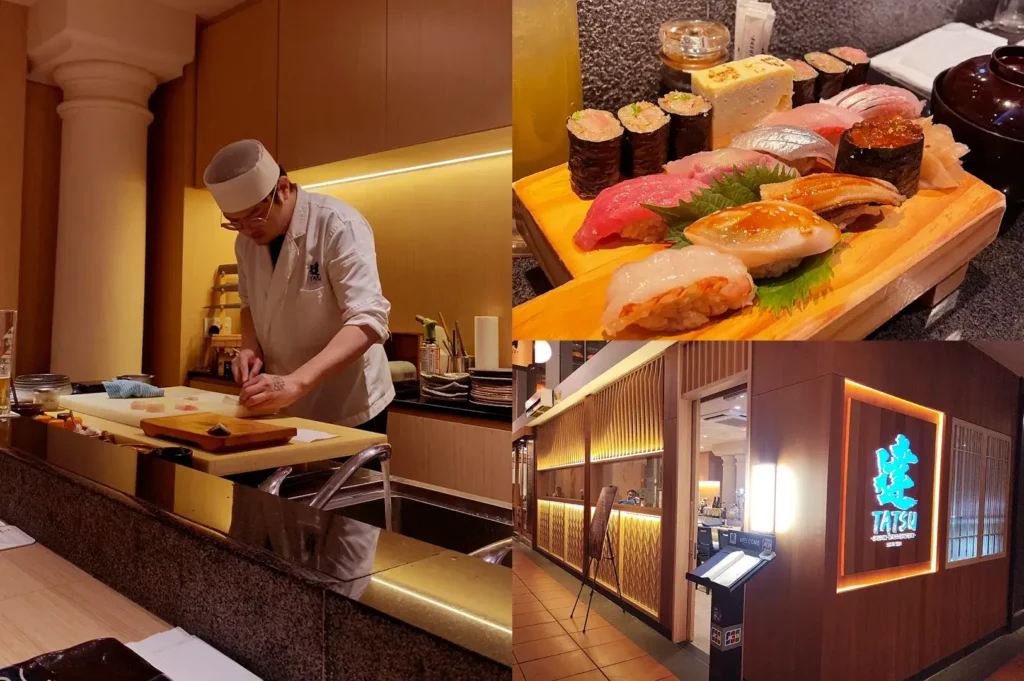
Nearest MRT: City Hall or Bras Basah, approximately 4–7 minutes on foot
Price: Published teppanyaki sets have been listed from S$68 to S$178 per person; check the current menu when booking because pricing may change.
Signature dishes: Wagyu steak teppanyaki, lobster teppanyaki, king prawn, seafood fried rice and sashimi
Tatsu is where we would go at CHIJMES when the evening calls for something quieter, more structured and more deliberate.
CHIJMES describes the concept as sushi by day and teppanyaki by night, with seafood and prime cuts prepared in front of diners.
The teppanyaki counter is therefore the clearest reason for us to choose Tatsu over the other Japanese restaurants here. It covers both the seafood and meat sides of the teppanyaki menu without reaching the highest price tier.
What is easier to verify is the format itself: Tatsu offers dedicated teppanyaki counter dining alongside its sushi service, and reservations for the CHIJMES outlet can be made by phone.
The restaurant currently runs two dinner seatings at the teppanyaki counter, at 6pm and 8.30pm. Tatsu notes that diners in the earlier session may need to vacate their seats for the 8.30pm seating.
Because the teppanyaki counter works to fixed dinner seatings, this is the restaurant we would plan in advance rather than treat as the most flexible walk-in option.
Plan the booking, ask for the counter and allow the chef to set the pace.
The occasion it fits: Date nights, client dinners and evenings when watching the chef is part of the meal.
Think twice if: You want inexpensive casual food, a quick bowl of noodles or the freedom to arrive without planning.
The seat to ask for: Reserve the teppanyaki counter. A standard table removes much of what makes Tatsu distinct.
3. Gyu-Kaku Japanese BBQ Restaurant
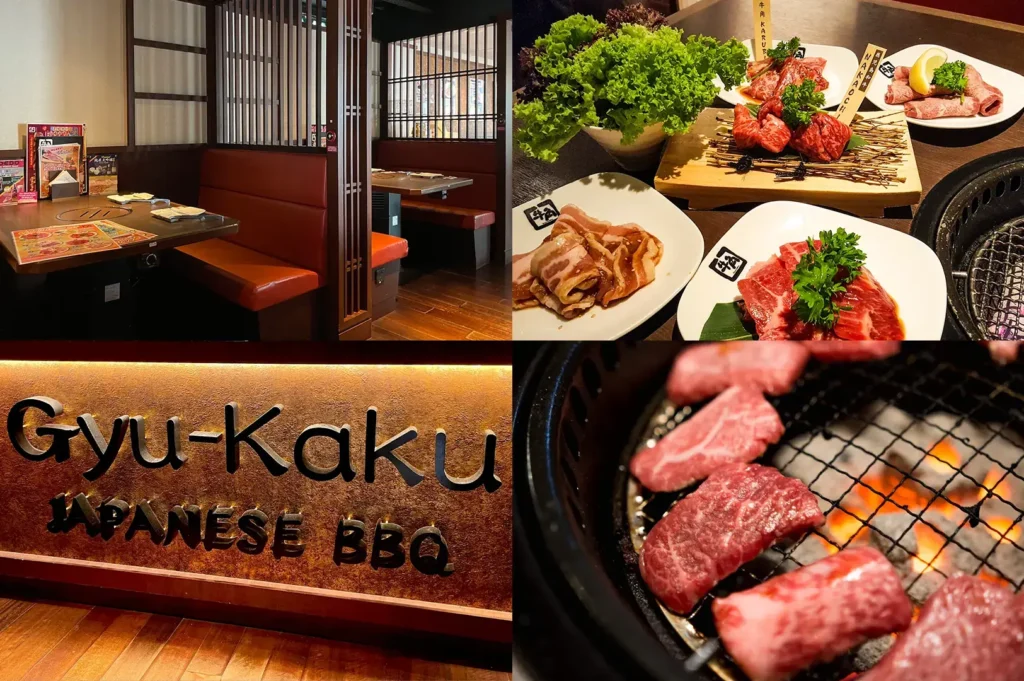
Nearest MRT: City Hall or Bras Basah, approximately 4–7 minutes on foot
Price: Varies significantly by à la carte choices, buffet tier and Wagyu selection.
Signature dishes: Japanese Wagyu, assorted beef platters, beef tongue, harami-style cuts and the CHIJMES-exclusive sharing set
Some meals work because the kitchen handles everything. Others are enjoyable precisely because the table has to participate.
Its Singapore operation describes the restaurant around Japanese BBQ, with Japanese Wagyu, seafood, appetisers, salads, desserts and drinks available alongside the grilled meats. Chicken also appears within Gyu-Kaku’s wider Japanese BBQ offering, alongside beef, pork, seafood and vegetables. The defining difference is that the food is grilled at the table. That makes it a naturally participatory format for groups without requiring us to claim that one particular crowd will necessarily enjoy it more than another. Chicken also appears within Gyu-Kaku’s wider Japanese BBQ offering, alongside beef, pork, seafood and vegetables.
If everyone is happy to cook as they eat, Gyu-Kaku provides a very different experience from the chef-led teppanyaki format at Tatsu.
That interaction is part of the appeal. A plated dinner can feel passive by comparison.
Gyu-Kaku introduced a CHIJMES-exclusive set at S$138.80++ in June 2026, described as a sharing menu with premium Wagyu selections, appetiser, salad, soup, rice, desserts and drinks. The company notes that the offer is limited and subject to availability, so we would check whether it remains available before planning around it.
The restaurant currently also publishes separate grand, lunch and buffet menus, which means there is no single representative spend for every visit.
Because the meal involves grilling meat at the table, we would choose Gyu-Kaku when that hands-on format is part of what the group wants rather than when everyone prefers finished dishes arriving from the kitchen.
Bring this crowd: Groups, meat-focused dinners and casual celebrations where cooking together is part of the fun.
Less suitable when: Anyone at the table dislikes smoke, eats very little meat or would rather have the kitchen finish every dish.
The easier way to order: Begin with a sharing set or mixed platter, then add one or two premium cuts instead of building the entire meal à la carte.
4. Kome Bar
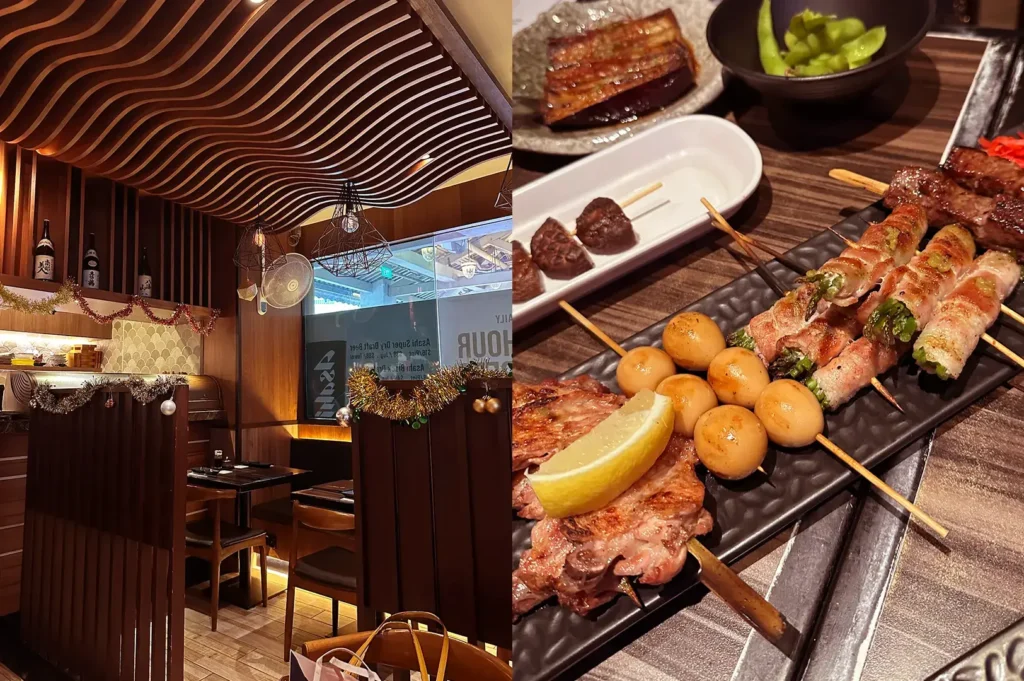
Nearest MRT: City Hall or Bras Basah, approximately 4–7 minutes on foot
Price: Around S$30–S$55 per person
Signature dishes: Hotate Miso Roll, Salmon Ikura Don and Bara Chirashi
Kome Bar is the broad sushi-and-donburi option among these five restaurants.
Its CHIJMES listing specifically highlights the Hotate Miso Roll and Salmon Ikura Don.
The restaurant’s current online ordering site also lists Bara Chirashi among its bestsellers and separates the menu into sashimi, speciality maki, donburi and bento categories.
What we can say more confidently is that Kome Bar covers sashimi, speciality maki and donburi, giving it a broader sushi-led menu than the more specialised ramen, yakiniku and teppanyaki restaurants in this guide.
For readers comparing the five restaurants, we would put Kome Bar in the middle when the table wants Japanese food but does not want to commit to grilled meat, teppanyaki or ramen.
It is also confirmed for both lunch and dinner service every day.
Sometimes the most practical choice is the place that can feed everyone at the table without turning the meal into a negotiation.
Where it works best: Casual dinners, mixed cravings and tables that want rolls, rice bowls and grilled food without committing to one specialist format.
Look elsewhere when: The priority is traditional izakaya atmosphere, serious sushi-counter service or a dedicated yakiniku or ramen meal.
A balanced first order: Share the Hotate Miso Roll, add either the Salmon Ikura Don or Bara Chirashi, then round out the table with one grilled dish.
5. Hakata Ikkousha Ramen – Tonkotsu Near Bras Basah
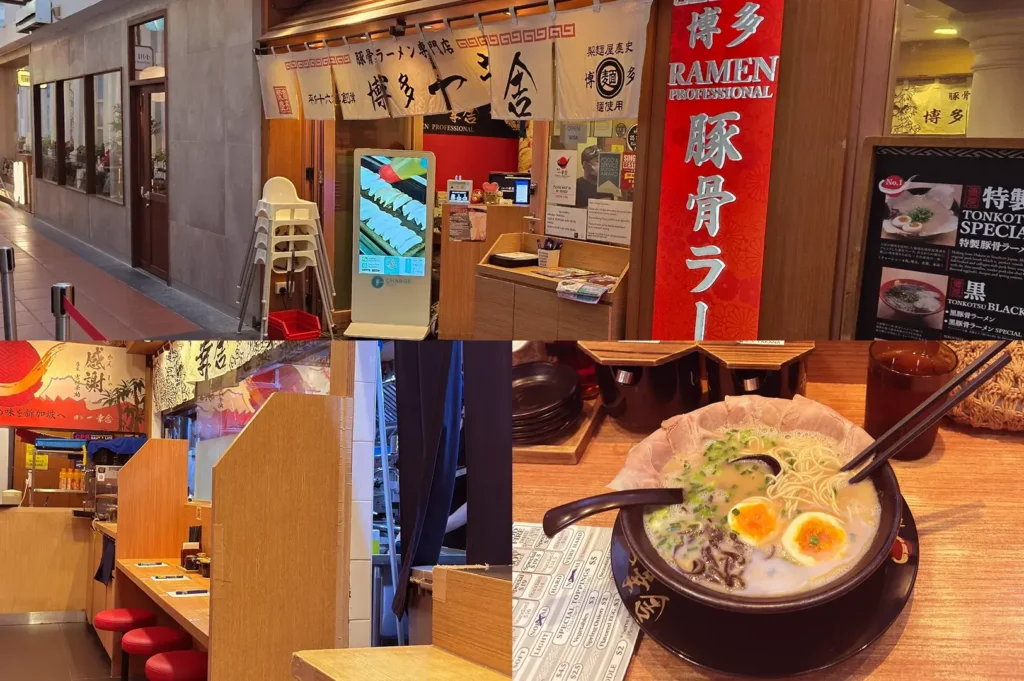
Nearest MRT: Bras Basah or City Hall, approximately 4–7 minutes on foot
Price: S$14–S$21 for most ramen bowls, or around S$18–S$30 per person with an egg, side dish or drink
Signature dishes: Tonkotsu Standard, Tonkotsu Special, Tonkotsu Black, God Fire Ramen and Tonkotsu Shio
Opening hours: Monday to Saturday, 11:30 am–10:00 pm, last order 9:30 pm; Sunday, 11:30 am–9:00 pm, last order 8:30 pm
Every Japanese dining area benefits from having one place where the decision is simple.
At Ikkousha Ramen, located at #F1-07, the answer is usually a bowl of Hakata-style tonkotsu. The noodles are thin, the broth is pork-based and creamy, and the toppings are kept focused enough that the soup remains the centre of the meal.
The company says Ikkousha began in Hakata, Fukuoka in 2004, and describes its ramen around pork-bone broth, a blend of three Fukuoka soy sauces, custom noodles and chashu.
The current CHIJMES/Tanjong Pagar menu lists:
Tonkotsu Standard: S$14.50
Tonkotsu Special: S$19.50
Tonkotsu Black: S$16, or S$21 Special
God Fire: S$16, or S$21 Special
Tonkotsu Shio: S$14, or S$19 Special
Flavoured Egg: S$3
Hitokuchi Gyoza, five pieces: S$6.50
Based on those published prices, a bowl plus an egg or gyoza can remain below S$30 before any additional drink or side dish.
For a first visit, we would use the Tonkotsu Standard as the baseline because it is the restaurant’s core tonkotsu option rather than jumping immediately to the black-garlic or spicy variations.
Ikkousha says its tonkotsu broth is made by boiling and simmering pork bones, while its noodles are specifically made to pair with the soup.
Of the five formats here, ramen requires the least shared ordering, so we would keep Ikkousha in mind when the goal is simply an individual bowl rather than a table of shared dishes.
The meal it answers: Solo lunches, quick dinners and days when one concentrated bowl is all you need.
Not the right stop for: Shared izakaya plates, sushi, grilled meat or a long evening built around drinks.
Make the bowl yours: Choose the noodle firmness deliberately and add the flavoured egg before reaching for several side dishes.
So, Where Should Your CHIJMES Night Go?
Rather than ranking them as though they were competing for the same meal, we would choose according to format.
For sake, beer and Japanese sharing plates, The Modern Izakaya is the clearest izakaya choice. Its own CHIJMES description explicitly positions it as a casual Japanese dining destination inspired by Tokyo izakaya bars.
For visitors comparing the Japanese options at CHIJMES, that positioning makes The Modern Izakaya the clearest match for an izakaya-focused meal.
For a chef-led teppanyaki meal, Tatsu has dedicated counter seatings at 6pm and 8.30pm.
We would still check the current restaurant details before visiting, particularly when dining around public holidays.
For yakiniku cooked at the table, Gyu-Kaku provides Japanese Wagyu, other grilled meats and multiple menu formats.
For maki, sashimi and donburi, Kome Bar gives the table a broader Japanese menu, with Hotate Miso Roll and Salmon Ikura Don specifically highlighted by CHIJMES.
And when ramen is the entire point, Hakata Ikkousha keeps the decision centred on tonkotsu, with the Standard currently priced at S$14.50.
Our approach is simple: choose by what you actually want to eat rather than expecting every Japanese restaurant at CHIJMES to deliver the same kind of night.
For an izakaya atmosphere, start with The Modern Izakaya. For cooking at the table, choose Gyu-Kaku. For cooking in front of you, book Tatsu. For sushi and rice bowls, look at Kome Bar. And for a straightforward bowl of Hakata ramen, head to Ikkousha.