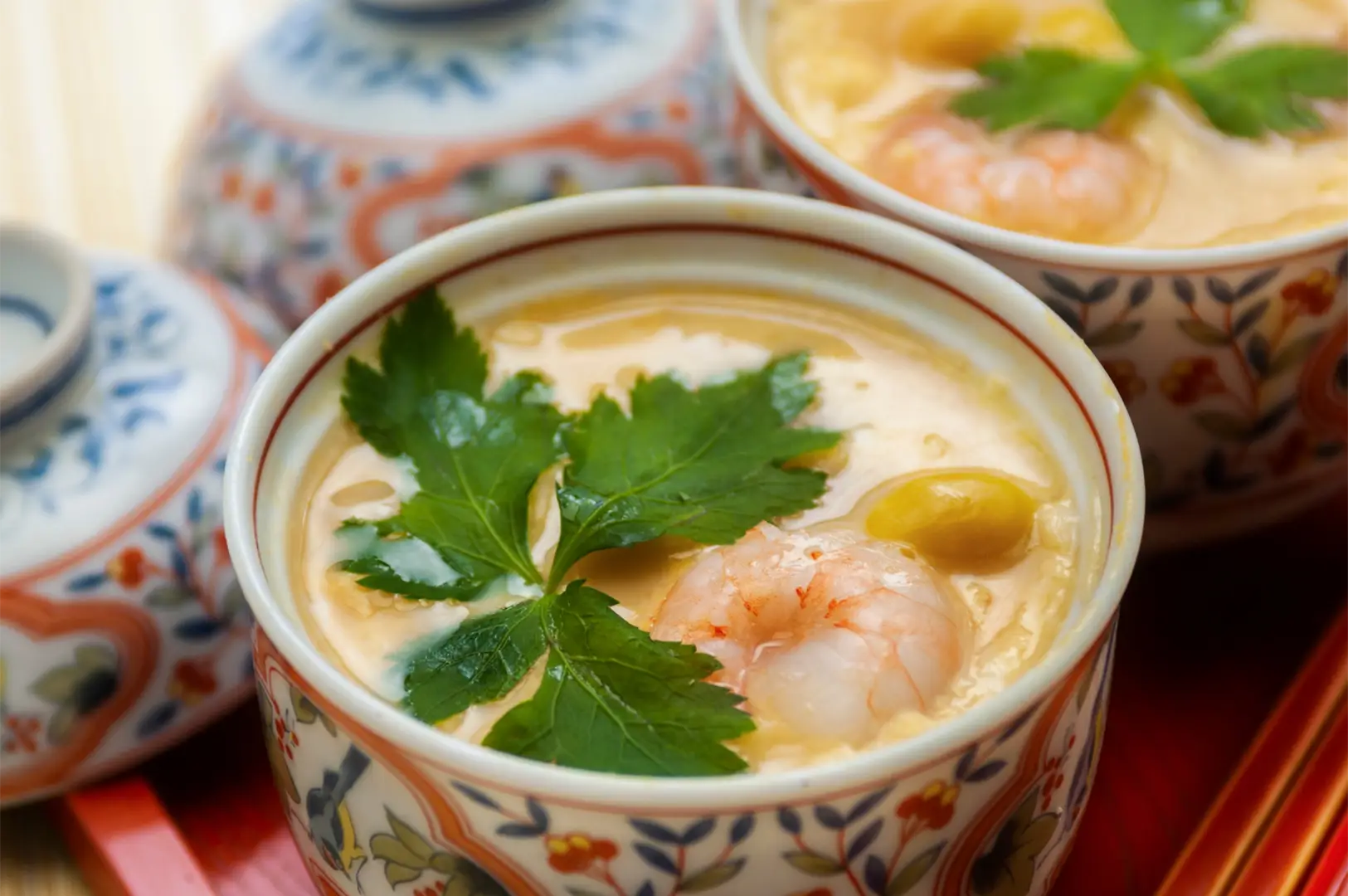
Chawanmushi looks simple: an egg custard in a small cup. Treat it like an omelette, and the result changes. Why does Japanese cooking usually steam it instead of reaching for a frying pan or oven?
The answer lies in texture. Chawanmushi is meant to be delicate, savoury and softly set. Steaming helps cooks control how the egg mixture firms up.
Chawanmushi Is Not a Sweet Custard
Chawanmushi literally means a steamed dish in a tea bowl. Its base combines beaten egg with dashi, the Japanese stock that supplies much of its savoury flavour. Depending on the recipe, the cup may also contain mushrooms, chicken, seafood or other ingredients.
We should not confuse it with a dessert custard. Its appeal comes from a smooth egg base, gentle seasoning and ingredients that appear as the spoon moves through the cup.
What Gentle Steam Does to Eggs
Egg proteins begin to set when heated. If the mixture becomes too hot too quickly, those proteins can tighten excessively, leaving the custard firm, uneven or riddled with holes.
Steaming surrounds the covered cup with moist heat. With a restrained temperature and appropriate cooking time, the mixture can set gradually without developing a browned surface. A well-prepared chawanmushi should hold together while remaining tender enough to scoop easily.
Steaming alone does not guarantee perfection. Vigorous boiling beneath the steamer, excessive heat or prolonged cooking can still produce bubbles and a coarse texture. Cooks therefore monitor the heat rather than simply leaving the cup over boiling water.
Why the Dashi Ratio Matters
Chawanmushi contains considerably more liquid than many familiar egg dishes. Dashi gives it flavour, but the proportion of stock to egg also affects how firmly the custard sets.
More liquid generally produces a softer result, provided there is enough egg to form a stable structure. Too much liquid may prevent a satisfactory set. Recipes vary, so there is no single proportion that every restaurant must follow.
Straining the mixture can remove uneven strands of egg, while allowing bubbles to settle can help create a smoother surface. These small steps matter alongside steaming temperature.
Why Not Fry or Bake It?
Frying exposes the egg mixture to direct, concentrated heat from a pan. That works for omelettes but makes the soft, uniform texture of chawanmushi harder to achieve.
Baking can produce a tender custard, especially with a water bath. It is therefore inaccurate to say an oven could never work. Traditional steaming, however, is closely associated with the dish and allows careful heating in individual cups.
What Diners Should Notice
Chawanmushi appears among the small dishes at Japanese restaurants, including Sandaime Hiraki’s documented menu. Some gozen sets elsewhere may include it as an accompaniment.
When served, look for a gently set custard with a savoury dashi character, not a browned top or a firm omelette-like bite.
The technique serves the intended result: a modest dish whose texture depends on patient, controlled heat.