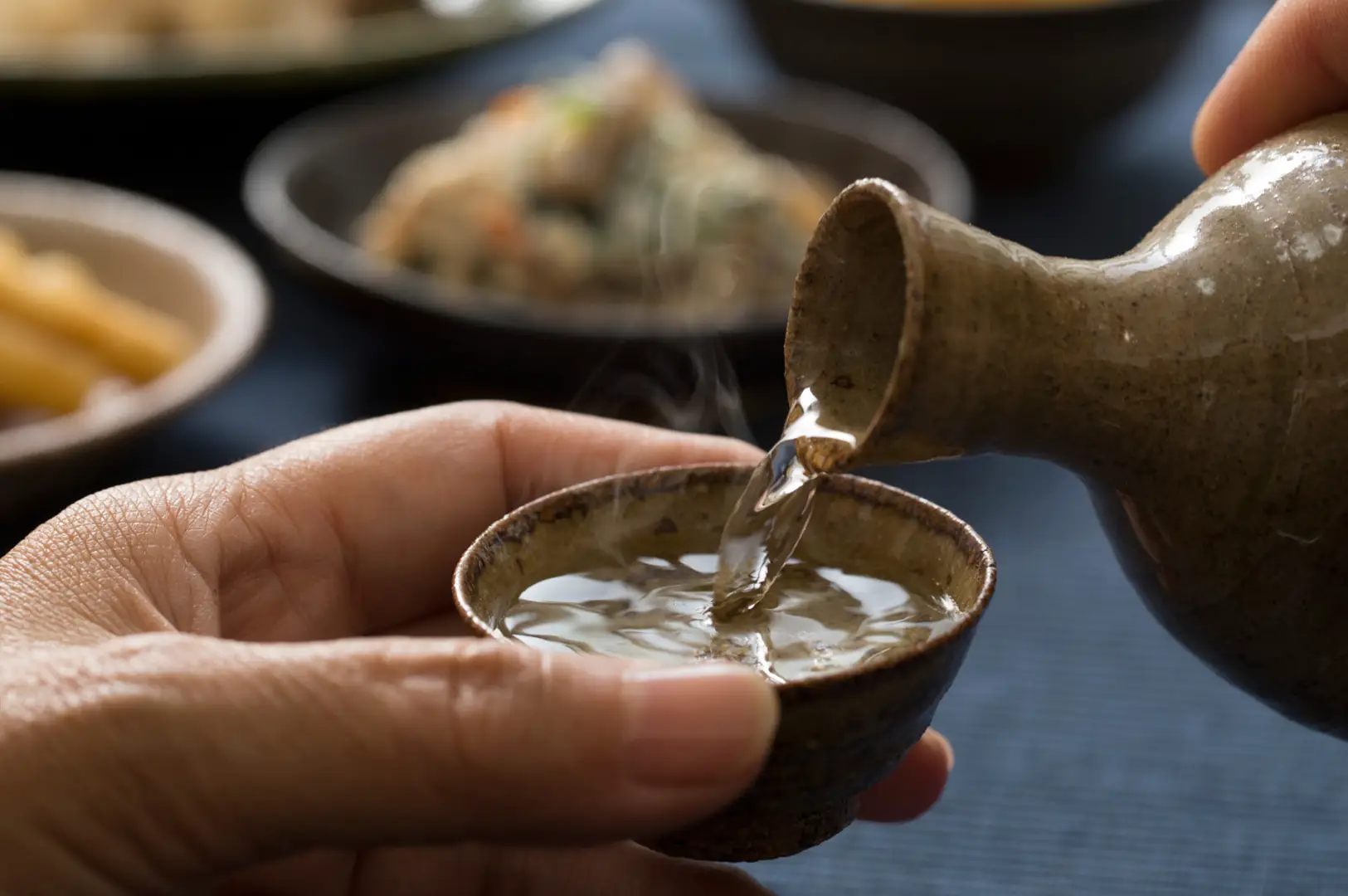
In Tokyo, the evening often softens at a small counter. A ceramic cup rests on the wood, and a bottle tilts slowly. The sake spills a little past the rim into the masu beneath it, an old gesture of generosity. Nobody hurries. The bottle is turned so the label faces you, and someone tells you where in Japan it was brewed.
Across the city, some of the most exciting sake bars are not necessarily the loudest. They are the places where a bottle’s origin, brewing method and character become part of the conversation. This list gathers seven, each chosen because Japanese sake sits at the center of the evening rather than at its edges. Some are built around craft sake and tasting flights. One introduces sake through cocktails. Others place it beside careful seasonal cooking. I have not ranked them by their food. I have tried to describe how each sake bar in Singapore asks you to drink, and where the numbers are older, conflicting or still unconfirmed, I say so gently.
How These Sake Bars Differ
A sake bar is not one thing. Some feel like a brewer’s notebook, full of unusual styles. Some keep the standing spirit of a Japanese tachinomi. Others treat sake as a companion to kappo or kaiseki cooking.
Beyond these sake-focused rooms, Best Izakaya explores another side of Singapore’s Japanese drinking culture, where grilled skewers, shared plates and familiar conversations give each evening its own rhythm.
Exact pour, glass and flight prices are not published for most of these venues, and labels rotate with the seasons. The details below offer a starting point; confirm current opening hours and available sake before visiting.
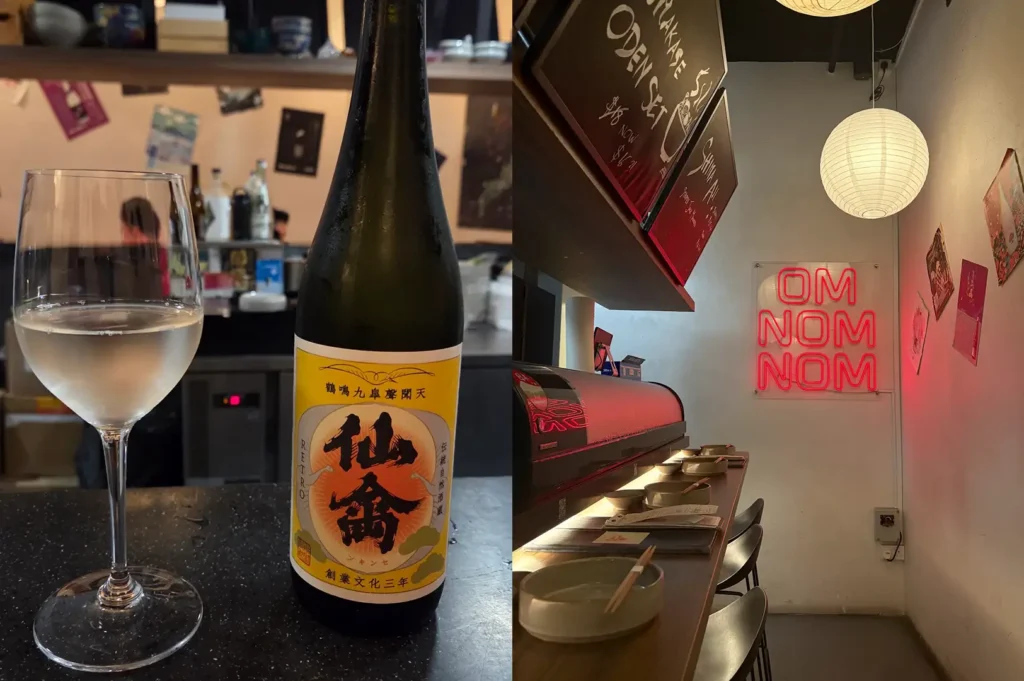
1. Omu Nomu Craft Sake & Raw Bar (Beach Road): Craft Sake for the Curious Palate
How to arrive: Nicoll Highway MRT, Exit A, about 3 to 5 minutes on foot
What it costs: Mid-range to premium, depending on the sake and seafood chosen; current pour and flight prices still need confirming
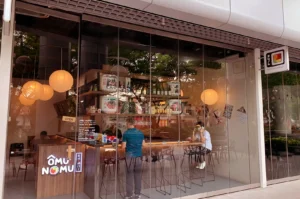
There is a particular pleasure in a menu that changes before you have learned it. Omu Nomu, at 302 Beach Road, #01-08 Concourse Skyline, has been built around that feeling. Its collection of craft sake rotates, with around 15 bottles previously advertised at a time. The styles lean toward the unusual: muroka nama genshu, unfiltered and unpasteurized at full strength, alongside bodaimoto, aged sake, cloudy doburoku and spontaneously fermented brews.
The programme reflects the passion of chef-owner Gerard Alexis, a certified sake sommelier who has championed lesser-known brewing traditions, including ancient methods such as bodaimoto. Food receives similar attention: the restaurant says its sushi rice is prepared daily with red vinegar and Akita Komachi rice, bringing another dimension of Japanese cuisine into its sake-led approach.
What draws me here is the invitation to compare. Sake micro-flights let you set several styles side by side and notice how their flavour profiles diverge. Fresh sashimi, sushi, handrolls and grilled skewers accompany the cups quietly, the way food should in a room where the drink leads.
Who it suits: Sake lovers who want to explore brewing styles, and beginners willing to be guided through unfamiliar bottles
A quiet consideration: The room is small, labels change, and premium seafood can lift the bill. A bottle praised in an older article may already be gone.
Worth knowing: Begin with a micro-flight before committing to a larger pour, and ask which labels are open that week. Lunch runs 12pm to 2:30pm, dinner from 5:30pm until late, and the bar is closed on Sundays.
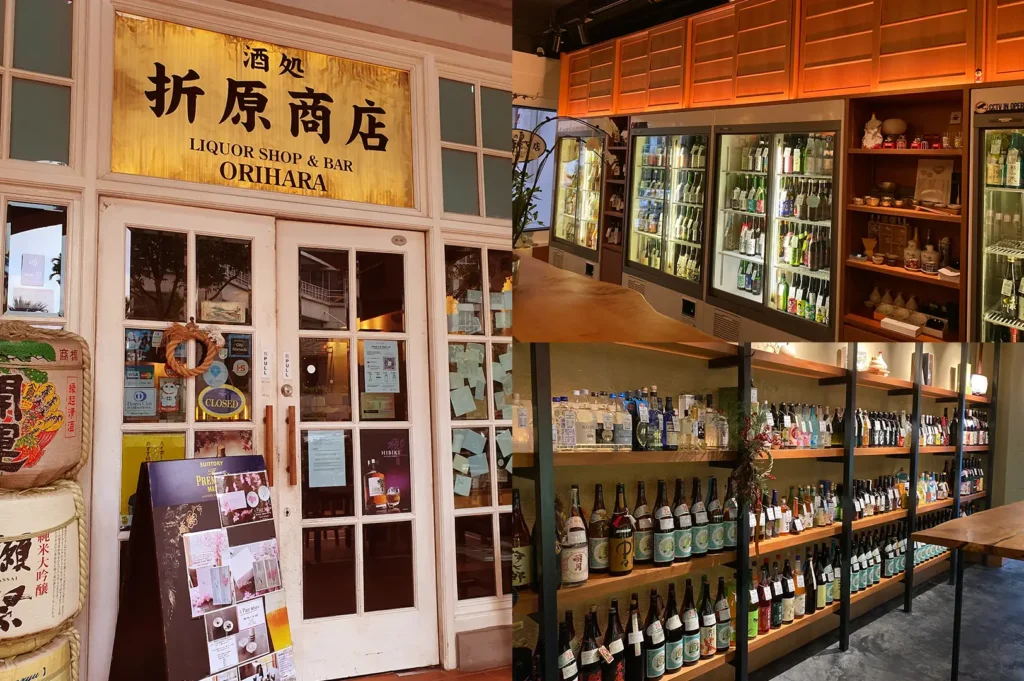
2. Orihara Shoten (Mohamed Sultan): Regional Japanese Sake and the Standing Bar Spirit
How to arrive: Fort Canning MRT, about 7 to 10 minutes on foot
What it costs: Wide-ranging, from single servings to limited-allocation bottles; current glass prices need confirming
In Japan, many of the most honest sake moments happen standing up. A worker leans against a narrow counter, one cup, a few words with the owner, then home. Orihara Shoten, at 25 Mohamed Sultan Road, #01-00, carries some of that tachinomi character, though its roots run deeper than mood. It is also a sake importer, with relationships reaching back to the breweries themselves.
Its devotion is to jizake, the regional sake of small towns and local rice. That focus opens onto an extensive range of brewing traditions, from familiar regional expressions to less commonly encountered labels. Its extensive selection reaches beyond regional sake to limited-allocation bottles, shochu, umeshu, Japanese liqueurs, whisky and craft beer. Diners speak of knowledgeable recommendations and the quiet thrill of meeting a brewery they had never heard of. For anyone who loves the craftsmanship behind a label, this feels like a map of Japan unfolded one glass at a time.
Who it suits: Experienced drinkers and the deeply curious who want to compare regional labels
A quiet consideration: The terminology can feel dense to newcomers, and rare bottles carry rare prices.
Worth knowing: The bar and restaurant keep different hours. The bar opens 3pm to 11:59pm Monday to Saturday and 5pm to 11:59pm on Sunday, with last order at 11:30pm. The restaurant serves 6pm to 11pm and closes on Sundays. Ask the staff to guide you across categories rather than choosing by familiar names.
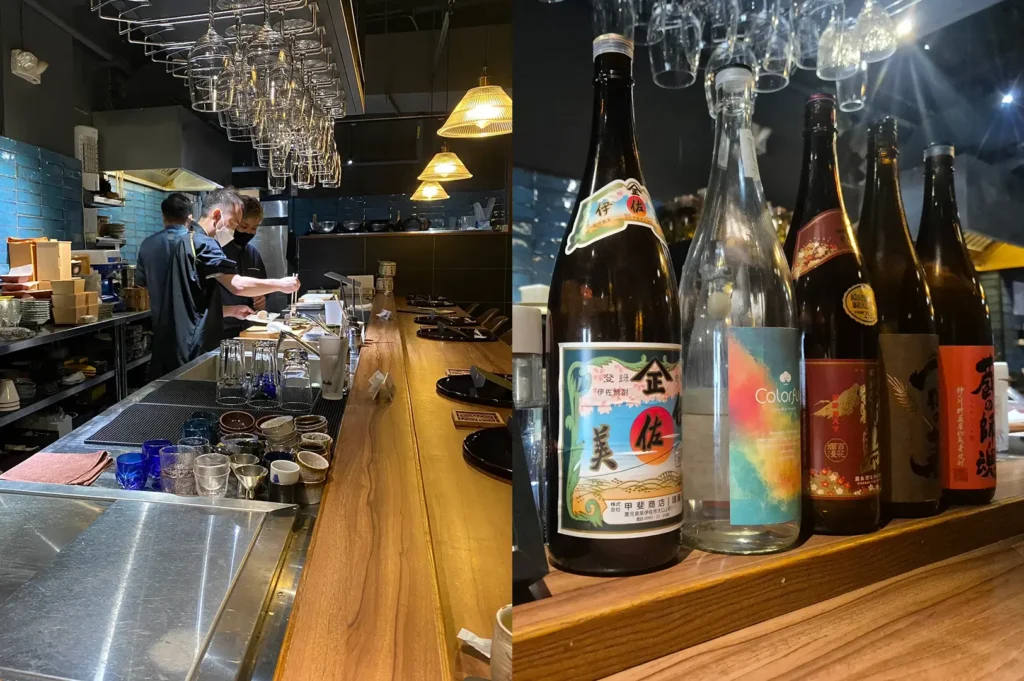
3. SAKEMARU Artisan Sake Hideout (South Bridge Road): Small Breweries, Patient Pairings
How to arrive: Clarke Quay MRT, about 3 to 5 minutes on foot
What it costs: Premium, with recent listings suggesting around S$100 per person, depending on food and sake
Some sake asks for a meal around it. At SAKEMARU Artisan Sake Hideout, 55 South Bridge Road, #01-01, the small-production bottles arrive beside kappo-style cooking, where the chef works close enough to speak with you across the counter. The business also distributes artisanal sake, so the selection comes from people who spend their days thinking about breweries.
Earlier coverage described more than 50 rotating specialist labels, and a later account suggested an even larger seasonal collection. I hold both figures lightly. What stays constant is the idea of pairing: sashimi moriawase, seasonal seafood and omakase courses chosen with the cup in mind. One recent report placed a 15-course omakase from S$200, though that price has not been confirmed as current.
Who it suits: Diners marking a special evening, and sake lovers who want to understand how food can complement a pour
A quiet consideration: Counter seats are limited, and the experience is more considered than a casual drink after work.
Worth knowing: Confirm whether your booking covers à la carte drinking or a set dining experience, then ask which artisanal bottles are available by the glass. The official schedule lists lunch from 11:30am to 3pm and dinner from 6pm to 11pm, Monday to Saturday. The venue closes on Sundays, while 3pm to 6pm is reserved for sake bottle takeaway.
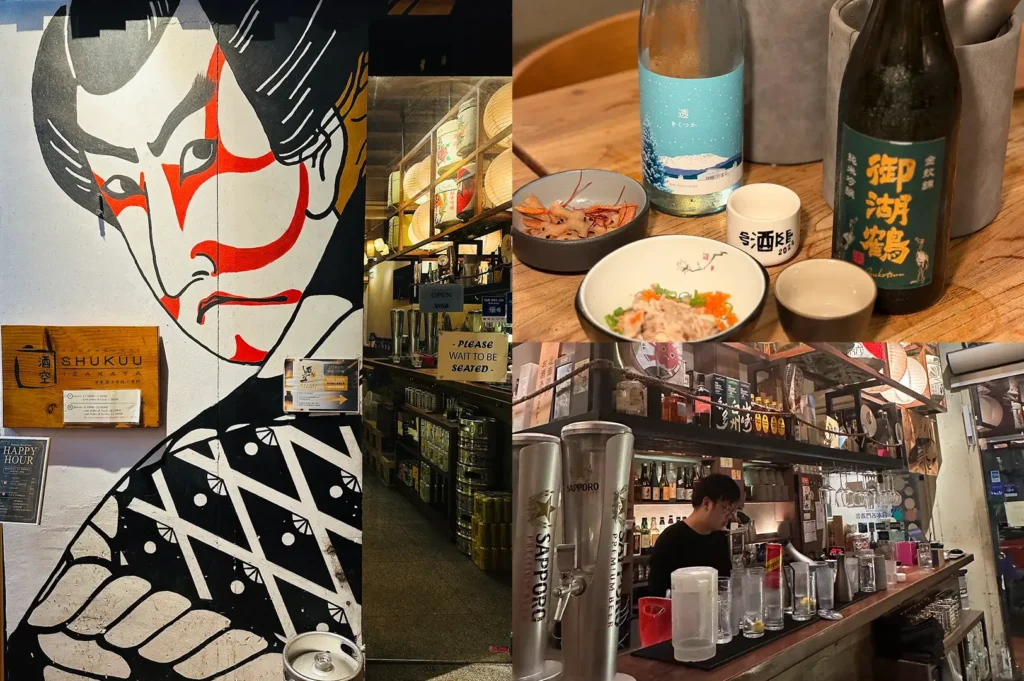
4. Shukuu Izakaya & Sake Bar (Stanley Street): Guided Discovery Among Friends
How to arrive: Telok Ayer MRT, about 3 to 5 minutes on foot
What it costs: Mid-range to premium, especially across several sake selections; current glass and bottle prices need confirming
Not everyone arrives at a sake bar knowing what to ask for. Shukuu Japanese Izakaya & Sake Bar, at 8 Stanley Street, seems to understand this. Its certified in-house sake sommeliers turn the drinks list into a conversation, steering guests toward regional bottles and curated pairings rather than leaving them alone with the menu.
On 26 and 27 September 2026, Shukuu also hosted the SAKE SAKE festival, organised by Mirai Sake Hall, featuring more than 100 sake and Japanese beverage selections, with three-hour sessions advertised from S$65+. That event has passed, and it should not be mistaken for a regular offer. The everyday rhythm is warmer and simpler: fresh sashimi, grilled skewers and fried small plates, with a full room around you.
Who it suits: Beginners, colleagues and friends who value a knowledgeable hand on their first few pours
A quiet consideration: Peak evenings can grow busy and loud, and several sake orders gather into a larger bill.
Worth knowing: Ask the team for contrasting styles shaped by sweetness, acidity, umami and drinking temperature. Dinner runs from 5:30pm, until midnight Monday to Saturday and 11:30pm on Sunday, with last food orders at 10:20pm. Ask whether any tasting events are planned.
5. Suiraku (Neil Road): Temperature, Shochu and the Art of Learning Slowly
How to arrive: Outram Park MRT, about 4 to 6 minutes on foot
What it costs: Premium; the Sake and Shochu Learning Series is S$99 including tax, and the eight-course Kyo-Kaiseki is S$178++, with alcohol pairing extra
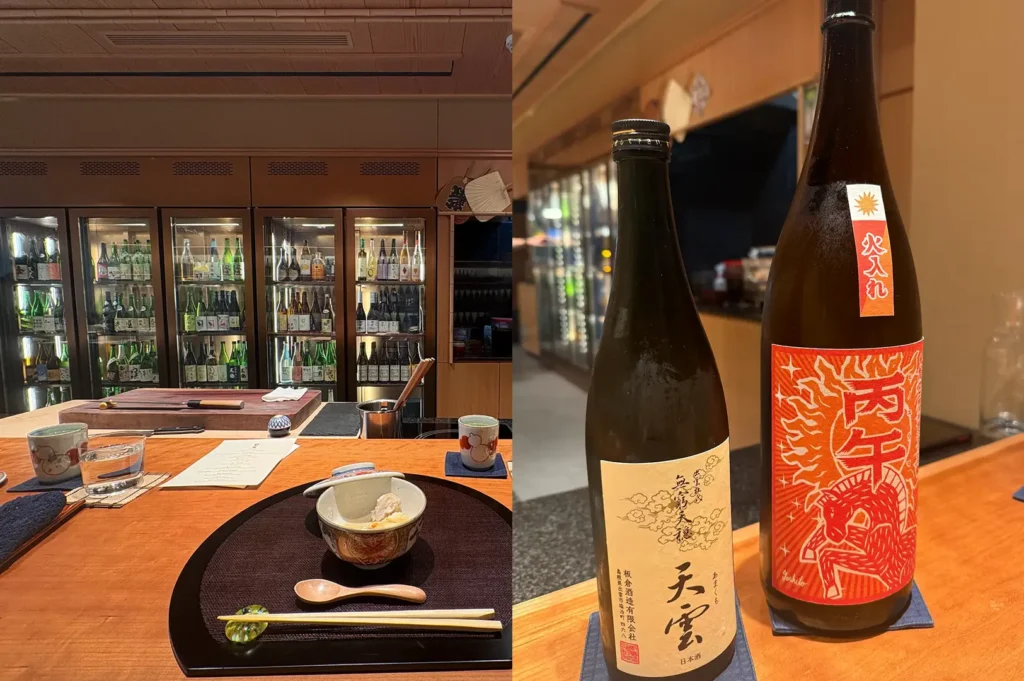
I have always believed that warmth changes sake the way light changes a room. Suiraku, at 73 Neil Road, gives that belief a place to rest. Its collection holds more than 200 sake and shochu selections, served with attention to how each should be poured and paired.
The refinement here is deliberate. The Kyo-Kaiseki must be ordered at least three working days ahead, and the Learning Series sessions, priced at S$99, are scheduled events rather than a standing offer. For those visiting with a particular sake in mind, the staff’s guidance may matter as much as the bottle brought to the table. Customer accounts describe knowledgeable recommendations, seasonal cooking and a comfortable counter. It is a room for listening as much as drinking.
Who it suits: Couples, small groups and anyone who wants to learn Japanese sake and shochu with real guidance
A quiet consideration: It feels comparatively formal, and its courses and sessions require advance planning.
Worth knowing: Ask whether your sake is best chilled, at room temperature or warmed, since not every bottle suits each. Lunch runs from about 12pm to 2pm and dinner from 6pm, Tuesday to Saturday, with closing times that vary.
6. Braveheart Sake Originals (Tanjong Pagar): When Sake Becomes a Cocktail
How to arrive: Tanjong Pagar MRT, about 4 to 5 minutes on foot
What it costs: OpenTable lists a general category of S$40 and under; bar bites have been published at S$12 to S$16
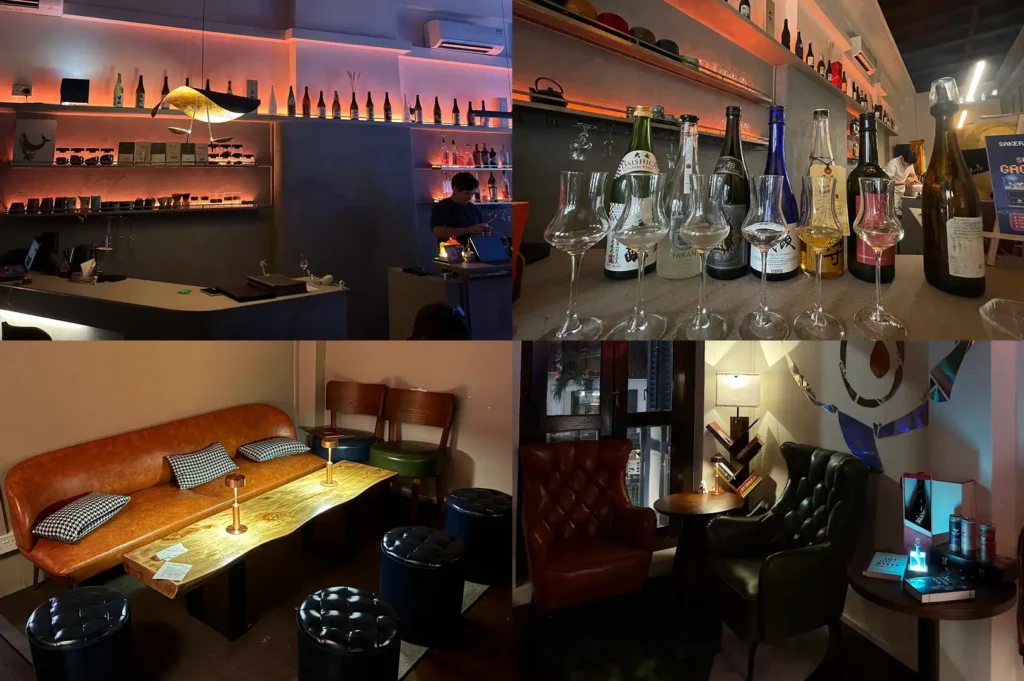
Tradition does not have to stay still. Braveheart Sake Originals, upstairs in a shophouse at 83A Tanjong Pagar Road, imagines sake as the heart of a cocktail. Its programme was shaped by mixologist James Li and sake sommelier Ong Jun Quan, and the result is a gentler doorway for people who have not yet fallen for sake on its own. The Shin Classico illustrates this approach through sake infused with pickled ginger, honeyed ginger liqueur and citrus. Rather than concealing the sake, the combination introduces a brighter, gently spicy character, with sweetness and acidity adding depth to the drink.
Tasting flights, Japanese and Singaporean sake and shochu sit alongside the cocktails. Small plates have included Smoked Duck at S$14, Karaage Chicken at S$16 and Tater Tots with Mentaiko at S$12. Recent drinks coverage speaks of the team’s patient explanations and unexpected combinations.
Who it suits: Cocktail lovers, sake beginners and couples looking for something contemporary
A quiet consideration: The food is limited for a full dinner, and as a newer venue, its review history remains thin.
Worth knowing: Published opening hours differ, so confirm before visiting. Beyond individual pours and flights, Braveheart has also offered private and corporate sake tasting experiences. Ask about current availability and how a particular sake shapes the aroma or texture of a cocktail.
7. MoboMoga (UE Square): An Intimate Counter for Sake Lovers
How to arrive: Fort Canning MRT, about 5 to 8 minutes on foot
What it costs: Mid-range to premium; small plates have been listed from S$8 to S$30
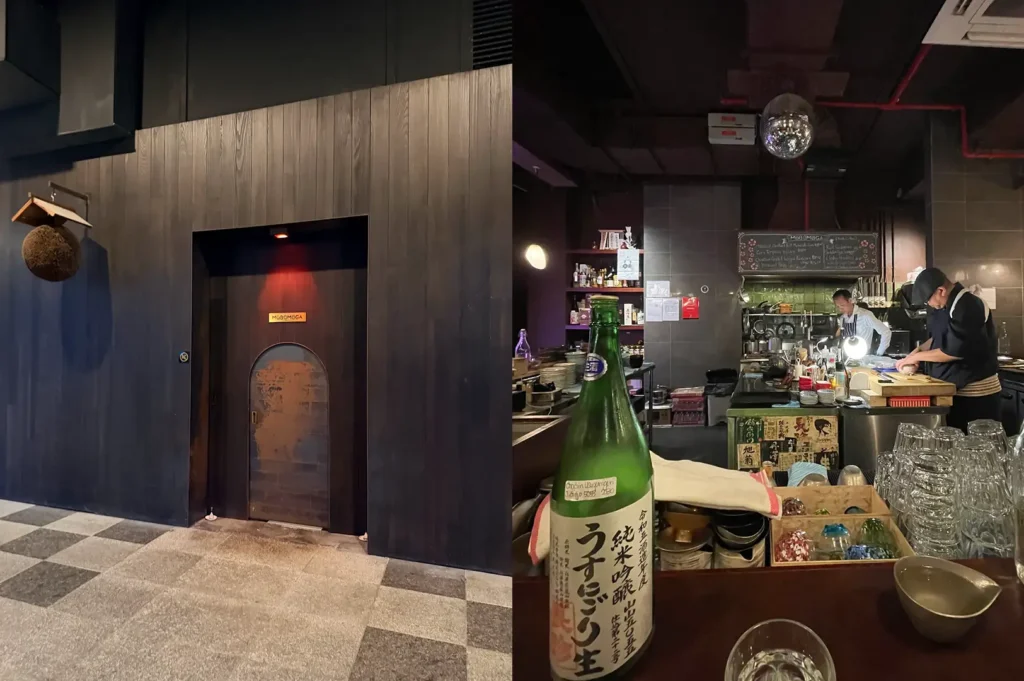
A hidden gem does not have to be difficult to find. Sometimes it is simply a small room that asks little of the evening beyond a good bottle and an unhurried conversation. MoboMoga, at 207 River Valley Road, UE Square River Wing, #01-58, offers that informal intimacy. It is a sake bar first, with a wide selection and food that follows the drink rather than leading it.
Earlier menus listed Edamame at S$8, a Three-Kind Sashimi Assortment at S$16 and Chicken Karaage with Yuzu Pepper at S$12. A Crab Cream Croquette crowned with salmon roe, glistening ikura, was S$18, while sushi rolls reached S$28 to S$30. Diners mention oden, warm welcomes and thoughtful pairing suggestions.
Who it suits: Friends and couples who want an unhurried evening without formality
A quiet consideration: Seating is compact, busy nights grow lively, and the bill rises with each new bottle.
Worth knowing: Chope is not taking bookings, so contact the restaurant directly. It is closed on Sundays, and listed hours vary between 5pm to 11:30pm and 6pm to midnight. Ask which sake complements the day’s oden or sashimi.
The Last Pour
When I think of these seven rooms, I don’t see one kind of evening. I see a flight of rotating craft sake on Beach Road and a regional label poured near the river. I see a cocktail glass upstairs on Tanjong Pagar Road and a cup warmed with intention on Neil Road. Some are for learning, some for lingering, some simply for sitting close to friends.
Perhaps the best sake bars are not the ones with the longest lists. Perhaps they are the ones where someone turns the label toward you and tells you where it came from. In Tokyo, that small gesture always felt like an invitation to stay. Here, too, the bottle tilts, the cup fills, and for a little while the evening holds still.