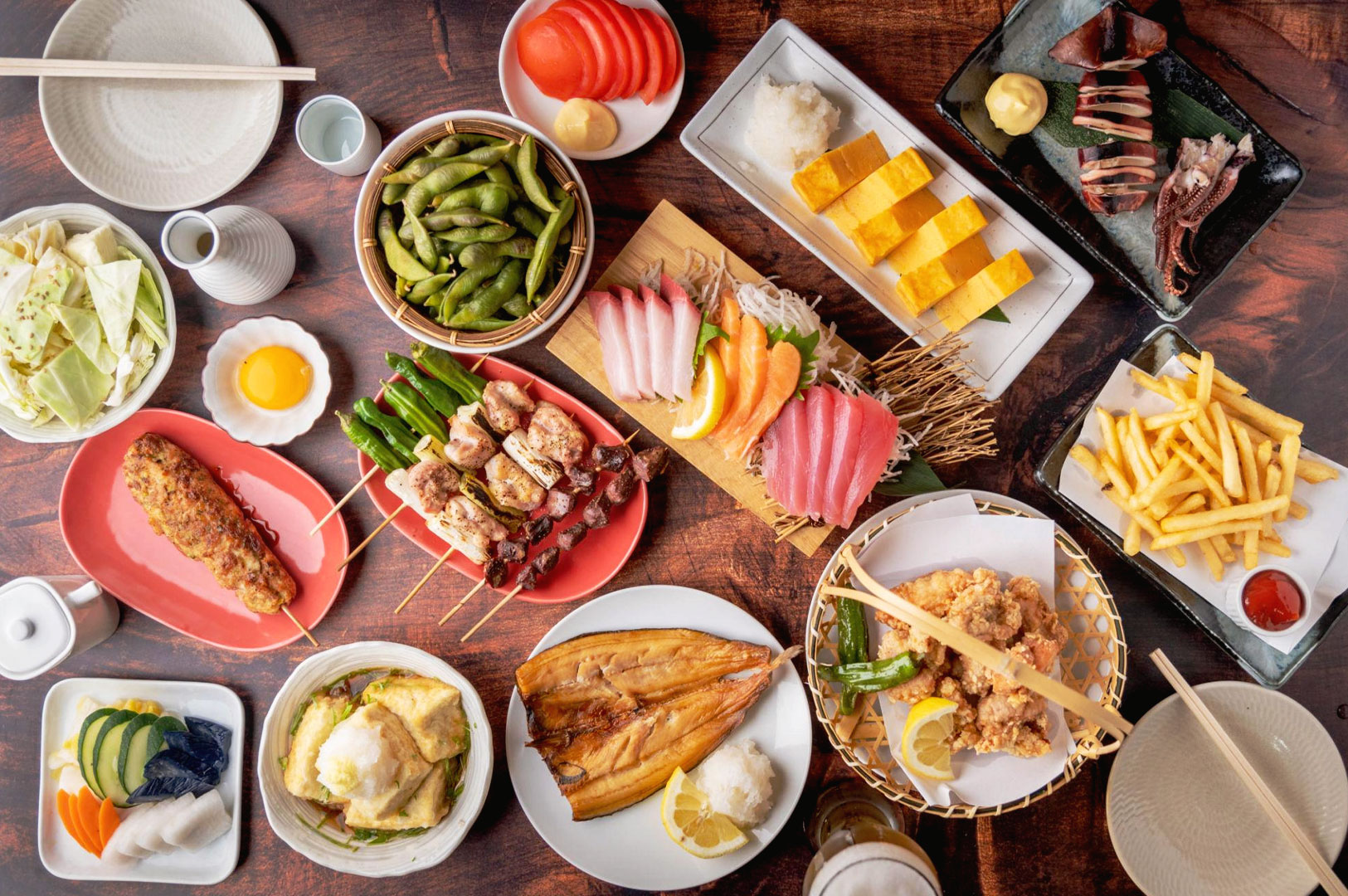
The crowded table is part of the design.
At first, it can feel inconvenient. We sit down, order a few drinks, add some skewers, maybe one fried dish, and suddenly the table already looks full. A plate of karaage takes up one corner. Two highballs claim another. Someone is balancing chopsticks against a soy sauce dish like we are solving a small engineering problem.
It is easy to think the table is simply too small.
But in many izakayas, that limited space serves a purpose.
A small table changes how we order, how long we stay, and how closely we interact with the people around us. It also explains why izakaya chefs dislike huge first orders — too much food arriving at once disrupts the pacing that small tables are designed to protect.
It is not always accidental. In many cases, it supports the rhythm of the entire meal.
Small Tables Prevent Over-Ordering
One of the most practical effects of a small izakaya table is that it limits how much food can arrive at once.
This matters more than diners realize.
Izakaya dining works best in waves. A few dishes arrive, the table eats, drinks, and then orders again. When the table is too large, it becomes easier to over-order early. Plates pile up, hot dishes cool down, and the pacing becomes harder to manage.
A smaller table naturally slows that behavior.
It reminds us to order just enough for the moment. Not the entire menu. Not every recommended dish. Just what the table can comfortably handle.
In that sense, the table quietly teaches better izakaya pacing.
It Supports Faster, Cleaner Table Rhythm
Small tables also help with service flow.
When dishes arrive in smaller rounds, staff can clear plates more quickly and reset the table without interrupting the meal. The surface stays active but not overloaded.
This creates a rhythm that suits izakaya dining:
- order
- eat
- clear
- drink
- order again
That rhythm keeps the meal moving without making it feel rushed.
It also prevents one common problem: food congestion. When too many plates arrive at once, diners stop enjoying the sequence and start managing space. A properly sized table helps avoid that.
The Closeness Is Part of the Atmosphere
There is also a social reason.
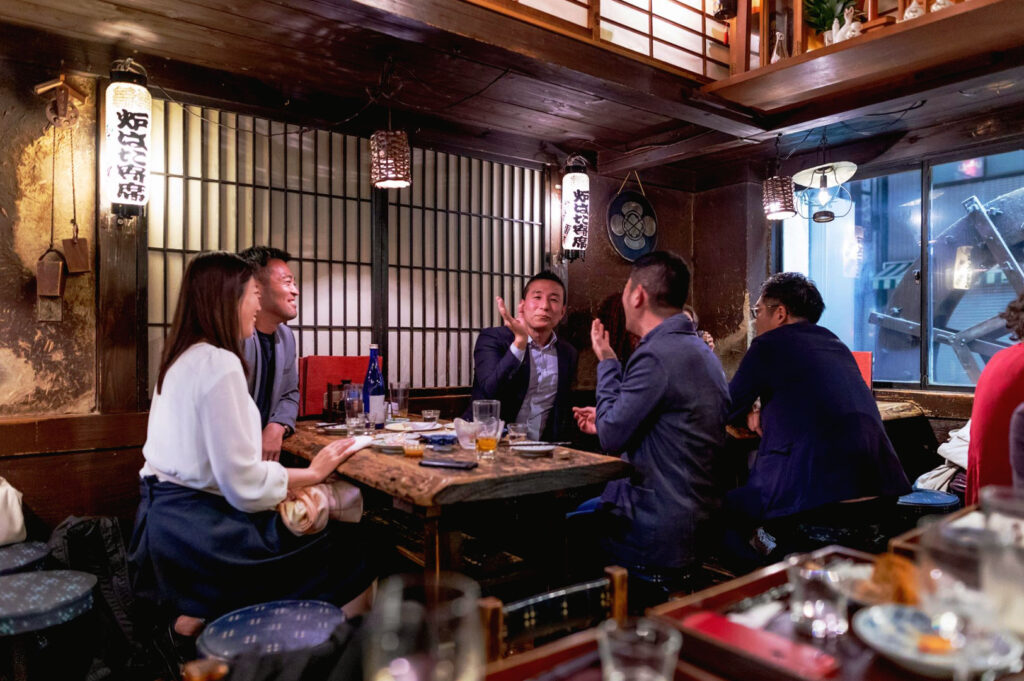
Izakayas are not designed to feel distant or overly formal. Tables are often compact, seats are close, and conversations happen within easy reach.
This closeness changes the energy of the meal.
People share more easily. Plates move across the table without ceremony. Drinks are refilled, skewers are split, and decisions become more collective.
The space encourages interaction.
This is especially important because izakaya food is built around sharing. Small dishes make more sense when the table itself brings people closer together.
Visual Fullness Changes How We Feel
A small table also creates a subtle psychological effect.
When three or four dishes fill most of the surface, the meal feels abundant even if the quantity is moderate. The table looks lively. The experience feels active.
This visual fullness matters.
It makes the meal feel generous without requiring excessive ordering. It also supports the feeling that something is always happening, even when the actual number of dishes is controlled.
In a larger space, the same amount of food might look sparse.
On a small izakaya table, it feels complete.
Small Does Not Mean Uncomfortable
Of course, there is a difference between compact and cramped.
A good izakaya table should still allow diners to eat comfortably. The point is not to make the meal difficult. The point is to keep the table dynamic.
When done well, the small table creates just enough pressure to maintain rhythm. It discourages over-ordering, supports sharing, and keeps the group connected.
The table becomes part of the experience rather than just a surface for plates.
The Table Is Teaching Us How to Eat
The next time we sit at a small izakaya table, it is worth noticing what it changes.
We may order less at first.
We may share more naturally.
We may wait before adding another round.
That is the design working.
A small table does not just hold the meal. It shapes it.
And in an izakaya, where timing, conversation, and pacing matter as much as the food itself, that small surface may be doing more than we think.