The tuna arrived and our table went quiet for a second.
Not because it was elegant, it wasn’t exactly, but because someone had taken a tuna collar and treated it like a rack of ribs, roasted until the edges caught and the flesh turned rich and sticky. I remember reaching in with my chopsticks, someone else already halfway through another beer, and that was it: I felt like I understood the whole kaikaya restaurant in a single dish.
Kaikaya by the Sea doesn’t do hushed reverence. It does generous, fun, seafood-forward chaos, and I found myself completely on board with it.
So this is my honest read after a night of sharing plates and ordering in rounds. If you know what Kaikaya is before you book, you’ll have a brilliant time. If you don’t, you might walk in expecting the wrong thing.
Walking In: Finding Kaikaya by the Sea Near Shinsen Station
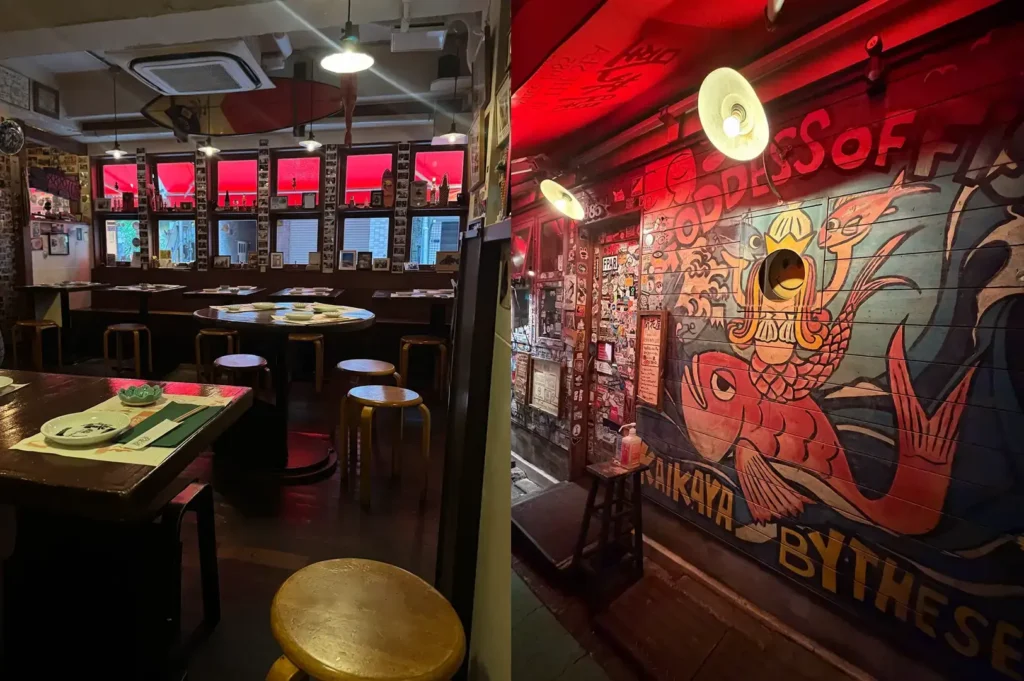
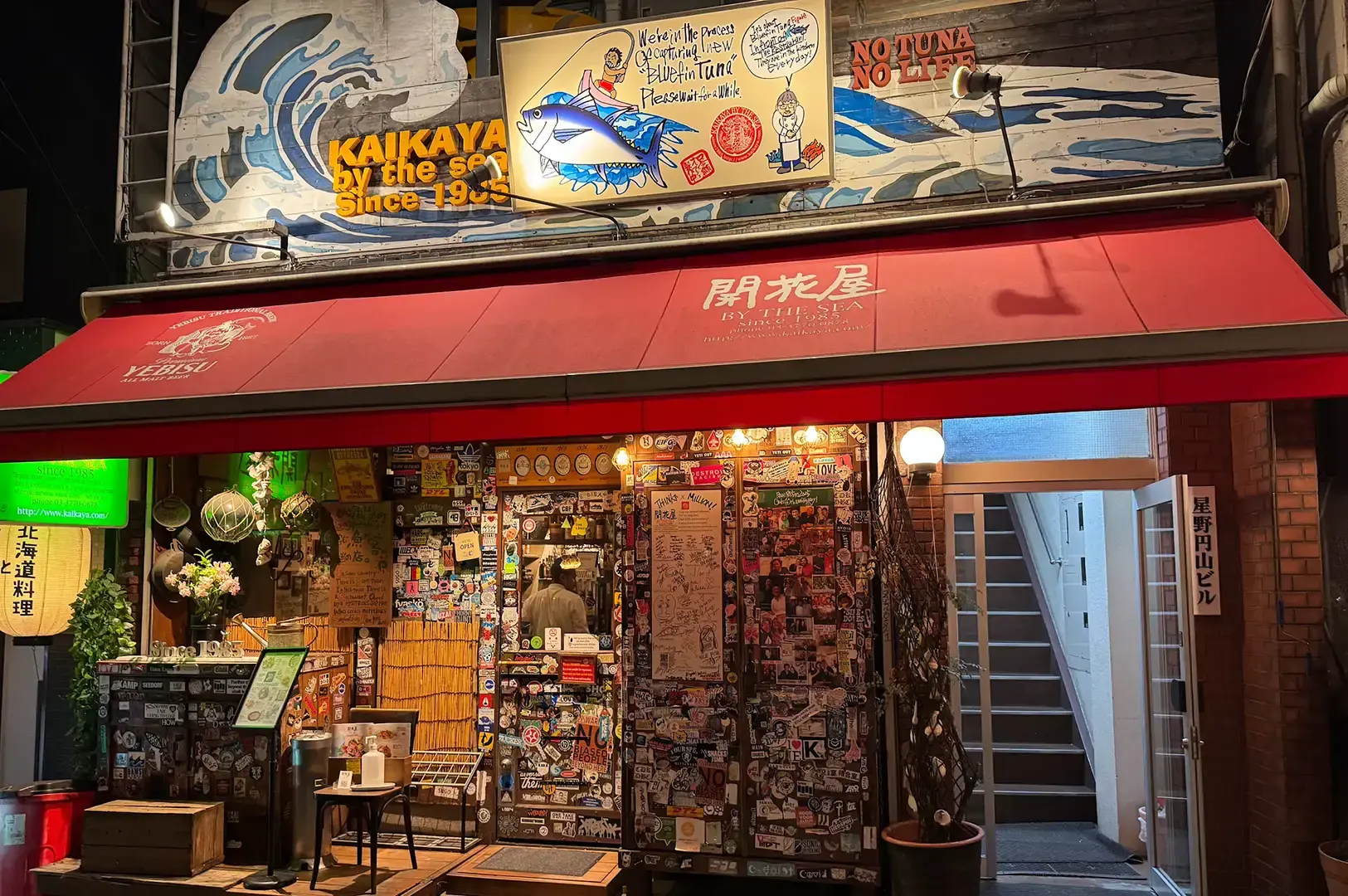
Kaikaya by the Sea, also known as 開花 屋, sits in Maruyamacho, tucked into that quieter pocket of Shibuya where the noise of the crossing starts to fade. I walked from Shinsen Station in a couple of minutes, though it’s also only about ten minutes from Shibuya Station depending on your exit. I’d say take the train. This isn’t a driving and parking part of town, and honestly, you’ll want to drink.
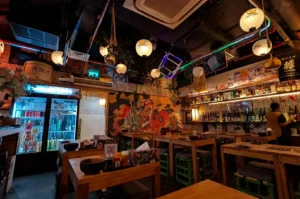
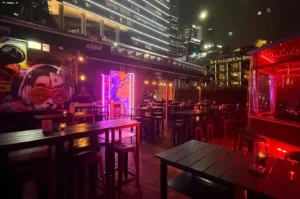
Inside, the mood hits immediately: warm, casual, and unmistakably social. It’s colourful, sea-inspired, more seafood bistro than minimalist Japanese room. The Japanese have a word for this kind of atmosphere, waiwai gayagaya, noisy and cheerful, and that’s exactly what it felt like.
It’s a lively atmosphere bordering on loud, especially once the group tables get going.
I realised quickly this is a place for sharing. I was glad I came with people who were happy to pass plates around and order in waves. If I’d come alone expecting a quiet counter meal, I think I would’ve felt slightly out of sync with the surroundings.
There’s also a two-hour seating limit, which quietly sets the rhythm of the evening whether you notice it or not.
The Food: Fresh Fish and Creative Dishes from Sagami Bay
Kaikaya by the Sea’s menu is built around seafood supplied fresh straight from Sagami Bay, brought in daily by fishermen with whom both the owner and chef have a close network developed over many years. The food is seafood-based but not strictly traditional, sometimes European, sometimes playful, very much “now” Japanese food. That makes Kaikaya an interesting counterpoint to many of the places in my best izakaya Tokyo line-up, where the drinking-night format can range from old-school yakitori counters to quieter sake-led rooms.
And hat framing actually helped me understand what I was about to eat: generous, creative, and built for sharing rather than precision.
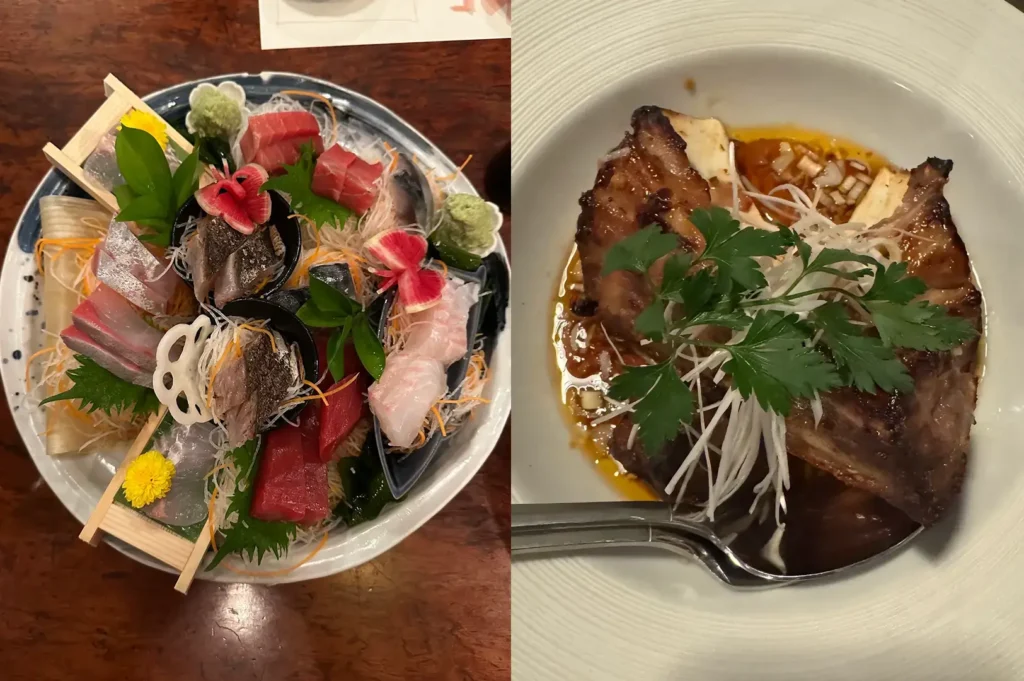
The first thing I’d tell anyone to order is the Maguro no Kama Spareribs (around ¥2,800). This dish, featuring the fatty tuna collar, defines the place for me. A big tuna collar, roasted until the edges caramelise and the flesh turns almost sticky rich, served in a way that invites hands, chopsticks, and immediate conversation.
It lands at the table with a bit of drama, and I remember thinking: this is the point of coming here.
If I went back, I’d order it again without hesitation.
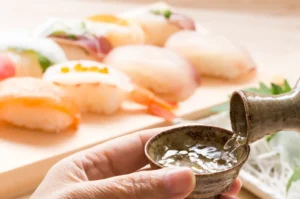
Next came the Assorted Sashimi Mori-Awase of seven kinds. We sized it for the table, and it worked perfectly as a shared opening plate. The fresh fish was genuinely fresh, the kind that reminds you why you came to a seafood restaurant in Japan in the first place. Salmon roe added a pop of flavor, and the sashimi was served alongside a light sesame sauce that complemented the fish beautifully.
But I had to adjust my expectations. This isn’t a quiet sushi counter moment. It’s colourful, generous izakaya sashimi, meant to be passed around while the table settles and the drinks start flowing.
The Prawn with Prawn Sauce was where things shifted slightly more playful. Deep fried prawn with a rich prawn tomalley sauce, crispy, savoury, and a little indulgent in the best way.
This was the dish that felt furthest from tradition and closest to a modern seafood bistro. I liked it more than I expected to, though I was glad we didn’t over order it, it’s rich, and it builds quickly.
From there, the menu opens out: Crab Shell Gratin, Fresh Fish Carpaccio, Otoro Sushi, Wagyu Teppan Sukiyaki, Half Moon Tofu, and Wagyu Beef dishes. It’s seafood first, but not seafood only, which I appreciated in a mixed group.
One honest note I kept thinking about during the meal: the pacing can feel brisk. The room runs on a system, dishes arrive steadily, and the two-hour limit means the evening doesn’t really slow down.
I could see how, if I’d ordered too much, it would have tipped from “generous” into “too much, too fast.”
The Service: Warm, Energetic, and Attentive at Kaikaya Restaurant
The service was one of the strongest parts of the experience for me.
The staff were warm, energetic, and clearly used to international diners. I noticed how easily they made recommendations, and how comfortable they were adjusting things, like swapping a beef dish for a vegetarian option at our table without any fuss. They also explained the seasonal dessert platter options at the end of the meal, which sounded like a perfect way to finish.
For me, especially early in a Tokyo trip, that kind of English-friendly ease matters. It makes Kaikaya far more approachable than the tiny, Japanese-only counters that can feel intimidating at first.
The only trade off is the rhythm. It’s attentive, yes, but it moves with the pace of a busy restaurant that knows it has to turn tables and includes a service charge.
A Few Things Worth Knowing Before You Go to 開花 屋
Kaikaya by the Sea is at 23-7 Maruyamacho, Shibuya-ku, Tokyo, about 2 minutes from Shinsen Station and roughly 8–11 minutes from Shibuya Station. I’d strongly recommend public transport.
Dinner runs 5:00pm to 10:30pm, with last food orders around 9:30pm and drinks around 10:00pm. If I went again, I’d book an early weekday slot, just after opening, before the lively atmosphere reaches full energy.
Reservations are essential, and they’re tied to course orders. The cancellation policy is strict: around ¥8,000 per person on the day, and ¥5,000 per person the day before or two days prior. It’s worth locking in numbers properly before you commit.
Budget-wise, I’d expect around ¥6,000 to ¥10,000+ per person, depending on course and drinks.
And if I had to choose, I’d always go for a group table. Kaikaya really comes alive when there are enough people to keep the plates moving.
What Stayed With Me After Dinner at Kaikaya Restaurant
Who I’d bring here:
First-time Tokyo visitors who want seafood without the stress of navigating a tiny counter, groups who naturally share everything, and anyone who prefers their Japanese dining a little playful rather than strictly traditional.When I’d choose somewhere quieter:
For a hushed date, a solo counter meal, or one of those evenings where I want to linger slowly over sake without watching the clock. Kaikaya works best when the table matches the room’s energy.What I’d order again without thinking:
The Maguro no Kama Spareribs first, then the Assorted Sashimi Mori-Awase of seven kinds and the Prawn with Prawn Sauce, with cold beer somewhere in between.What I’d do differently next time:
I’d book earlier in the evening and slow myself down. The portions and pacing have a way of catching up with you if you’re not careful.
What I’d Remember About Kaikaya by the Sea
Kaikaya by the Sea, to me, is a lively Shibuya seafood bistro wearing izakaya clothes. Once I met it on those terms, the evening made perfect sense.
The tuna collar is still the dish I think about first, but what stayed with me just as clearly was the feeling of the place: plates moving across the table, people talking over one another, another drink appearing before anyone really asked for it.
It’s busy, international, and more structured than the small neighbourhood izakayas I tend to romanticise. There’s a clock on the table, even if you can’t see it.
But not every Tokyo dinner needs to be quiet or hidden.
Sometimes I want seafood piled in the middle, conversation spilling over itself, and a table that gets steadily messier as the night goes on.
Kaikaya understands that kind of evening very well.