Looking for the best sushi Singapore has to offer within a relaxed, drink-friendly setting? This guide focuses on Singapore’s vibrant izakaya culture, not conveyor-belt chains, sushi delivery, or formal omakase set menu dining. Here, sushi may start as an appetiser before the table moves into sashimi, grilled dishes, tempura, noodles, sake, and dessert.
We have narrowed the shortlist to three venues that each serve strong sushi while remaining social, casual, and sake-friendly. They differ sharply from one another: one is modern and creative, one is broad and approachable, and one is traditional and sake-led.
Across the three sushi restaurants, you will find creative sushi rolls, assorted sashimi, seasonal nigiri, donburi bowls, tempura, noodles, premium sashimi, and plenty of sake. Below, we cover location, signature items, pricing, and who each restaurant suits best.
1. Kinki Restaurant + Bar (Marina Bay): Fresh Sushi With a Modern Twist
Nearest station: Raffles Place, approximately 4 minutes’ walk
Typical spend: $$
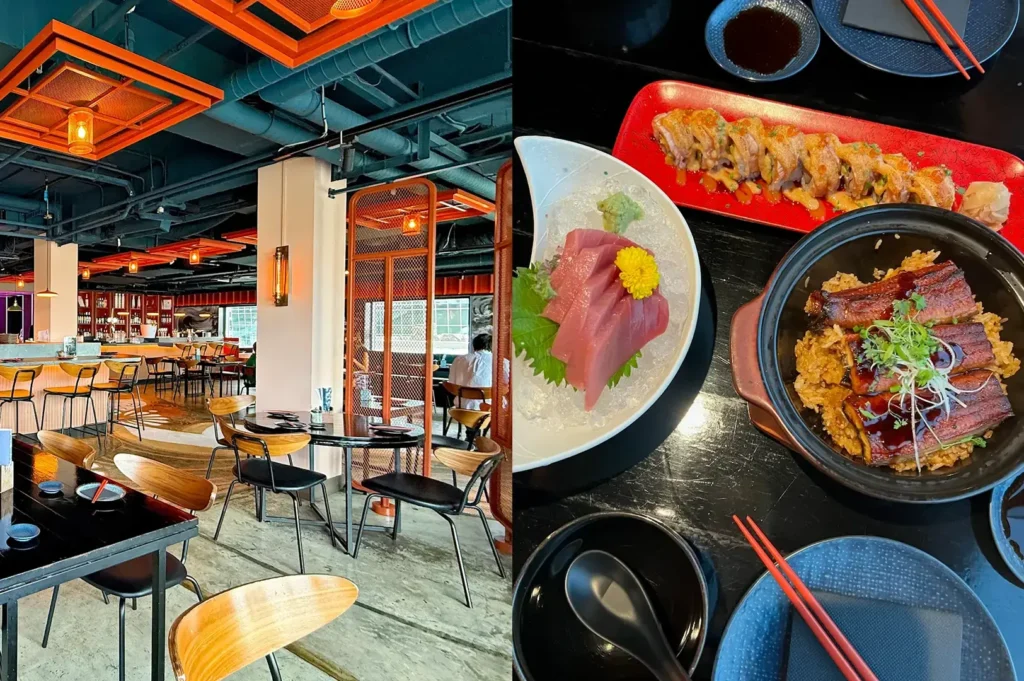
Kinki sits above the waterfront at Customs House and positions itself as a modern Japanese restaurant and bar rather than a traditional sushi counter.
The restaurant describes its philosophy as a deliberate break from conventional Japanese dining, combining traditional and contemporary dishes. For a sushi-focused guide, this matters: sushi is a substantial part of Kinki’s identity, but the experience stays social, drink-friendly, and izakaya-adjacent.
The sushi here leans creative rather than minimalist. Instead of concentrating only on Edomae-style nigiri, the menu features contemporary maki with seared elements, richer sauces, and bolder toppings. Signature rolls include the AC/DC Dynamite and the Golden Age, the latter built around seared salmon and mentaiko.
That seared style gives some dishes an aburi sushi character, introducing warmth and smoke while keeping the fish central.
Around these sit sashimi, sushi and sashimi platters, donburi bowls, and Japanese mains, so a table can move easily between raw fish, cooked dishes, cocktails, and sake.
The clearest fixed-price reference is the Bottomless Brunch at $68++ per person, which includes two hours of unlimited sashimi, signature maki, and selected mains. An optional two-hour free-flow alcohol add-on costs a further $38++ per person.
For nights at home, Kinki also offers islandwide sushi delivery, including maki rolls, sushi and sashimi platters, and donburi.
It runs on Saturdays and public holidays, with seatings at 11:30am and 1:45pm, and is the most efficient way to sample a broad spread of fresh sushi, sashimi, and Japanese food in one sitting.
Reservations are required for the Bottomless Brunch.
Best suited to: Celebrations, casual dates, and groups who want creative sushi with cocktails and a Marina Bay setting.
Less suitable for: You want a quiet dinner or strictly traditional nigiri.
Planning note: Order in sequence: signature maki, then sashimi, then a Japanese main, followed by rooftop drinks. Note the smart-casual dress code, which excludes singlets and flip-flops.
2. EN Dining (Tanjong Pagar): Affordable Sushi and Fresh Sashimi With Broad Variety
Nearest station: Tanjong Pagar, a few minutes’ walk to Capital Tower
Typical spend: $–$$
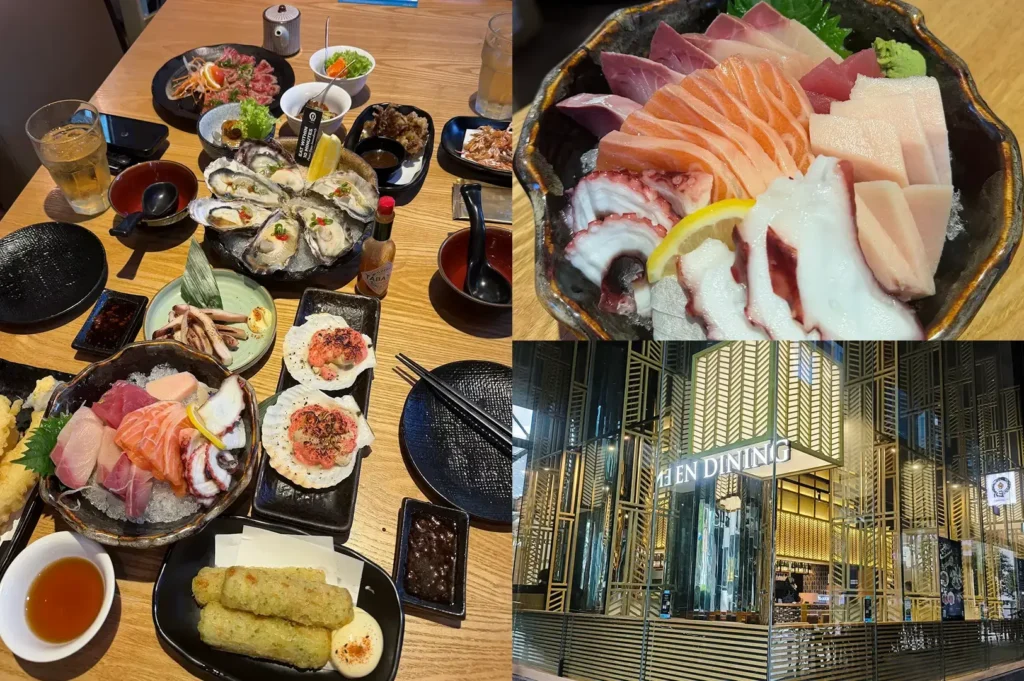
EN Dining describes itself as a Japanese restaurant and bar with more than two decades in Singapore, tracing its roots to En Japanese Dining Bar, established in 2001.
Its emphasis spans Japanese food, Okinawan cuisine, sake, beer, highballs, and shochu, and the restaurant states that its ingredients are mainly imported fresh from Japan on a regular basis.
Fresh seafood is central to that range, alongside meat and cooked Japanese dishes. The current menu also includes Soft Shell Crab Karaage for diners who want something fried between sashimi plates.
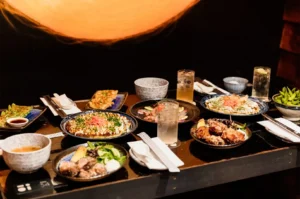
Rather than committing to an omakase format, one table can order sushi, maki, tempura, donburi bowls, noodles, meat dishes, and Okinawan plates together.
That dishes range is the real advantage. It works especially well for mixed groups where one diner wants fresh sashimi, another wants tempura, and someone else would rather have noodles or cooked Japanese dishes.
For a first, sushi-oriented visit, the strongest verified choice is the EN Dining Signature Set at $38.
It combines six sashimi varieties, toro, maguro, salmon, buri, tai, and mekajiki, with kappa maki, negitoro, marinated ikura, and chawanmushi, giving you a much broader read on ingredient quality than ordering a single fish.
Diners who specifically want salmon can opt for the Hokkaido Ikura Salmon Don Set at $28, which layers salmon sashimi and roe over sushi rice, while the Sashimi & Assorted Tempura Set at $32 pairs with tempura and inaniwa udon.
Lunch sushi and sashimi sets generally sit in the $28–$38++ range, making this the most affordable sushi entry on the list.
Opening hours are Monday to Saturday, 11am–10pm, with a Saturday break from 3–5:30pm; the restaurant is closed on Sundays and public holidays.
Reservations are recommended for dinner, Friday evenings, and groups, and the buffet operates on a 90-minute dining period with a minimum of two diners.
Reported drawbacks include small tables and occasional inconsistency in buffet standards.
Best suited to: CBD lunches, colleagues, and mixed groups with different Japanese-food preferences.
Less suitable for: You want an intimate room or a single-focus sushi counter.
Planning note: Visit at weekday lunch and order the $38 Signature Set. Six sashimi varieties plus maki, negitoro, and ikura give the clearest picture of the kitchen.
3. Suiraku (Neil Road): Premium Sashimi, Seasonal Nigiri and Serious Sake
Nearest station: Outram Park, approximately 316 metres; Tanjong Pagar, approximately 504 metres
Typical spend: $$$
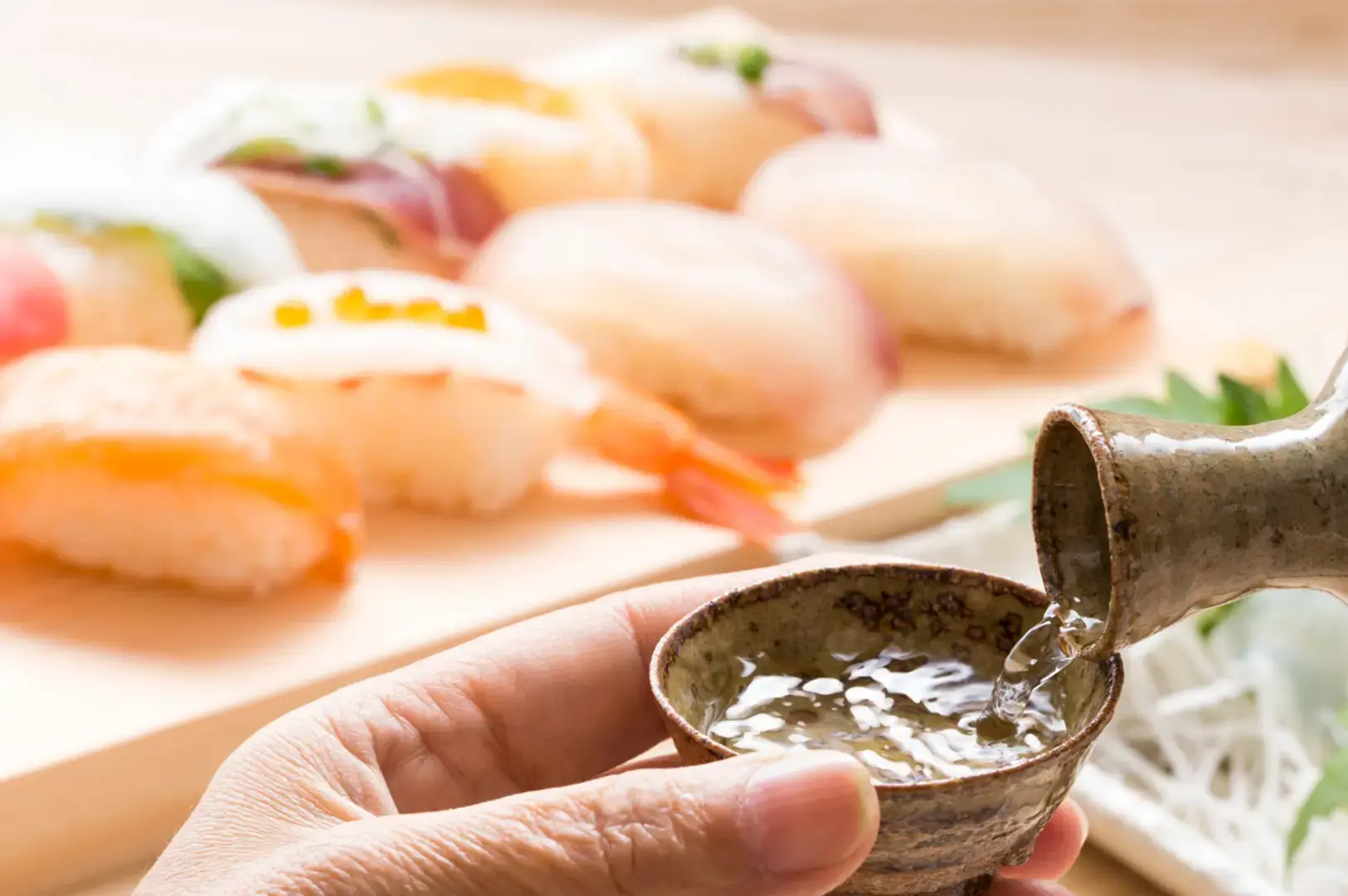
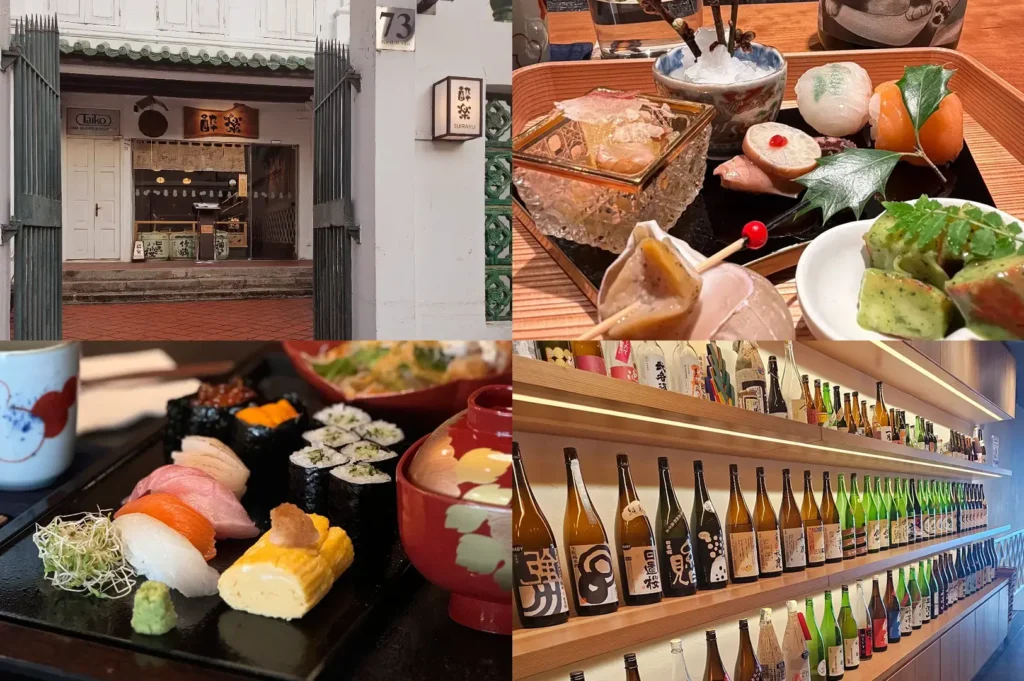
Suiraku is the clearest true izakaya of the three, described as a polished venue that leans toward an upscale counter, with a strong emphasis on sake and shochu.
The kitchen is built around Chef Jing’s Kyo-Kaiseki background, a Kyoto style of seasonal, multi-course Japanese cuisine, and the drinks programme is the standout differentiator, with more than 200 sake and shochu selections and specialist staff to guide diners between them.
We include Suiraku to illustrate an important point: quality sushi in an izakaya context does not always mean a large maki menu.
Suiraku does not operate a permanent roster of sushi rolls comparable to Kinki. Instead, nigiri sushi appears seasonally.
For example, its Wild Maguro Festival featured wild tuna from Shiogama, offered as nigiri and other maguro dishes.
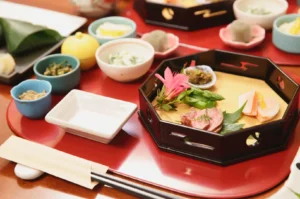
The broader programme centres on sashimi, seasonal fish, and traditional Japanese preparations rooted in kaiseki technique. The appeal here is the combination of seasonal ingredients, refined cooking, premium sashimi, nigiri when featured, and serious sake pairing, rather than volume or variety of rolls.
This is also the venue where premium ingredients and seasonal availability matter most. Rather than chasing a fixed list of rolls, ask what fish is available that day and let the kitchen guide the meal around it.
The signature premium option is the Kyo-Kaiseki Course at $178++, an eight-course seasonal menu that must be pre-ordered at least three working days in advance, with an optional alcohol pairing.
This is a splurge, and reservations are essential.
Opening hours are Tuesday to Saturday, 12–2pm and 6–10pm, with dinner the strongest fit for the full seasonal and sake experience; Monday operation varies, so it is worth confirming before visiting.
The main limitation is structural: this is not the venue for diners expecting dozens of permanent sushi rolls.
Best suited to: Sake enthusiasts, couples, and diners who prefer seasonal nigiri and traditional Japanese cooking over large roll menus.
Less suitable for: You want an extensive, permanent sushi-roll selection or a casual, low-cost meal.
Planning note: Ask about the current seasonal fish and whether nigiri is being served, then defer to the sake team. The rotating seasonal bottles are the highlight.
Fresh Seafood and Japanese Food Beyond Sushi
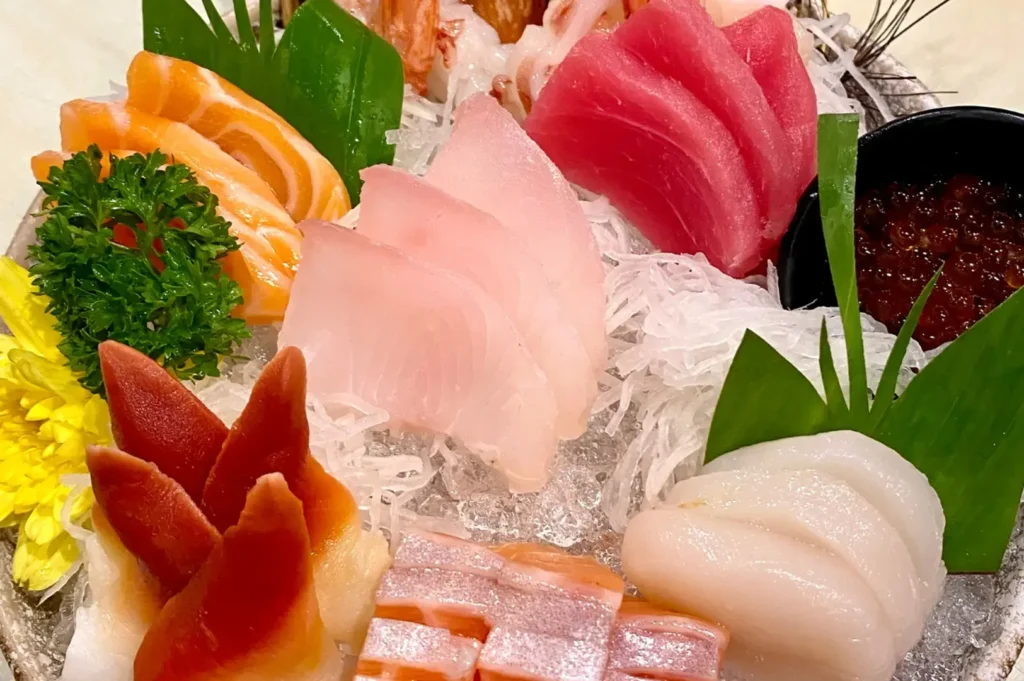
These are not single-focus sushi bars. Kinki adds Japanese mains, EN Dining covers tempura, rice, meat and noodles, while Suiraku moves toward seasonal kaiseki and sake.
If raw fish matters more than rolls, our best sashimi Singapore guide goes deeper into izakayas where freshness, seasonal seafood, and sake shape the meal.
Affordable Sushi, Not Cheap Sushi
Price is one of the clearest ways to distinguish the three.
EN Dining is the natural pick if you’re looking for affordable sushi within a full-service restaurant. Its lunch sets give you maki, tempura and rice without moving into omakase pricing.
Kinki sits in the middle. Its Bottomless Brunch costs more, but it gives groups a chance to sample multiple rolls and sashimi dishes in one meal.
Suiraku is the premium sushi and seasonal end of the spectrum. It is the place to splurge, especially if sake pairing and premium ingredients matter as much as the fish itself.
None of these should be confused with cheap sushi chains built around speed and volume. They are full restaurants designed for a longer meal.
Comparing the Three Sushi Spots
Each venue occupies a distinct position, which makes choosing between them straightforward once you know your priority:
Kinki: modern, creative, and energetic. The best fit for creative maki, sushi platters, and drinks in a lively Marina Bay setting near Customs House.
EN Dining: broad, casual, and accessible. The best fit for affordable sushi, and mixed groups who also want tempura, noodles, or wagyu near Tanjong Pagar.
Suiraku: intimate, traditional, and sake-led. The best fit for seasonal nigiri, premium sashimi, and serious sake pairing.
Pricing follows the same pattern.
EN Dining is the most approachable, with lunch sets from $28–$38++. Kinki sits in the upper-mid range, anchored by its $68++ Bottomless Brunch. Suiraku is the premium option, with its $178++ Kyo-Kaiseki Course.
Which Sushi Spot Should You Choose for the Best Japanese Restaurants?
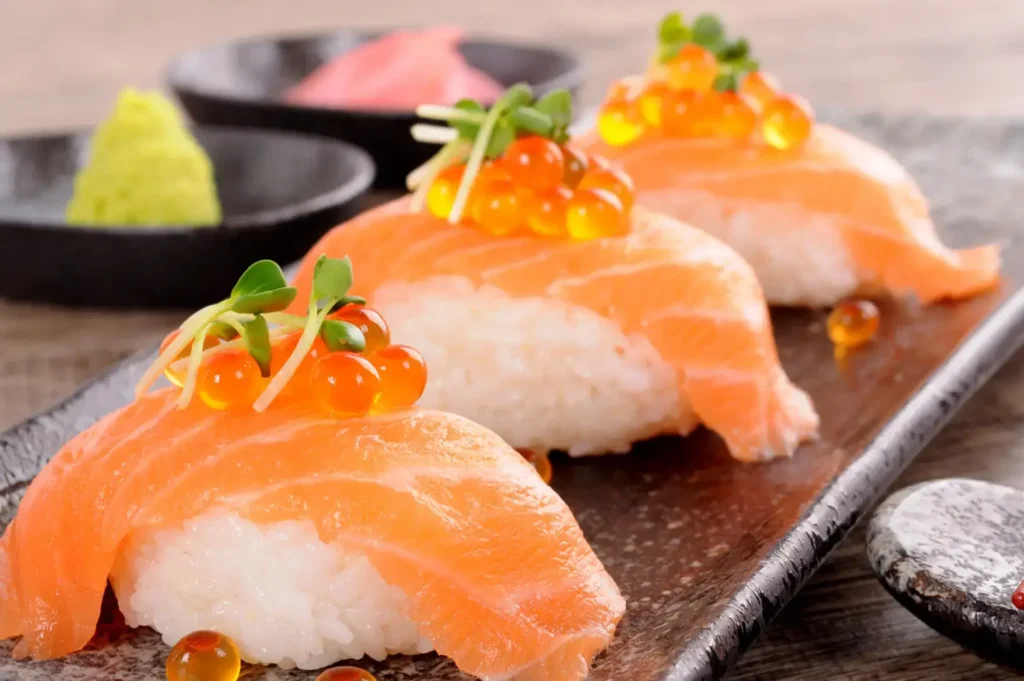
For readers searching for the best sushi Singapore offers within a genuine izakaya setting, these three restaurants cover the practical range of needs.
If you want creative sushi rolls and a social, drink-forward evening, book Kinki.
If you want broad Japanese variety at an approachable price, EN Dining is the reliable all-rounder.
If you want seasonal nigiri, premium sashimi, and an exceptional sake list, reserve ahead at Suiraku.
To decide quickly, match the venue to your occasion: Kinki for celebrations and views, EN Dining for casual group lunches, and Suiraku for a refined, sake-driven dinner.
Reservations are advisable at all three, and confirming current hours and seasonal offerings before you visit will ensure the experience matches your expectations.
Best Sushi Singapore: Common Questions
What is an izakaya-style sushi restaurant?
An izakaya is a casual Japanese establishment centred on drinks and shared plates. An izakaya-style sushi restaurant serves sushi, sashimi, or seasonal nigiri as part of a broader menu enjoyed alongside sake and other Japanese dishes rather than as a formal, single-focus tasting counter.
Which of these offers the most affordable sushi?
EN Dining is the most affordable, with lunch sushi and sashimi sets generally between $28 and $38++, including the $38 Signature Set and the $28 Hokkaido Ikura Salmon Don Set.
Which restaurant is best for fresh sashimi?
All three serve fresh sashimi, but they fit different priorities. EN Dining is the most accessible for assorted sashimi, Kinki combines sashimi with creative rolls, and Suiraku is the strongest fit for diners seeking seasonal, premium sashimi.
Which venue is best for sake pairing?
Suiraku, with more than 200 sake and shochu selections and specialist staff who guide diners through seasonal pairings.
Which one is best for sushi lovers who prefer rolls?
Kinki is the clearest choice. Its menu places more emphasis on creative maki and contemporary sushi rolls, while Suiraku is more focused on seasonal fish, nigiri and sashimi.
Do these restaurants require reservations?
Reservations are recommended at all three. They are required for Kinki’s Bottomless Brunch and essential at Suiraku, where the $178++ Kyo-Kaiseki Course must be pre-ordered at least three working days in advance.