Condiments are not always a rescue mission.
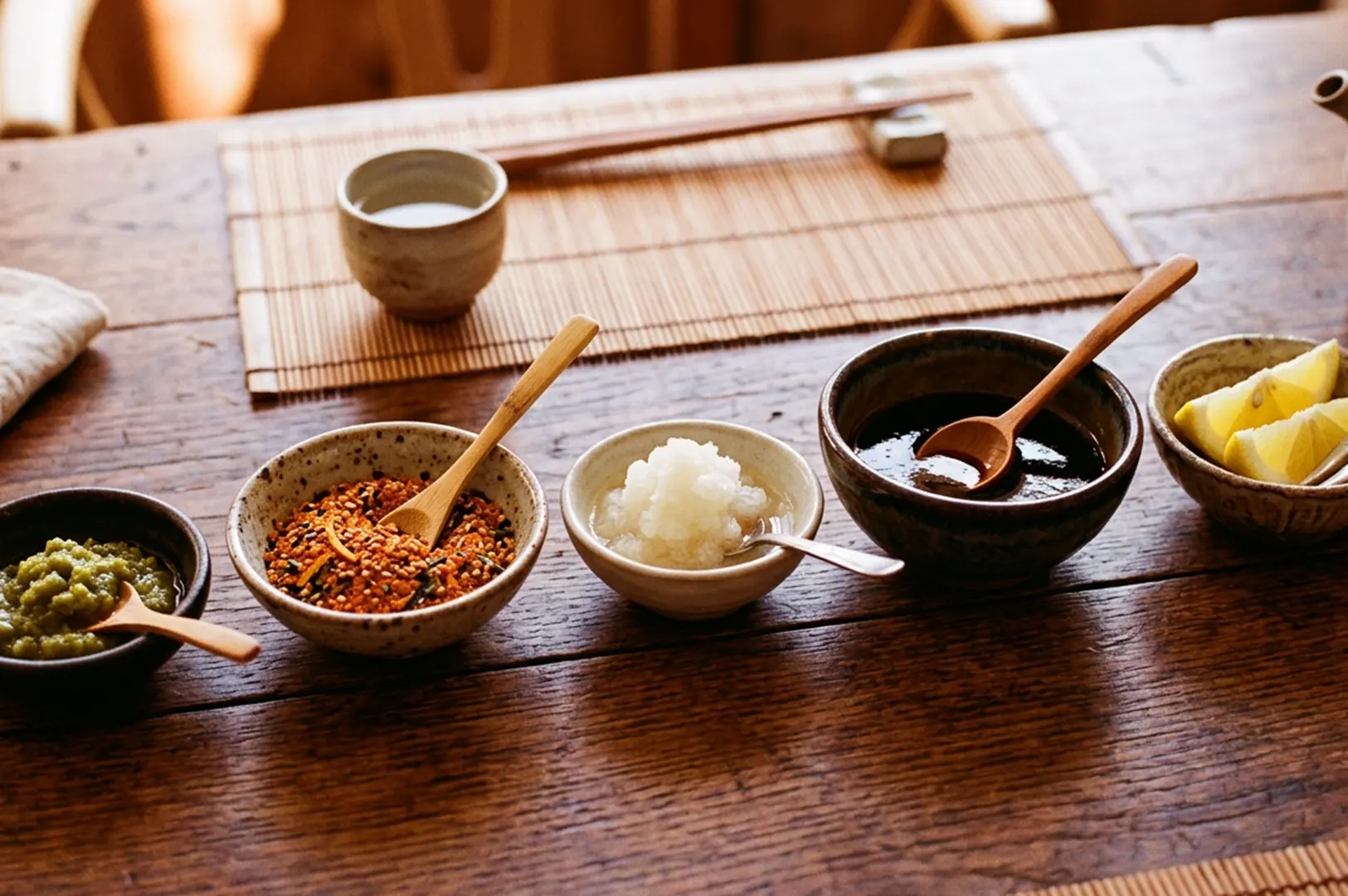
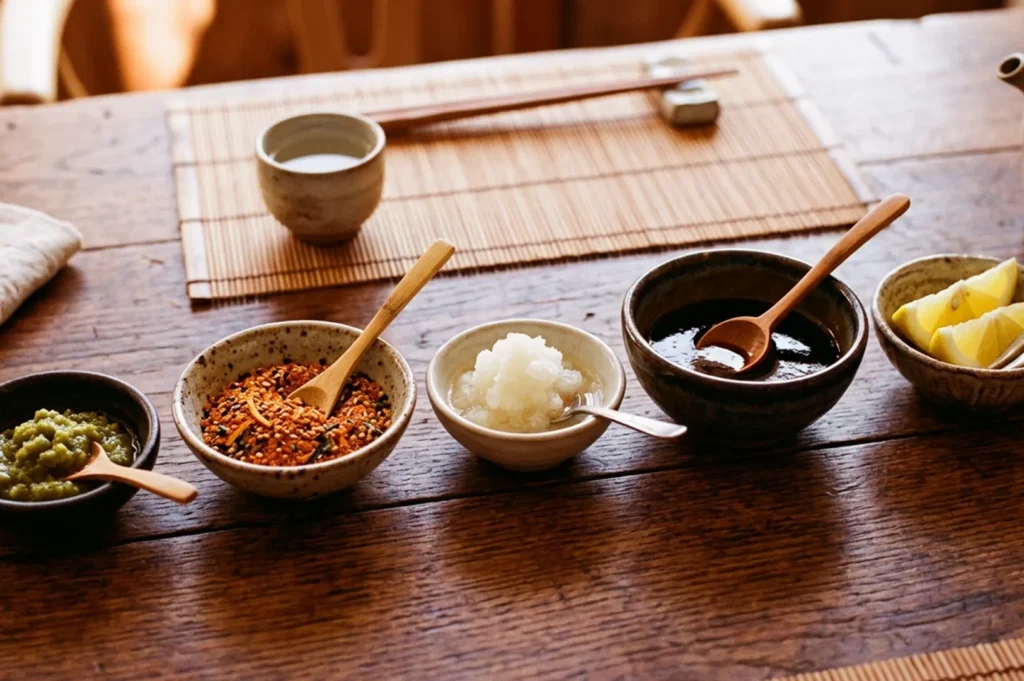
In an izakaya, the small dish beside the plate often carries instructions. Yuzu kosho, shichimi, grated daikon, tare, salt, lemon, and dipping sauces are not random extras. They show how the kitchen expects the diner to adjust flavour after the dish leaves the grill or fryer.
This matters because izakaya food is rarely static. A skewer may arrive seasoned, but still benefit from citrus. A fried item may be complete, but sharper with grated daikon. The condiment is part of the eating design.
That small detail is one of the reasons izakaya food is not just bar snacks, but a dining style built around balance, texture, and careful adjustment.
Seasoning Does Not Always End in the Kitchen
Many diners assume seasoning is finished before serving. In izakaya dining, that is not always the case.
Some dishes are deliberately served with room for adjustment. Salted yakitori may arrive with lemon because the kitchen expects brightness to cut through fat. Grilled meat may come with yuzu kosho, a citrus-chilli paste, to add heat and aroma. Fried dishes may be paired with grated daikon to soften oiliness.
This does not mean the dish is incomplete.
It means the final balance happens at the table.
When to Add the Condiment
Taste first.
We recommend trying the dish before adding anything. This helps diners understand the kitchen’s starting point. After that, condiments can be used more accurately.
A small amount works best. Yuzu kosho can overwhelm if spread heavily. Shichimi, a Japanese seven-spice blend, should add warmth rather than cover the main flavour. Lemon should brighten, not turn the dish sour.
Condiments are most effective when used to adjust one bite at a time, especially with skewers.
Why Some Skewers Arrive With Lemon or Miso
Skewers often carry clear signals.
Chicken skin may arrive with lemon because its richness benefits from acidity. Tsukune, or minced chicken meatball, may come with tare, a sweet-savoury glaze, or egg yolk for richness. Pork or vegetable skewers may be paired with miso to add depth.
These pairings are not decorative.
They guide the diner toward the intended contrast: fat with acid, salt with heat, smoke with sweetness, crunch with freshness.
Understanding this makes ordering useful. Diners can ask whether a skewer is best with salt, tare, lemon, or spice, rather than treating every condiment the same way.
Correction Versus Enhancement
There is a difference between fixing a dish and enhancing it.
If a dish needs heavy sauce to taste acceptable, that may be a problem. If a condiment improves a specific element, the dish is working as intended.
Good condiments sharpen, soften, lift, or balance. They should not erase the original flavour.
Final Perspective
Condiments in an izakaya are small, but they are informative.
They reveal how the kitchen thinks about fat, salt, heat, acidity, and texture. Used, they help diners experience the dish closer to the way it was intended.
The best approach is simple: taste first, adjust lightly, and let the condiment support the food rather than take it over.