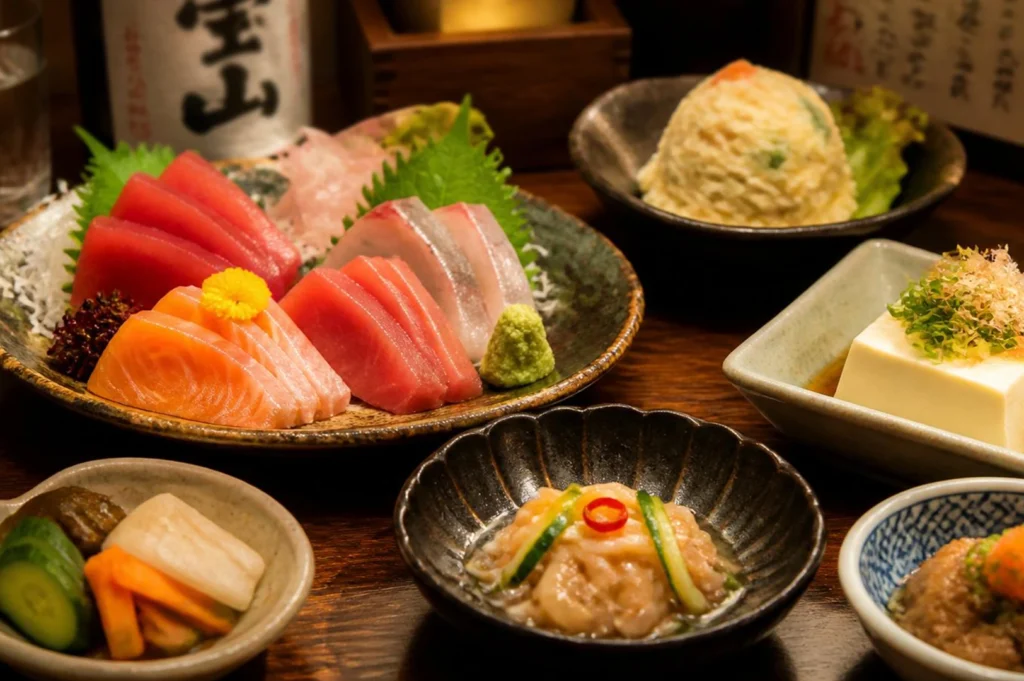
Cold dishes are not the easy part of an izakaya menu.
They only look that way.
In Singapore, diners often notice the grill first. Yakitori, charcoal aroma, fried dishes, and hot plates usually get more attention. Yet many small izakayas depend on cold preparation to keep service stable, especially during peak hours when walk-ins, reservations, and sudden group arrivals place pressure on a compact kitchen.
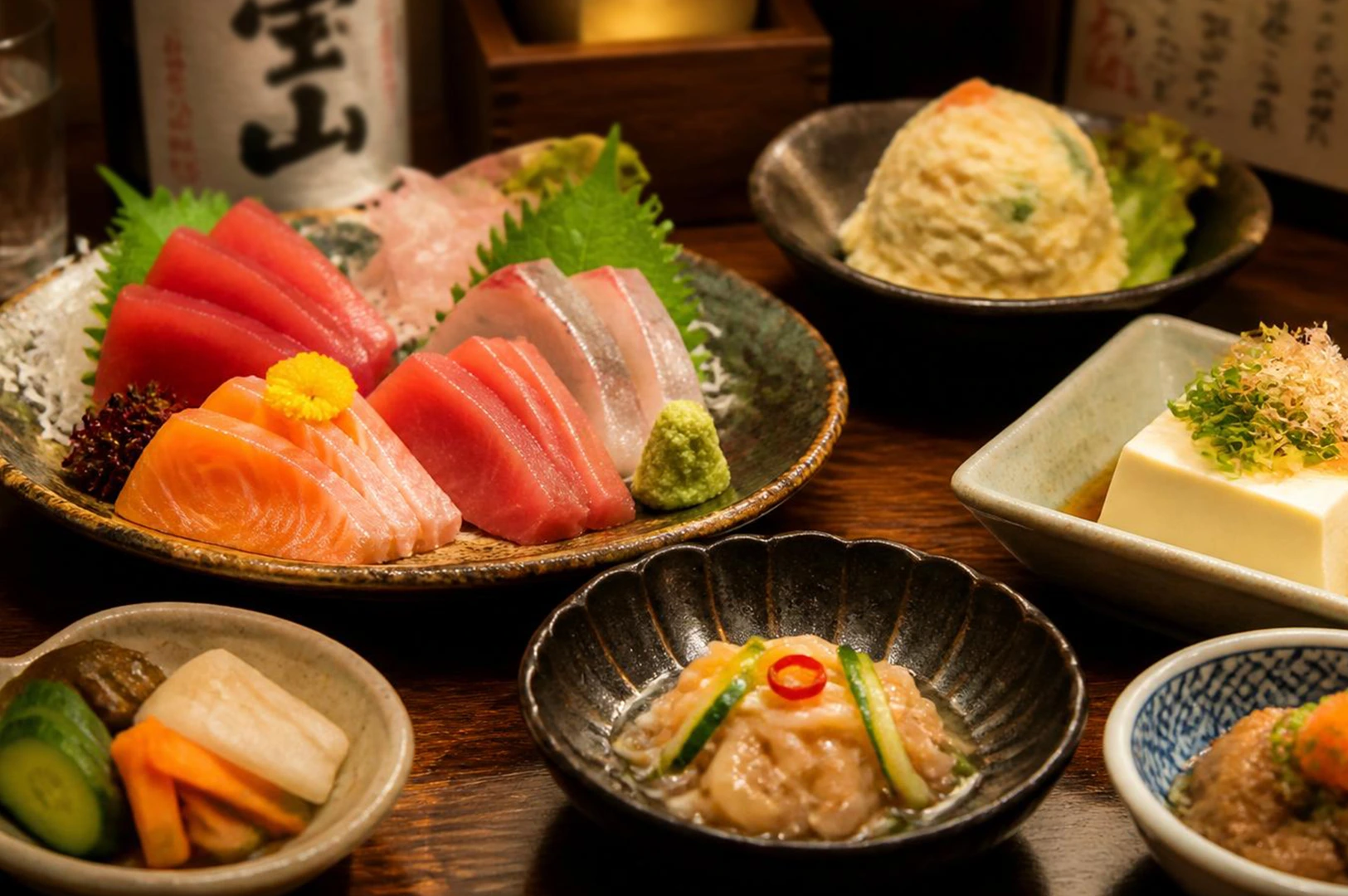
Cold prep refers to dishes prepared or assembled without direct cooking during service. This may include sashimi, chilled tofu, potato salad, pickles, marinated vegetables, cold seafood, or small appetisers served before grilled and fried items.
These dishes help the table begin smoothly while the kitchen manages slower stations.
Cold Prep Supports the First Round
A good izakaya meal often begins before the grill is ready for every order.
Cold dishes can arrive quickly because much of the work is completed before service. Fish has been portioned, vegetables have been cut, sauces have been prepared, and small plates have been arranged for fast assembly.
This matters during the first round.
When diners sit down, especially after work, they usually expect drinks and food to begin without a long wait. Cold prep helps fill that early gap. It gives the table something to share while skewers, fried items, or rice dishes take longer.
Walk-Ins Create Preparation Pressure
Singapore diners often expect some walk-in flexibility.
For small izakayas, this is not always simple. A room may look like it has empty seats, but those seats may be held for reservations, later arrivals, or tables that require specific timing.
Cold prep becomes important in these situations because it helps staff respond quickly when extra diners are seated.
However, cold dishes still depend on planning. Sashimi must be handled carefully. Chilled items need proper storage. Appetisers must remain fresh without being over-prepared.
Too much prep risks waste. Too little prep slows service.
Cold Dishes Still Require Skill
Cold preparation is not only about speed.
It requires knife work, temperature control, seasoning, and consistency. Sashimi must be cleanly cut. Pickles need balance. Potato salad should hold texture. Chilled tofu must arrive cold, neat, and properly dressed.
Because these dishes are simple, mistakes are visible. That matters because the first small plate can shape the way diners read the rest of the meal, much like how the first bite tells you if an izakaya is good. A poorly seasoned cold dish can weaken the table’s first impression before any hot food arrives.
A poorly seasoned cold dish can weaken the table’s first impression before any hot food arrives.
Small Teams Rely on Smart Prep
Many Singapore izakayas operate with compact teams.
During peak periods, cold prep helps reduce pressure across stations. If the cold side is organised, the grill and fryer can focus on timing hot dishes instead of trying to answer every order at once.
This balance keeps the meal moving.
It also explains why some dishes sell out early or appear in limited quantities.
Final Perspective
Cold prep deserves more attention because it supports the whole service rhythm.
It helps tables start quickly, protects kitchen flow, and gives small izakayas more control during crowded periods.
The grill may draw attention, but the cold station often keeps the night steady.
For more close looks at the quiet details behind izakaya dining, visit bestizakaya.com.sg.