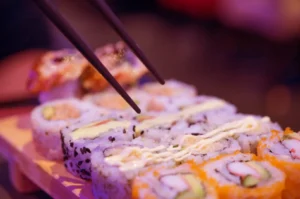

I still remember walking out of a well-known Japanese restaurant along Orchard Road a few years ago—$180 poorer and strangely unsatisfied. The sushi, including the tuna and eel, felt forgettable, the pacing was rushed, and no one bothered explaining the seasonal seafood or the pickles that were supposed to complement the meal. Even the miso soup lacked depth, missing that comforting warmth I usually crave.
It was my introduction to what I now call the Orchard illusion: assuming that a high price tag and a polished mall setting automatically guarantee a great meal.
Spend enough time in Singapore, and you’ll realize Orchard isn’t just for shopping; it is one of the city’s broadest Japanese dining districts. At the affordable end, basement restaurants and food halls offer Japanese meals from around S$10–20, while premium sushi and omakase counters can run well above S$300 per person. That range is exactly why choosing by restaurant type and budget matters more than assuming a higher price automatically guarantees a better meal.
Working closely with the Best Izakaya Team, I’ve spent years navigating Orchard’s hidden basements and high-rise dining rooms. I’ve made the costly mistakes, sat through underwhelming meals, and found the spots that actually deliver Japanese flavours with a clear sense of identity. Whether you’re grabbing a quick lunch or planning a proper dinner, this is how to approach Japanese food in Orchard with clarity.
Japanese Food Orchard: The Orchard Illusion and What Most People Get Wrong

When people ask me about Japanese food in Orchard, the same concerns always surface:
“Is it authentic traditional Japanese cuisine?” “Am I ordering the right dishes?” “Am I about to overpay my total bill?”
These questions usually come from a few persistent assumptions.
One of the biggest mistakes is assuming that higher prices automatically mean a better experience. In Orchard, pricing can reflect factors beyond the food itself, including location, service format, ingredient sourcing, restaurant design and the number of courses being served. Some casual Japanese restaurants and izakayas can deliver a satisfying meal at a much lower spend than premium sushi or omakase counters, so price is better treated as one consideration rather than a guarantee of quality.
Another misconception is that Japanese restaurants here are interchangeable. They’re not. The ecosystem is actually very structured: casual mall chains, focused specialists such as ramen shops, rice-bowl restaurants and yakitori counters, izakayas built for social dining, and premium sushi or omakase counters. Treating them as the same leads to mismatched expectations.
And then there’s the idea that omakase is always worth the splurge. It can be, but the experience varies widely by restaurant, chef, ingredient quality, number of courses and service style. A high price alone does not guarantee that the meal will suit your preferences.
Japanese Cuisine in Orchard Road: A Practical Way to Choose Where to Eat
Walking into the first Japanese restaurant you see in Orchard is essentially a gamble. A little structure makes all the difference.
Start by deciding your intent and budget.
If you’re looking for a quick Japanese meal under S$20, Orchard has genuine options in basement food halls and casual restaurants. At ION Orchard, for example, Japanese meals and lunch sets can fall within that range.
For a more substantial sit-down meal, casual Japanese restaurants, specialist shops and izakayas commonly move into the S$20–80+ range depending on what you order and how much you drink. Premium sushi and omakase counters occupy a much wider tier, from relatively accessible tasting menus to experiences costing several hundred dollars per person.
If you’re not sure where to start, here’s a curated list of the best izakaya in Orchard Singapore to help you narrow it down.

Next, think about the setting and opening hours.
Dining alone? A ramen counter with a bowl of broth and noodles can be one of the easiest formats to navigate. Catching up with friends after work? Izakayas in places such as Cuppage Plaza offer a social format built around small plates, drinks and gradual ordering. Celebrating something meaningful? A quieter sushi or omakase counter may feel more appropriate.
Before you even step out, check the menu.
This is one of the simplest but most overlooked steps. A broad menu is not automatically a warning sign, and a narrow menu does not guarantee quality. What matters more is whether the restaurant has a clear identity: a ramen specialist should be able to explain its broth and noodle style, a sushi restaurant should show attention to seafood and rice, and an izakaya should offer a coherent mix of food and drinks suited to sharing.
When the ingredients are good, the goal is not always to make everything taste rich or sweet. Good Japanese cooking can be restrained, allowing the natural flavour of fish, meat and vegetables to remain clear on the palate.
Insider Insight: The Lunch Set Advantage in Japanese Restaurants
If you’re curious about premium Japanese dining but hesitant about dinner prices, lunch can offer a more accessible entry point.
The saving varies considerably by restaurant rather than following a fixed percentage. At Mandarin Gallery, for example, Yakiniquest currently offers weekday wagyu lunch sets from S$48++, while its dinner omakase menus begin at S$138++. Other Orchard restaurants offer set lunches and abbreviated tasting menus that are priced below their more elaborate evening options.
Lunch hours commonly fall around noon to mid-afternoon, but availability, menu format and reservation demand vary by restaurant. Checking the current menu before visiting is more reliable than assuming every restaurant offers a discounted lunch equivalent of its dinner experience.

Hard Lessons From Real Japanese Dining Experiences
Early on, I made the mistake of treating Japanese restaurants like Western ones, ordering across categories just to try everything. At one Orchard spot, I ordered ramen, sushi, and tempura in one sitting. None of them stood out. The broth lacked depth, the sushi rice felt off, and the tempura was greasy.
That experience made one thing clear to me: restaurant focus matters, but specialization is not the only route to good Japanese food. Some of Orchard’s strongest restaurants specialise narrowly in sushi, ramen, udon or yakiniku, while others successfully operate broader Japanese menus. The better question is whether the restaurant executes its chosen format consistently.
I’ve also learned to approach izakayas differently from a fixed-course restaurant. Rather than ordering an entire table at once, we often start with a few small dishes and add more as the evening progresses. That ordering style suits the social, drinking-led nature of many izakayas, although exact service and pacing naturally vary from restaurant to restaurant.
Even small etiquette details can depend on the type of restaurant. At traditional sushi counters, the chef may already season certain pieces or add wasabi, so it is worth following the restaurant’s cues rather than automatically adding extra soy sauce or wasabi. Rubbing disposable wooden chopsticks together is also generally best avoided, as it can suggest that the chopsticks are rough or poorly made. These are better treated as useful dining conventions than rigid rules across every Japanese restaurant.
How to Spot a Good Japanese Restaurant in Orchard Road
Over time, you start to notice patterns.
Whenever possible, I enjoy counter seating, especially at sushi bars and small Japanese restaurants where you can watch dishes being prepared. Counter seating also lets you watch the chef work at close range, whether that means slicing seasonal fish for sashimi, shaping nigiri or managing grilled dishes as they are served.
MOMOYA in Orchard Plaza, for example, is a compact Japanese eatery serving rice bowls and traditional Japanese comfort dishes, while other Orchard venues use counter seating for sushi, izakaya dining and specialist concepts.

A restaurant with a clear menu identity is usually easier to understand before you order. Seasonal items can also be useful because they show that at least part of the menu changes with availability.
But visual cues alone do not prove quality. A quiet dining room, a long menu or a promotional offer can have many explanations. Current menus, recent customer feedback, restaurant specialisation and transparent pricing are more useful indicators than relying on a single signal.
Understanding Orchard's Local Context for Japanese Food
Orchard’s Japanese dining scene is shaped by convenience, variety and a particularly wide range of formats. Within a relatively compact area, diners can move between food halls, ramen and udon specialists, sushi restaurants, izakayas, yakiniku restaurants and premium omakase counters.
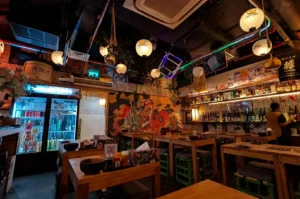
Cuppage Plaza gives the area a particularly strong old-school Japanese dining component. For diners looking for authentic Japanese drinking culture, Cuppage Plaza remains particularly useful because many of its small restaurants revolve around counter seating, sake, sashimi and sharing dishes rather than large mall-style dining rooms.
The building has been associated with Japanese restaurants and bars for decades and remains home to compact izakayas, sushi counters and sake-led dining rooms just off Orchard Road.
Tanjong Pagar offers another major concentration of Japanese restaurants, but it is better viewed as a different dining cluster rather than inherently “more authentic.” Orchard’s strength is the amount of choice available within walking distance.
Orchard Plaza Food Guide: Japanese Dining, French Cuisine and Izakaya Options
A proper Orchard Plaza food guide shows just how varied Japanese dining around Orchard can be. Located at 150 Orchard Road, Orchard Plaza has developed a particularly dense collection of Japanese restaurants, izakayas and chef-led counters, alongside a smaller number of restaurants influenced by French cuisine, Italian cooking and other cuisines.
For traditional Japanese cooking, Tetsu Japanese Cuisine at #01-26/27/28 focuses on Kappo-style dining, sashimi, sushi, grilled dishes and seasonal ingredients. Its menu includes seasonal fish, assorted sashimi, nigiri, oysters, tempura, salad and Japanese sea bream ramen, while its current opening hours cover lunch and dinner from Monday to Saturday, with Sunday closed.
Orchard Plaza also shows how Japanese techniques can overlap with other cuisines. Sage by Yasunori Doi is a small French-Japanese counter where chef Yasunori Doi applies classical French cuisine techniques to Japanese ingredients. It is a useful example of why Orchard’s Japanese dining scene cannot always be divided neatly into sushi bars, ramen shops and izakayas.
For something more casual, MOMOYA operates as a Japanese obanzai izakaya with seasonal fish, sashimi and sharing dishes. Its Momoya course, currently listed around S$50, combines appetisers, chicken tempura, ryukyu-style sashimi and a choice of rice or onigiri, making it suitable for diners who prefer a structured introduction rather than ordering completely à la carte.
Seafood fans can also look at Sakutto Tempura & Oyster at #03-33. The restaurant specialises in live oysters, tempura and izakaya-style seafood, with current coverage highlighting its oysters and tempura fried in a light, crisp batter.
At Al Solito, Japanese dining takes another turn. The third-floor Japanese-Italian izakaya is known for its uni pasta, with angel-hair pasta topped with sea urchin, ikura and caviar. Its intimate evening format also makes it a reasonable date night option for diners who want Japanese ingredients presented through a more European-influenced menu.
These restaurants are a good reminder that Orchard’s Japanese food scene extends well beyond sushi and ramen. Within one older building, you can move between traditional Japanese cuisine, obanzai, oysters and tempura, French-Japanese cooking and Italian-influenced izakaya dishes.
Frequently Asked Questions About Japanese Food in Orchard
Will I overspend?
Not necessarily, but the range is unusually wide. Japanese meals in Orchard can start around S$10–20 at casual counters and food halls, while sit-down restaurants and izakayas can easily move into the S$20–80+ range depending on dishes and drinks. Omakase is even broader: current Orchard menus range from entry-level tasting menus below S$100 to premium counters above S$300.
Is there a dress code?
Casual clothing works for many Japanese restaurants in Orchard. Higher-end sushi and omakase restaurants may prefer smart casual dress, so checking the restaurant’s own policy before visiting is the safest approach.
What if I don’t eat raw fish?
You’ll still have plenty of options. Yakitori, tonkatsu, teppanyaki, ramen, udon, curry, grilled meat, tempura, salads and rice bowls are widely available. Some Japanese restaurants also offer prawns, oysters and other seafood cooked rather than served as sashimi. Izakayas are especially useful for groups because sharing dishes make it easier to mix raw and cooked food around the same table.
Do I need to tip?
Tipping is generally not expected in Singapore. Many full-service restaurants add a 10% service charge, but this is not universal. GST is currently 9%, and where a service charge applies, GST is calculated on the total including that service charge. Check the menu or bill because pricing conventions differ between establishments.
Should I make reservations?
Casual restaurants often accept walk-ins, although busy Orchard locations can still develop queues. For premium omakase counters, small restaurants and popular izakayas, booking ahead is usually the safer choice. Limited-seat restaurants such as Izakaya Naniwa are particularly worth reserving in advance.

The Orchard Dining Mindset: Eat With Intention
Navigating Japanese food in Orchard isn’t about spending more: it’s about choosing better.
Match the restaurant to your goal. Don’t expect intimacy from a casual ramen counter or speed from a lengthy omakase meal. Understand that price doesn’t always reflect quality, and look for restaurants with a clear identity, transparent pricing and a format that matches what you actually want to eat.
The next time you’re in Orchard, skip the assumption that the biggest menu or highest price guarantees the best meal. Find the specialist, the well-run izakaya, the focused sushi counter or the casual Japanese restaurant that suits your budget, then let the experience unfold properly.