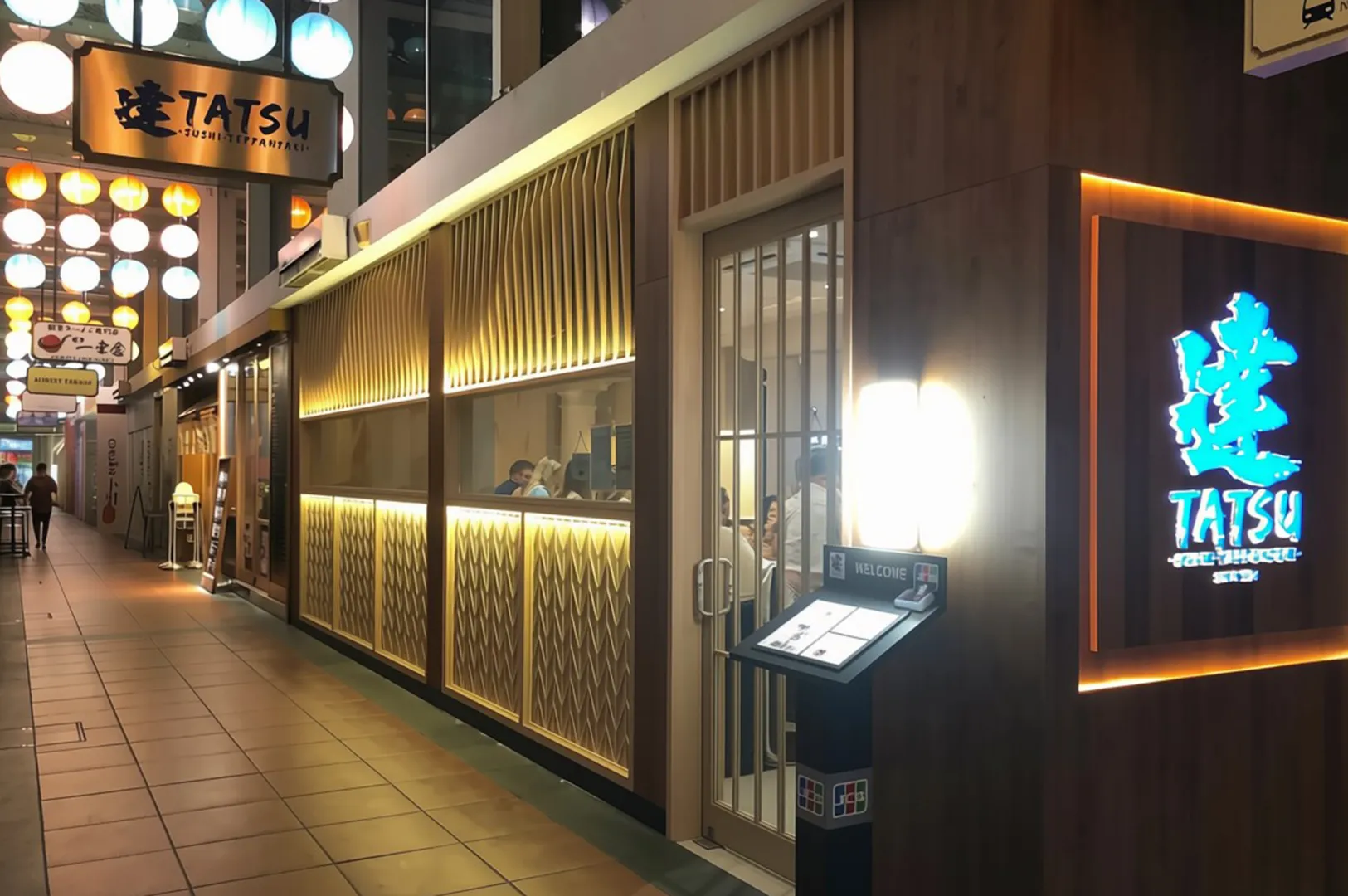
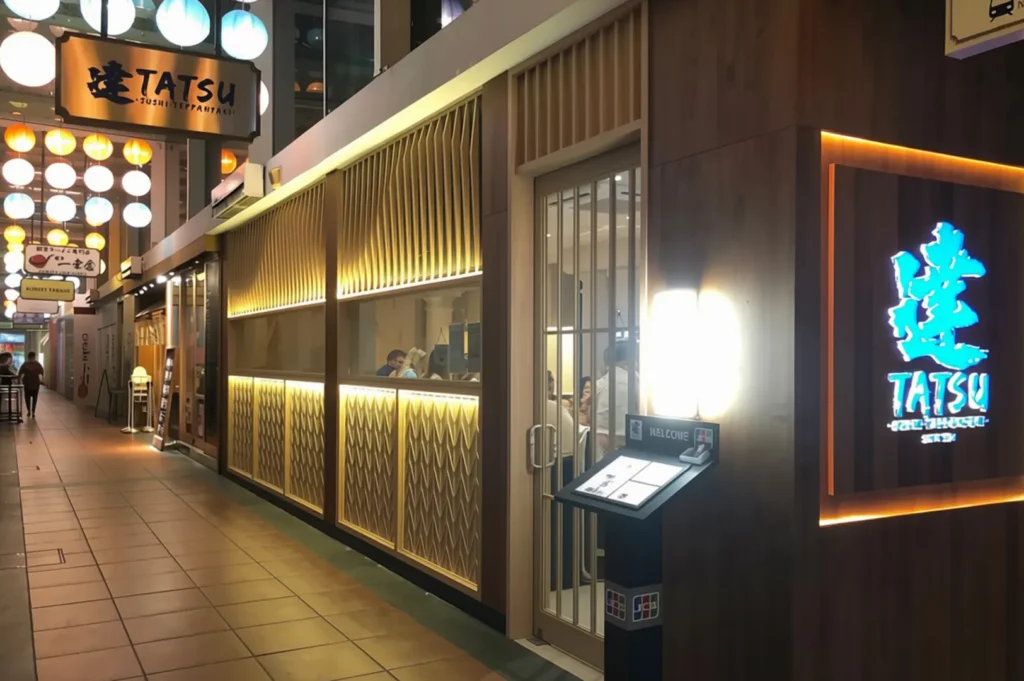
Tatsu is not where you go for a messy izakaya night.
Good.
That is the point.
I went in thinking about CHIJMES Japanese food, not expecting smoke, skewers, and a table yelling for another highball. Tatsu plays a different game. It is sushi and teppanyaki, chef-facing, polished, and more structured than the usual drinks-and-small-plates rhythm.
So, is it an izakaya?
No.
Is it still useful for izakaya lovers to understand?
Absolutely.
Tatsu Is Only One Side of CHIJMES Japanese Dining
That distinction becomes clearer when you look at the wider mix of CHIJMES Japanese food options.
The area is not built around one kind of Japanese night. You can sit at a teppanyaki counter, order ramen, share grilled meat, or find a more relaxed izakaya-style table for drinks and small plates.
Tatsu belongs to the more structured end of that spectrum. It gives you a chef-led meal with a defined pace, rather than the open-ended rhythm of an izakaya. Knowing what else is available at CHIJMES makes that difference easier to appreciate, and makes it less likely that you book the right restaurant for the wrong mood.
Not Every Japanese Night Needs Skewers
Sometimes you want the izakaya thing. Shared plates. Sake. Fried food. Someone ordering one more dish even though everyone said they were done.
But sometimes, especially at CHIJMES, you want Japanese food with a clearer lane.
Tatsu fits that night.
Instead of grazing through small plates, you sit into a more deliberate experience. Sushi brings freshness. Teppanyaki brings heat. The meal feels less like “let’s see where this goes” and more like “we came here for the counter.”
Different mood. Still very Japanese.
Teppanyaki Changes the Energy
In an izakaya, the table usually drives the night.
At Tatsu, the chef does.
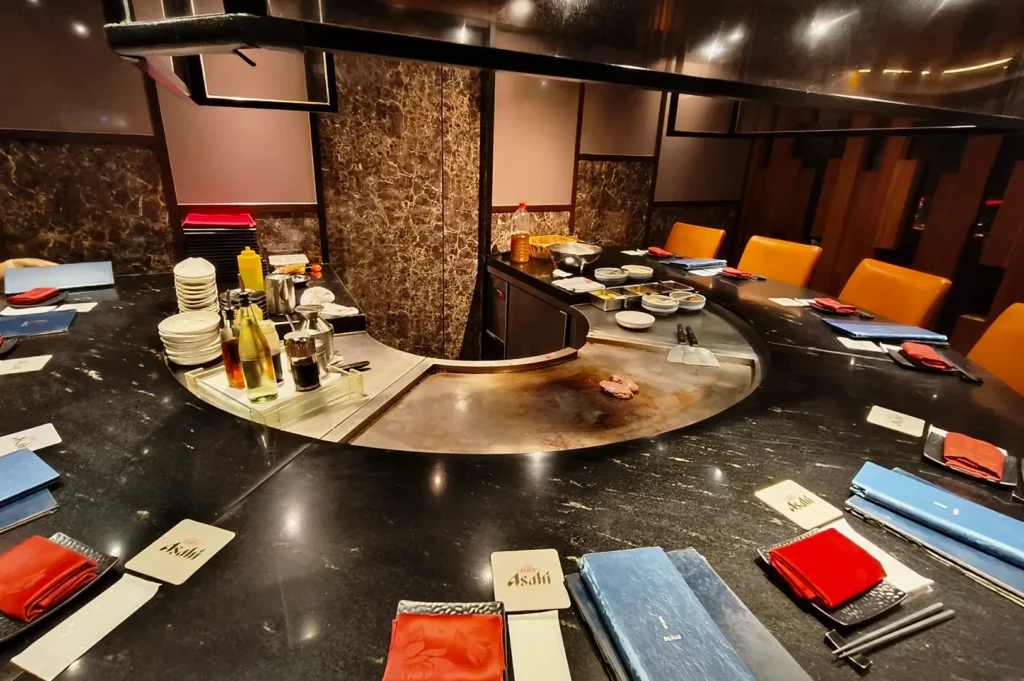
That changes everything. The hotplate becomes the centre. You watch the cooking happen in front of you: seafood, meat, sauces, heat, movement. The social energy is still there, but it is more focused.
You are not just passing plates around.
You are watching the meal being built.
That is the teppanyaki difference. It gives the table something to look at, react to, and talk about without needing the looseness of a tavern-style night.
Sushi Keeps the Meal Cleaner
Tatsu also works because sushi gives the experience a cleaner pace.
Izakaya food often builds in waves. A skewer here. A fried dish there. Another drink. Another plate.
Sushi feels more precise.
There is less chaos, more sequence. Sashimi and sushi ask for attention in a different way. Freshness matters. Temperature matters. The bite is smaller, quieter, and more exact.
If you want that sharper rhythm, Tatsu makes sense.
If you want noisy rounds and smoky plates, look elsewhere.
Where Tatsu Fits at CHIJMES
This is where the distinction matters.
Tatsu should not be forced into an izakaya list just because it serves Japanese food. It sits closer to sushi and teppanyaki dining than a sake bar or tavern.
That makes it a good alternative, not a substitute.
If you are visiting CHIJMES and want chef-led Japanese dining, Tatsu is worth considering. If you want casual drinks, small plates, and a looser evening, an izakaya will suit you better.
Final Take
Tatsu CHIJMES is not trying to be an izakaya.
That is why it works.
It reminds us that Japanese dining in Singapore has different speeds: the tavern, the sushi counter, the teppanyaki hotplate.
It also helps avoid the lazy trap of calling every Japanese restaurant an izakaya, which sounds convenient but makes dining choices less useful for everyone at the table before anyone books dinner.