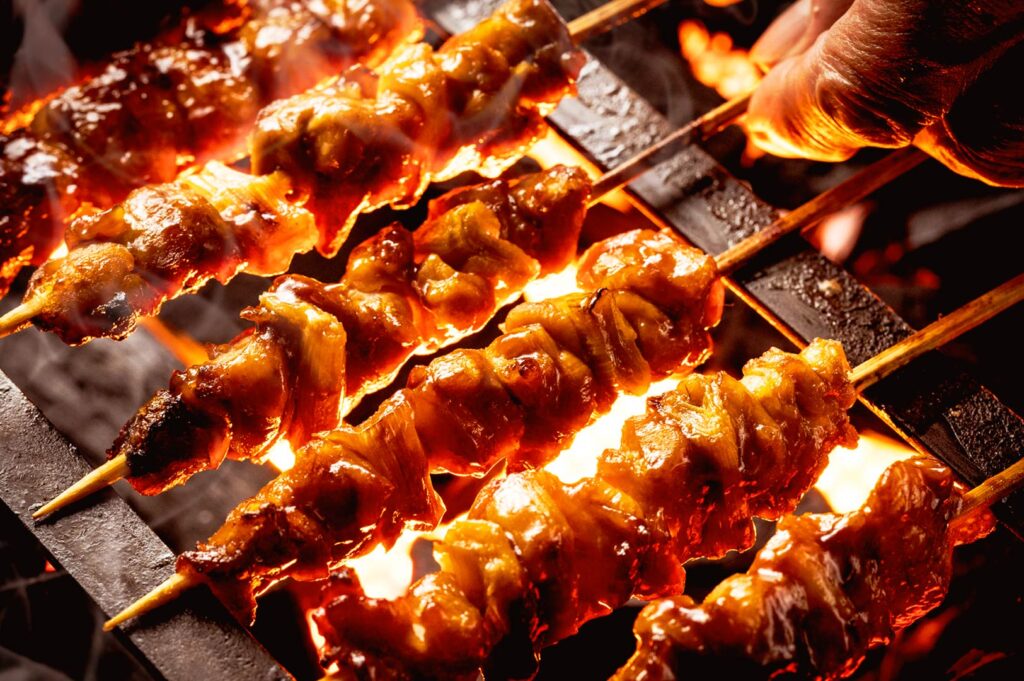
Hot is not always better.
It’s a small surprise, especially the first time you notice it. A skewer arrives from the grill, still warm, but not aggressively hot. Not the kind that burns your fingers or forces you to wait before the first bite.
And for a brief moment, there’s hesitation.
Was it meant to be hotter?
In many places, heat is treated as proof. Proof that something is fresh, just cooked, ready. The hotter it arrives, the more complete it feels.
But in an izakaya, the idea is slightly different.
The Pause Before Serving
At a yakitori counter, the movement is steady but never rushed.
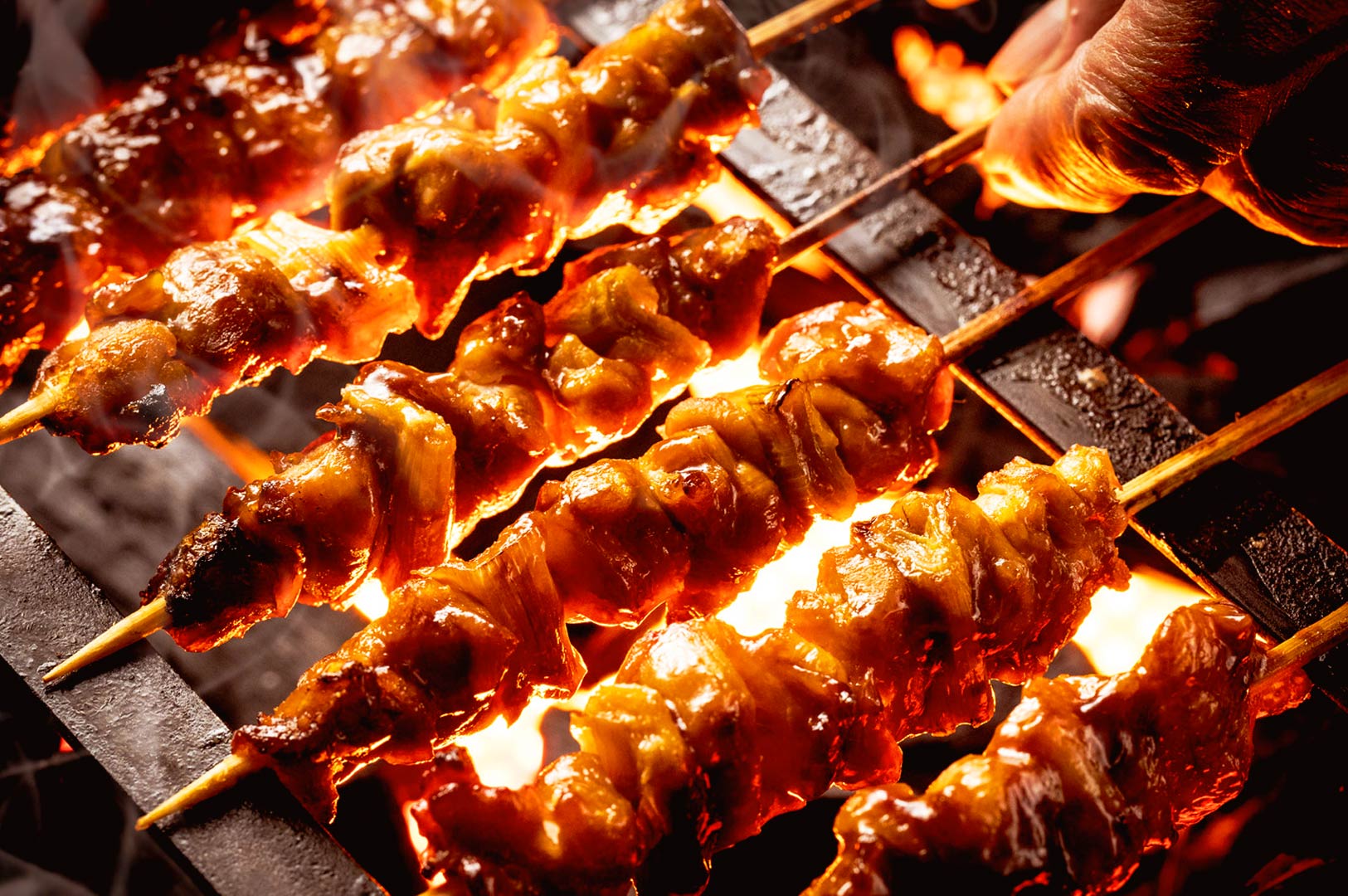
Skewers are turned, lifted, and shifted across the grill, part of a process that becomes clearer when you see how yakitori skewers are carefully made. The charcoal glows quietly. When a skewer is ready, it is not always served immediately.
Sometimes, it rests.
Only for a few seconds. Occasionally longer. Just enough for the surface to settle, for the juices inside to redistribute, for the heat to soften.
This pause is easy to miss.
But it changes the first bite.
Instead of sharp heat, there is balance. The outside remains lightly charred, the inside stays moist, and the flavor feels more complete.
It is not less fresh.
It is simply more considered.
Flavor Needs Space
When food is too hot, the tongue reacts first to temperature, not taste. Salt, sweetness, subtle notes of smoke — they arrive later, if at all.
Allowing a dish to cool slightly brings these elements forward.
In yakitori, this matters.
The difference between shio and tare, the light bitterness of char, the natural flavor of the cut — these are quiet details. They do not announce themselves. They need space to be noticed.
Serving food at a slightly lower temperature allows those details to remain clear.
It invites a different kind of attention.
Timing, Not Speed
There is also a rhythm to how food moves from grill to table.
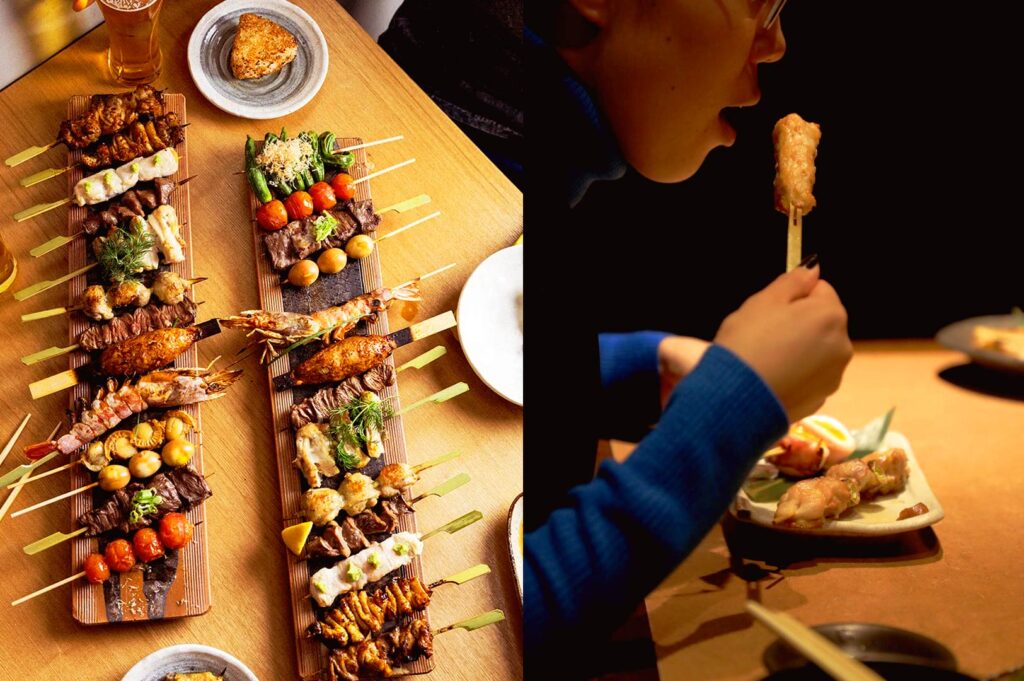
In an izakaya, dishes are rarely sent out all at once. They arrive in intervals, following the pace of conversation, of drinks, of the table itself.
Serving immediately is not always the goal.
Serving at the right moment is.
A skewer that arrives too early sits untouched. One that arrives too late disrupts the flow. The kitchen adjusts constantly, watching not only the grill but the room.
In some cases, this means holding a dish for a short time.
Not to delay, but to align.
Texture Changes With Heat
Temperature also shapes texture.
A skewer taken directly off the grill can feel tight, the surface slightly rigid from heat. Given a moment, it softens. The fibers relax. The bite becomes easier, more cohesive.
This is especially noticeable with certain cuts.
Chicken thigh, for example, benefits from a brief rest. The juices settle back into the meat, creating a texture that feels fuller and more even.
Served too hot, it can feel tense.
Served at the right moment, it feels complete.
The difference is small, but it lingers.
A Different Expectation
For diners accustomed to equating heat with quality, this can take time to understand.
The instinct is to reach for the hottest piece, to expect immediacy.
But in an izakaya, the experience is shaped by quieter decisions.
Not everything is meant to arrive at its peak temperature. Some dishes are meant to arrive at their best balance.
There is a distinction.
When the Timing Feels Right
Over time, the difference becomes easier to notice.
The skewer that feels just warm enough.
The bite that reveals more than just heat.
The moment when food arrives without interrupting the table.
These are not dramatic changes.
But they shift the experience.
What We Often Miss
The next time a dish arrives, it may be worth pausing, just briefly.
Not to question whether it is hot enough, but to notice how it feels as it is.
Because in an izakaya, temperature is only one part of the decision.
Timing is the other.
And when both are considered, the result is something quieter, but often more lasting.