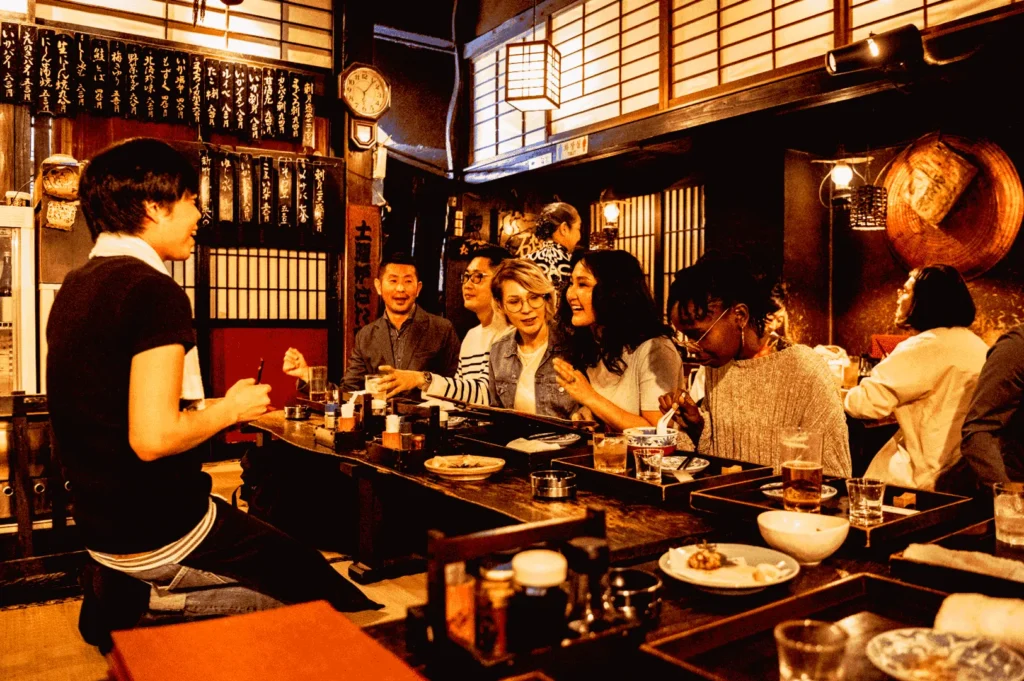
You can tell within 10 minutes.
No menu analysis needed. No chef insight required. Just… look around.
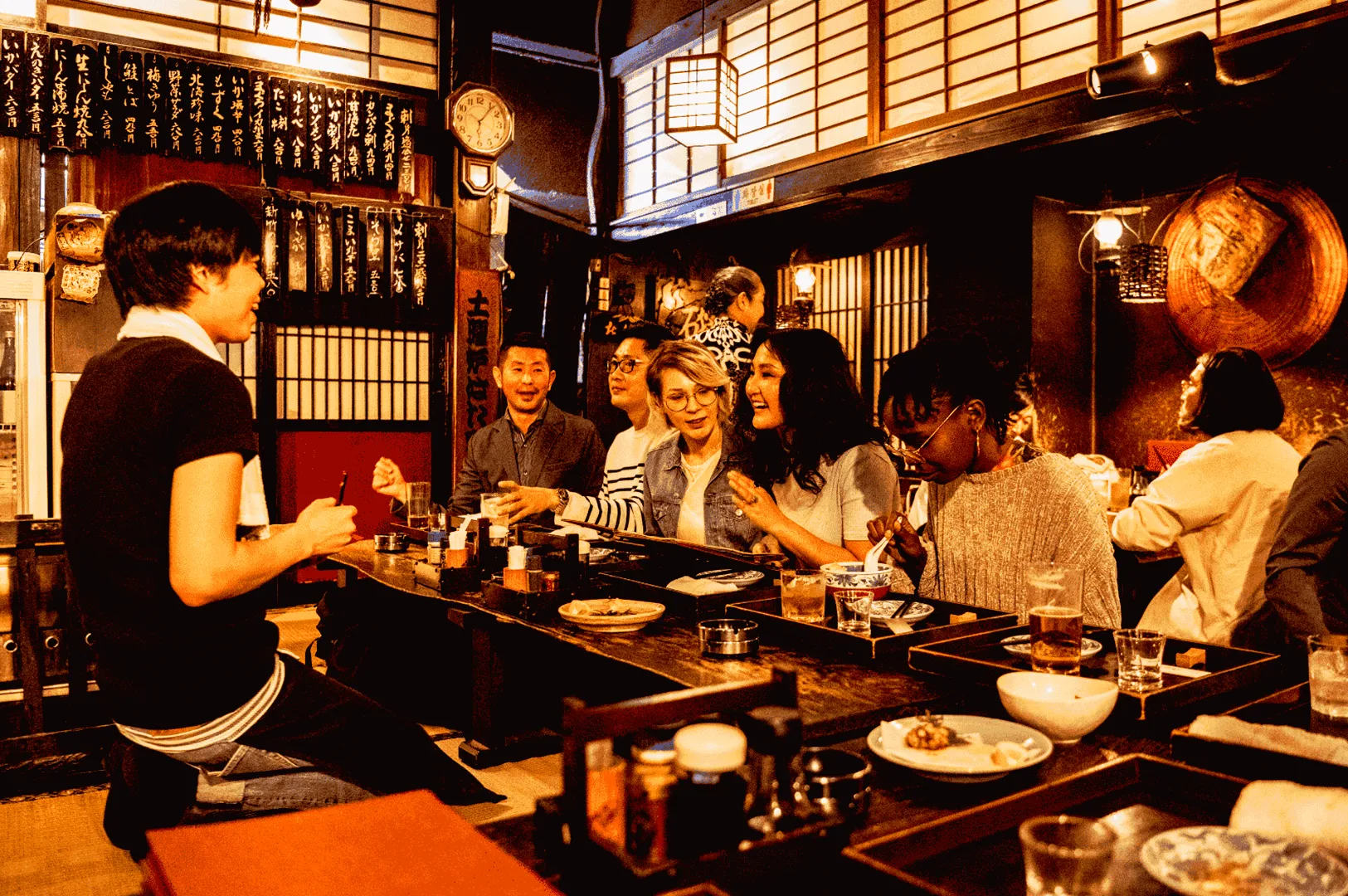
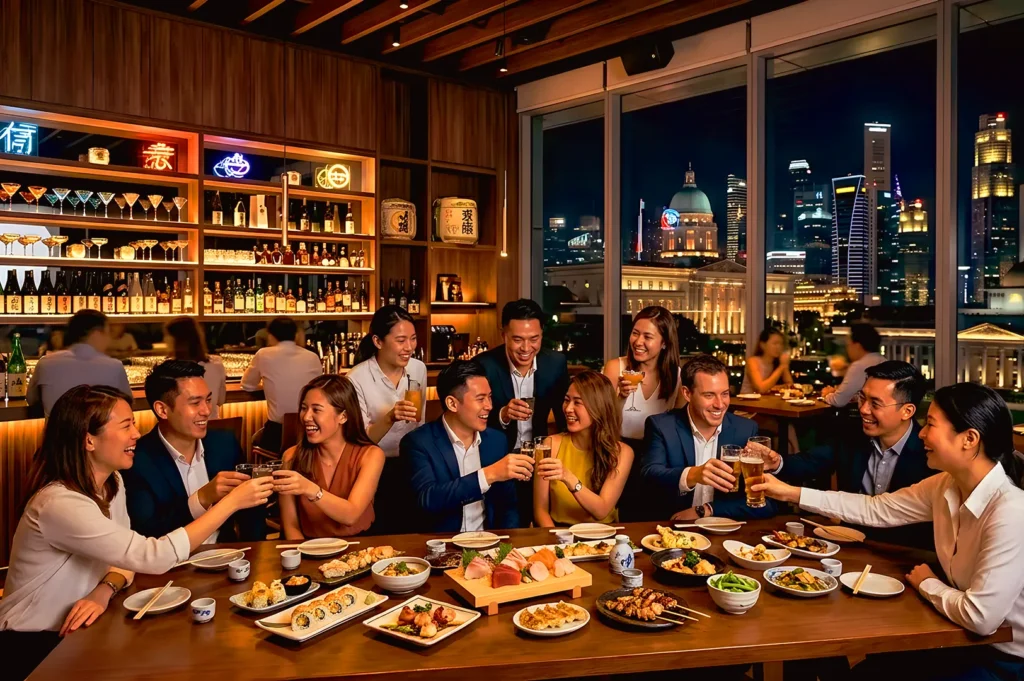
Two tables. Same izakaya. Same night.
Completely different energy.
The First-Timers: Let’s Order Everything
You know this table.
Menus open. Eyes scanning fast.
“Okay, let’s get this, this, this… oh and that one looks good.”
Within five minutes, they’ve ordered:
- 8 skewers
- 3 sides
- 1 fried dish
- maybe rice (way too early)
It feels efficient. Productive. Like they’ve “covered the menu.”
Then the food starts landing.
All at once.
Plates stack up. Skewers cool down. Someone’s still on their first bite while the next dish is already sitting there waiting.
And suddenly?
The table feels… crowded.
Not lively. Not flowing. Just full.
The Regulars: Slow Start, Long Night
Now look at the other table.
Same menu. Same options.
But they order differently.
But they order differently — in ways that chefs quickly recognize over time, something explored further in how izakaya chefs spot regulars.
“Let’s start with two skewers.”
“Maybe edamame first.”
“See how we feel.”
That’s it.
Food comes. They eat. They pause. They talk.
Then—then—they order again.
No rush. No pressure to decide everything upfront.
Just… momentum.
And here’s the thing: their table never looks overloaded.
It looks alive.
The Energy Is Completely Different
This is where it gets interesting.
The first-timers are busy managing the meal.
“What should we eat next?”
“Wait, this is getting cold.”
“Did we over-order?”
The regulars?
They’re just… there.
Talking. Laughing. Reaching for the next skewer when it arrives.
No stress. No coordination needed.
The food fits the conversation. Not the other way around.
Over-Ordering Isn’t the Problem. Timing Is.
Let’s be clear—first-timers aren’t wrong.
They’re just approaching it like a regular restaurant.
Pick everything early. Lock it in. Eat it all.
That works… everywhere else.
Not here.
Izakayas aren’t built for one big order. They’re built for waves.
Order a little. Eat. Drink. Then decide again.
It sounds simple. But it changes everything.
Regulars Don’t Chase the Menu
Another thing you’ll notice?
Regulars don’t try to “complete” the menu.
They don’t care if they didn’t try everything.
They’ll reorder what works. Skip what doesn’t. Ask what’s good today.
Sometimes they don’t even look at the menu after the first round.
Because they’re not chasing variety.
They’re building a night.
Same Room. Different Experience.
Here’s the part people don’t realize.
Both tables might eat the exact same dishes.
Same skewers. Same sides. Same drinks.
But one table leaves thinking:
“That was okay.”
The other?
“That was a great night.”
Same food.
Different approach.
So Which Table Are You?
Next time you’re at an izakaya, pause for a second.
Look around.
Which table are you closer to?
The one trying to get everything right upfront?
Or the one letting the night unfold?
Because once you see it, you can’t unsee it.
And once you try it the second way?
You’ll probably never go back.
And once you start noticing the difference, it’s something you’ll keep seeing across Best Izakaya Singapore.