
The Questions That Change the Tone
Menus in izakayas are rarely complete.
There are always small variations — seasonal items, better cuts that came in that day, or dishes not written down at all.
Some diners stick strictly to the menu.
Others ask, gently:
“Is there anything special today?”
“What do you recommend tonight?”
It’s not about trying to be knowledgeable.
It’s about being open.
In many traditional yakitori-ya, including places like Torishiki, chefs pay attention to this. A simple question signals that the diner is willing to follow the kitchen, not just choose from it.
That changes the interaction.
It becomes less transactional, more shared.
The Moment with the Simple Dish
There is a quieter signal chefs notice.
It happens early, often with something simple.
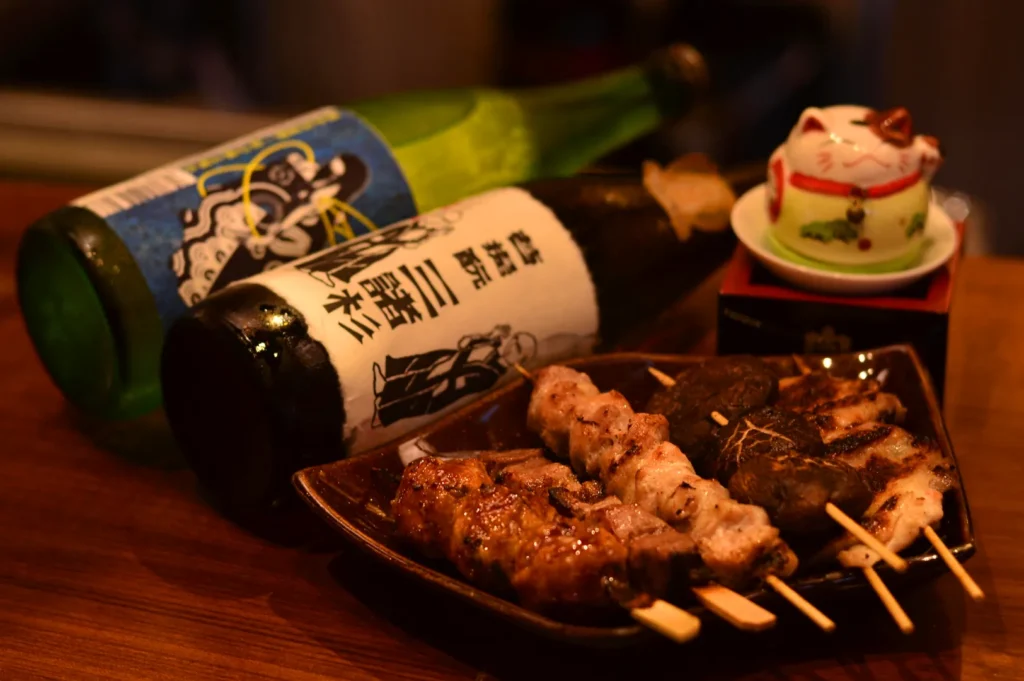
A salted skewer. A piece of tamagoyaki. A small plate that doesn’t stand out.
Some diners move past it quickly.
Others pause — even for a second. They register the texture. The balance. The way something simple feels complete.
They may not say anything.
But that pause is enough.
Because in izakaya culture, the people who return are often the ones who notice the basics: the kind of detail that often shows up in the one dish that reveals a good izakaya.
Not just the highlights.
It’s Not About Experience — It’s About Attention
None of this requires expertise.
A future regular isn’t necessarily someone who knows every cut of chicken or understands charcoal techniques.
It’s someone who moves with the space.
Who doesn’t rush the order.
Who asks when it feels natural.
Who notices what arrives, even when it’s simple.
From the outside, these are small things.
From behind the counter, they form a pattern.
The Second Round Says More Than the First
By the second round, the tone of the table is already clear.
Some tables begin winding down. Others settle deeper into the evening.
The difference is rarely dramatic.
It’s in the pacing. The curiosity. The way attention shifts from choosing food to experiencing it.
Chefs don’t announce this.
They simply notice.
And over time, those small differences become familiar.
Not as a label — one-time diner or regular.
But as a rhythm they recognize.
And sometimes, that rhythm is what brings people back.
Starting to notice the difference between a one-time diner and a regular? There’s more to observe here.