I’ve lost count of how many times I’ve walked into an izakaya telling myself the same thing.
Just a drink.
Maybe a quick highball. Something light before heading home. No need to order much food tonight.
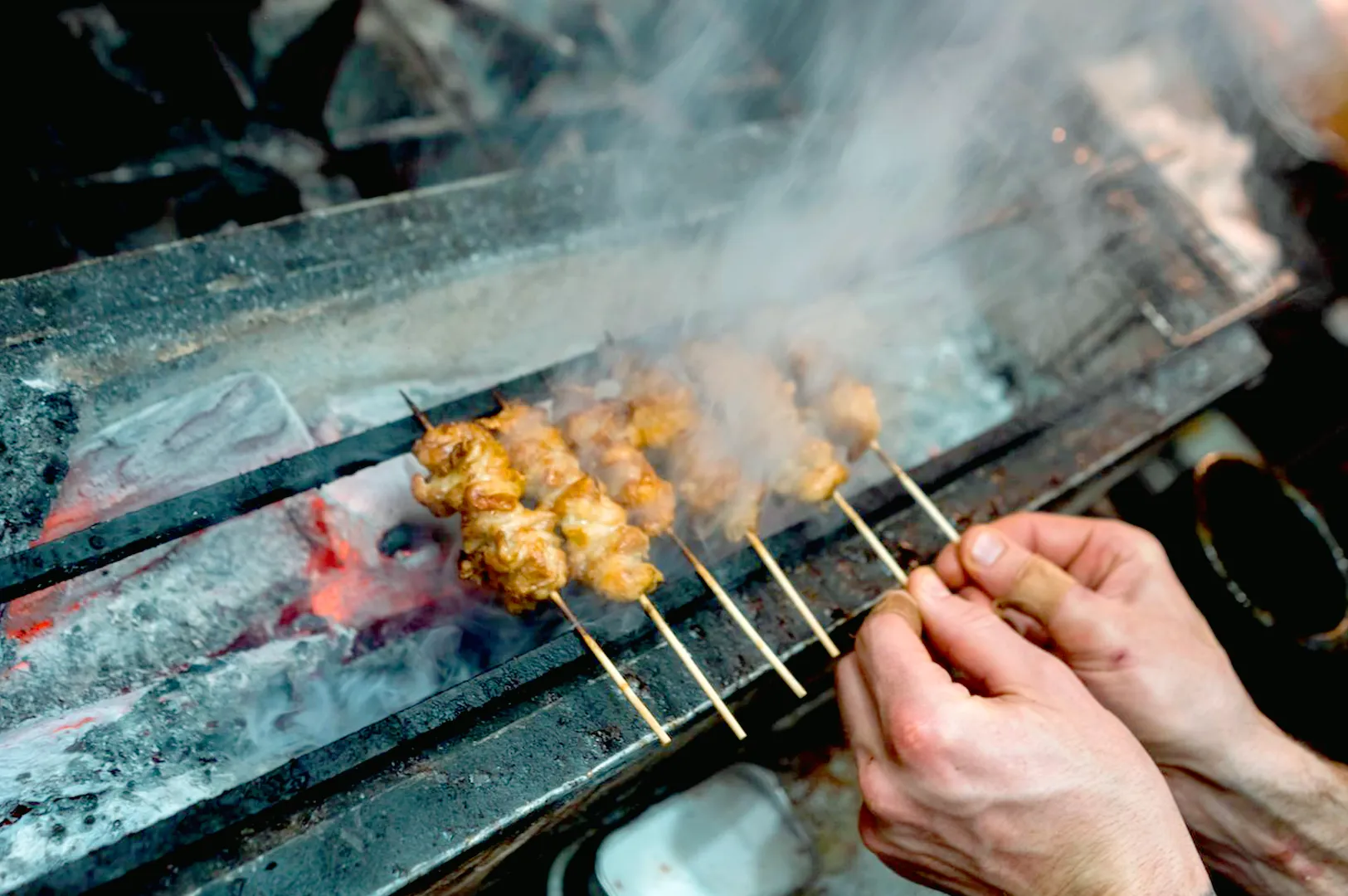
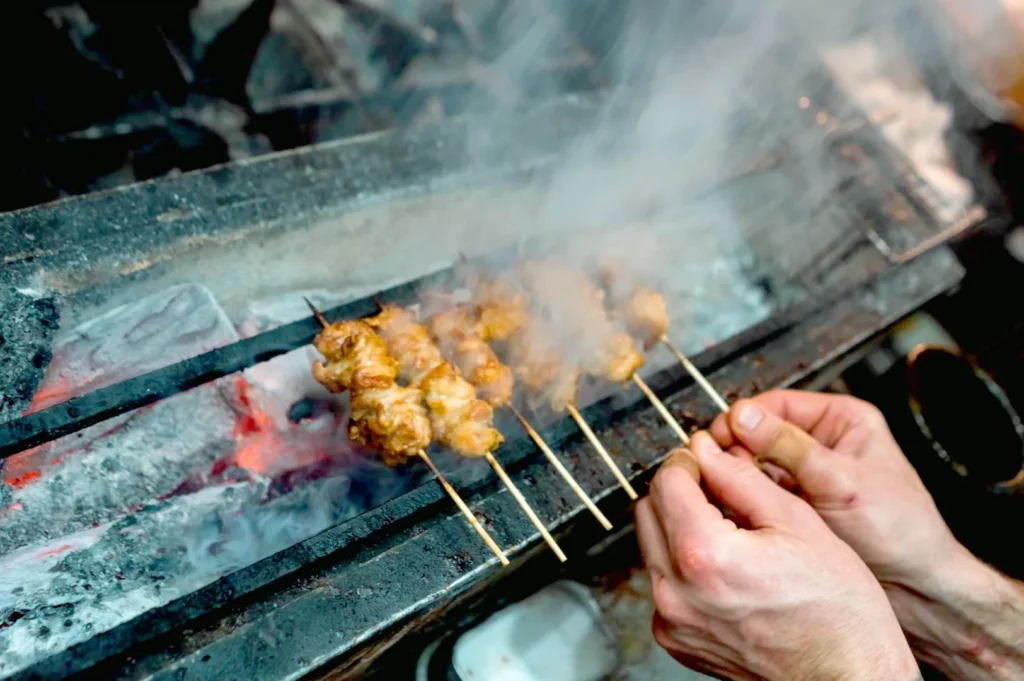
Then the grill starts working.
The room carries a soft, unmistakable scent — that quiet smokiness of charcoal warming meat. Someone nearby orders yakitori. A skewer lands at the next table. Another follows. Without quite noticing how it happened, the menu comes back out.
One skewer becomes three.
It’s easy to think this shift is about temptation or lack of discipline. In reality, something more subtle is happening. The smell of charcoal grilling has a real effect on appetite, and izakayas — knowingly or not — have long relied on it.
Aroma Begins the Meal Before the Food Arrives
When people talk about good food, they usually talk about taste.
But appetite often begins somewhere else entirely: the nose.
Scientists estimate that much of what we perceive as flavour actually begins with aroma. Before food even reaches the mouth, scent molecules reach the brain and begin shaping expectation. The body prepares itself — salivation increases, attention sharpens, hunger appears where it wasn’t moments earlier.
Charcoal cooking accelerates this process.
As meat warms over heat, fats begin to melt and drip. Proteins caramelize. Aromatic compounds are released into the air long before the first skewer is plated. By the time food arrives at the table, diners are already anticipating flavour.
In an izakaya, that anticipation fills the room.
Charcoal Creates a Distinctive Signal of Flavor
Not all cooking aromas behave the same way.
Charcoal grilling produces a particular scent profile that signals depth and richness. When fat touches hot coals, it vaporizes briefly, releasing compounds that contribute to the smoky fragrance many people associate with grilled food.
Yakitori chefs traditionally cook over binchotan charcoal, prized in Japan for its ability to burn steadily and cleanly at very high temperatures. Much of that aroma comes from the careful grilling process itself: something you’ll notice more once you see how yakitori skewers are traditionally made.
Unlike softer charcoal, binchotan produces minimal ash and smoke, allowing the flavor of the meat to remain clear while still creating that unmistakable grilled aroma.
The result is a scent that feels both subtle and persuasive — enough to signal warmth and savoriness without overwhelming the room.
Even before tasting anything, diners sense what is coming.
The Memory Behind the Smoke
There is also something more personal happening.
Humans tend to associate the smell of fire and cooking with comfort. For many people, charcoal aromas connect to memories of shared meals — late-night street food, backyard grilling, casual gatherings around heat and food.
These associations linger quietly in the mind.
When the smell of charcoal drifts across a room, it can trigger those familiar expectations of warmth and satisfaction. The appetite that follows is not only physical; it’s emotional as well.
An izakaya, with its glowing grill and steady rhythm of skewers turning over heat, naturally amplifies that effect.
You are not just smelling food being prepared. You are watching it happen.
Why Izakayas Keep the Grill in Sight
Unlike many restaurants that conceal the kitchen behind closed doors, traditional izakayas often place the grill within view of the dining room.
Part of this is practical. Yakitori requires constant attention, and chefs work closely with the charcoal.
But the visibility serves another purpose.
The gentle smoke, the glow of the coals, the sound of fat meeting heat — these sensory signals quietly shape the room. Diners may arrive intending to drink first and eat later. Yet the atmosphere slowly nudges them toward something else.
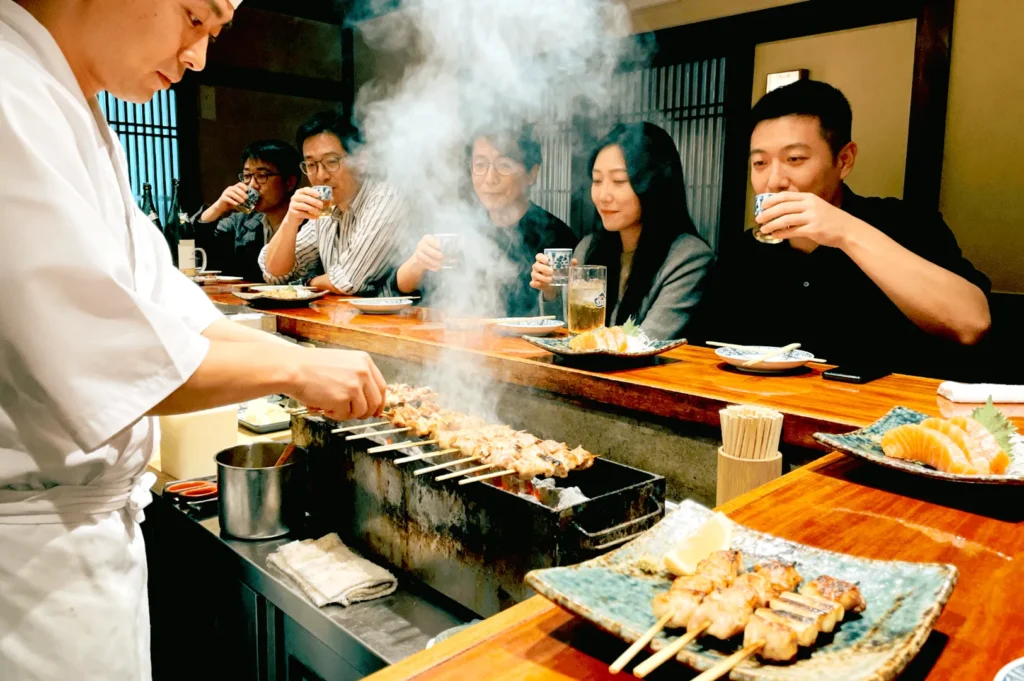
A skewer here. Another plate there.
The night expands naturally.
The Appetite That Begins in the Air
The next time you step into an izakaya, pause for a moment before opening the menu.
Notice the air in the room — the faint charcoal aroma drifting from the grill, the slow turning of skewers above glowing heat. Long before the first dish reaches the table, the appetite of the room has already been awakened.
Charcoal does more than cook food.
The meal begins.
And for those curious about the small details that shape a memorable izakaya night — from charcoal to craft to culture — there is always more to discover across Best Izakaya Singapore.