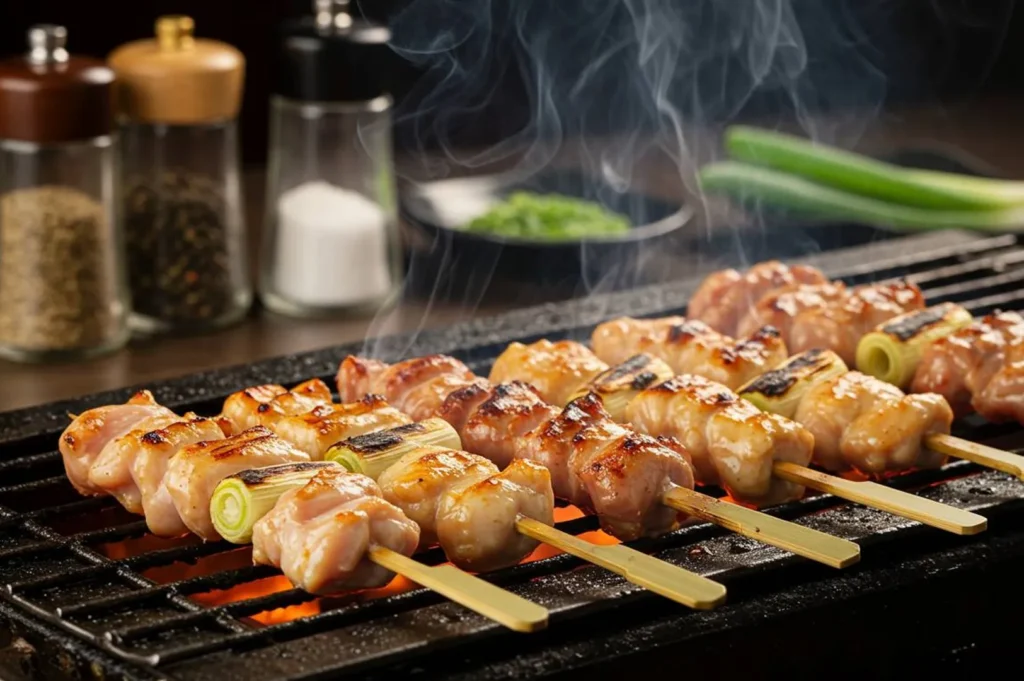
If you’ve ever paid good money for a single yakitori skewer and wondered how something so simple could justify the attention it receives, you’re not alone.
It’s just grilled chicken, right?
A stick. A few pieces of meat. A brush of sauce or a pinch of salt.
But that assumption usually disappears the moment you taste a truly well-made skewer. The outside carries a gentle char. The inside stays impossibly juicy. The seasoning feels precise rather than heavy-handed. Somehow, something so small holds layers of flavour and texture.
That’s the quiet craft of yakitori.
In serious izakaya kitchens, chefs often spend years refining what looks like one of the simplest dishes on the menu. Because when the ingredient list is short and the technique is exposed to open flame, every detail matters.
Charcoal Control
The first secret sits beneath the grill.
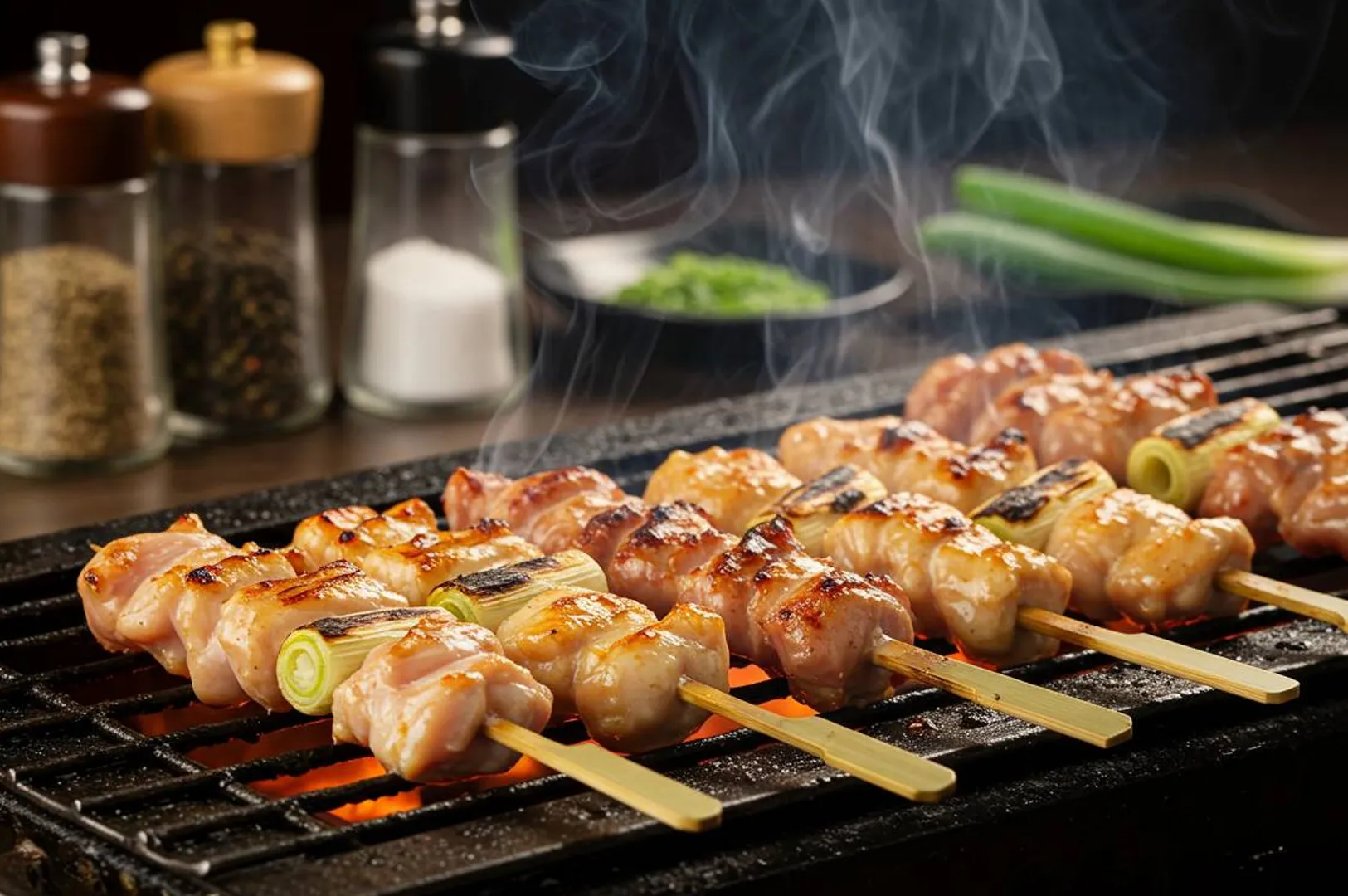
Most traditional yakitori is cooked over binchotan charcoal, a dense Japanese charcoal prized for its clean, high heat. Unlike ordinary charcoal, binchotan burns steadily and produces minimal smoke, allowing the flavour of the chicken to remain clear.
But the real skill isn’t simply lighting the charcoal — it’s controlling it.
Yakitori chefs constantly adjust heat zones across the grill. One section may burn hotter for crisping skin. Another stays slightly cooler to cook thicker cuts slowly. Skewers move across the grill in subtle shifts that most diners never notice.
To an experienced chef, the charcoal behaves almost like a living ingredient. Too much heat and the meat dries out. Too little and the texture loses its delicate crispness.
The grill becomes a conversation between fire and timing.
Meat Cuts
Another detail many diners overlook is how precisely each skewer is built.
Yakitori is rarely just “chicken.” A traditional menu breaks the bird down into numerous cuts: thigh, breast, skin, cartilage, tail, liver, and more. This attention to detail is also one reason izakaya menus often feel surprisingly long, with dozens of small dishes designed to be explored gradually rather than ordered all at once.
Each part behaves differently over fire.
Thigh meat carries natural fat and tolerates higher heat. Breast requires gentler cooking to avoid dryness. Skin demands patience to render properly.
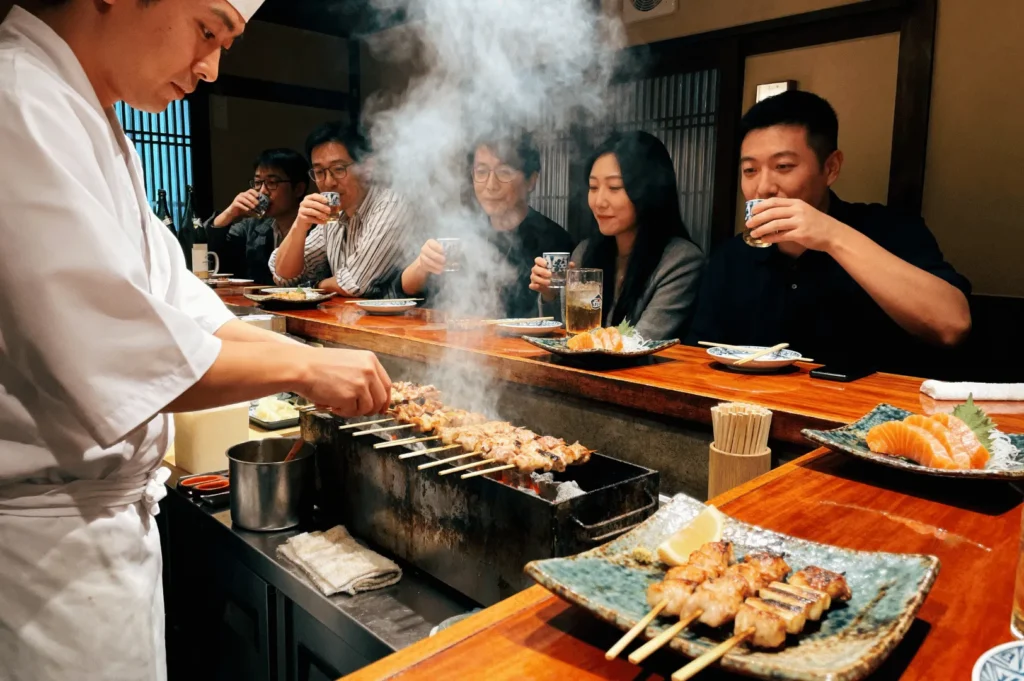
The chef must understand how each cut reacts to flame, skewering pieces in ways that ensure even cooking. Sometimes fat and lean meat are alternated intentionally so juices baste the skewer as it cooks.
What looks like casual arrangement is often deliberate engineering.
Seasoning Balance
Yakitori typically follows two classic styles: shio (salt) or tare (a sweet-savory glaze).
Shio seems deceptively simple. Yet applying salt evenly across skewered meat requires careful timing and restraint. Too early and moisture draws out before cooking begins. Too much and the natural flavour of the chicken disappears.
Tare introduces a different complexity. The sauce — usually soy, mirin, sugar, and sake — is brushed on in layers as the skewer cooks. The glaze caramelizes over the charcoal, building flavour gradually rather than all at once.
A well-made tare skewer tastes balanced, never sticky or overly sweet. Achieving that balance takes years of repetition.
Timing With Drinks
In an izakaya, yakitori isn’t meant to arrive as a single plate.
It appears in waves.
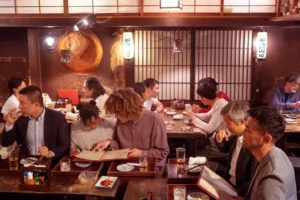
The pacing often mirrors how guests drink. In fact, there’s a quiet structure behind how dishes are ordered and served throughout the night, something you may explore more deeply in a guide to izakaya ordering logic. A skewer might arrive just as a beer reaches its halfway point. Another lands after the first round of sake. The rhythm of grilling follows the rhythm of the table.
This is part of the craft rarely discussed: yakitori chefs aren’t only cooking meat. They’re reading the room.
Skewers are fired and delivered in small intervals so diners can appreciate each one at its peak — hot, fragrant, and freshly grilled.
The Beauty of One Perfect Bite
From a distance, yakitori looks simple.
Up close, it reveals layers of quiet discipline: charcoal management, careful butchery, seasoning precision, and timing that respects the flow of an izakaya evening.
It’s a reminder that the most memorable dishes are often the most restrained.
When a chef spends years refining a single skewer, it isn’t about turning chicken into something extravagant. It’s about proving how much flavour, texture, and craft can exist within one perfectly grilled bite.
And the next time a plate of yakitori arrives at your table — lightly smoking, glistening with tare or dusted with salt — you might notice something you didn’t before.
Not just a skewer.
But the result of years spent learning how to make something simple, unforgettable.