There is a difference between being served sashimi and watching it become sashimi.
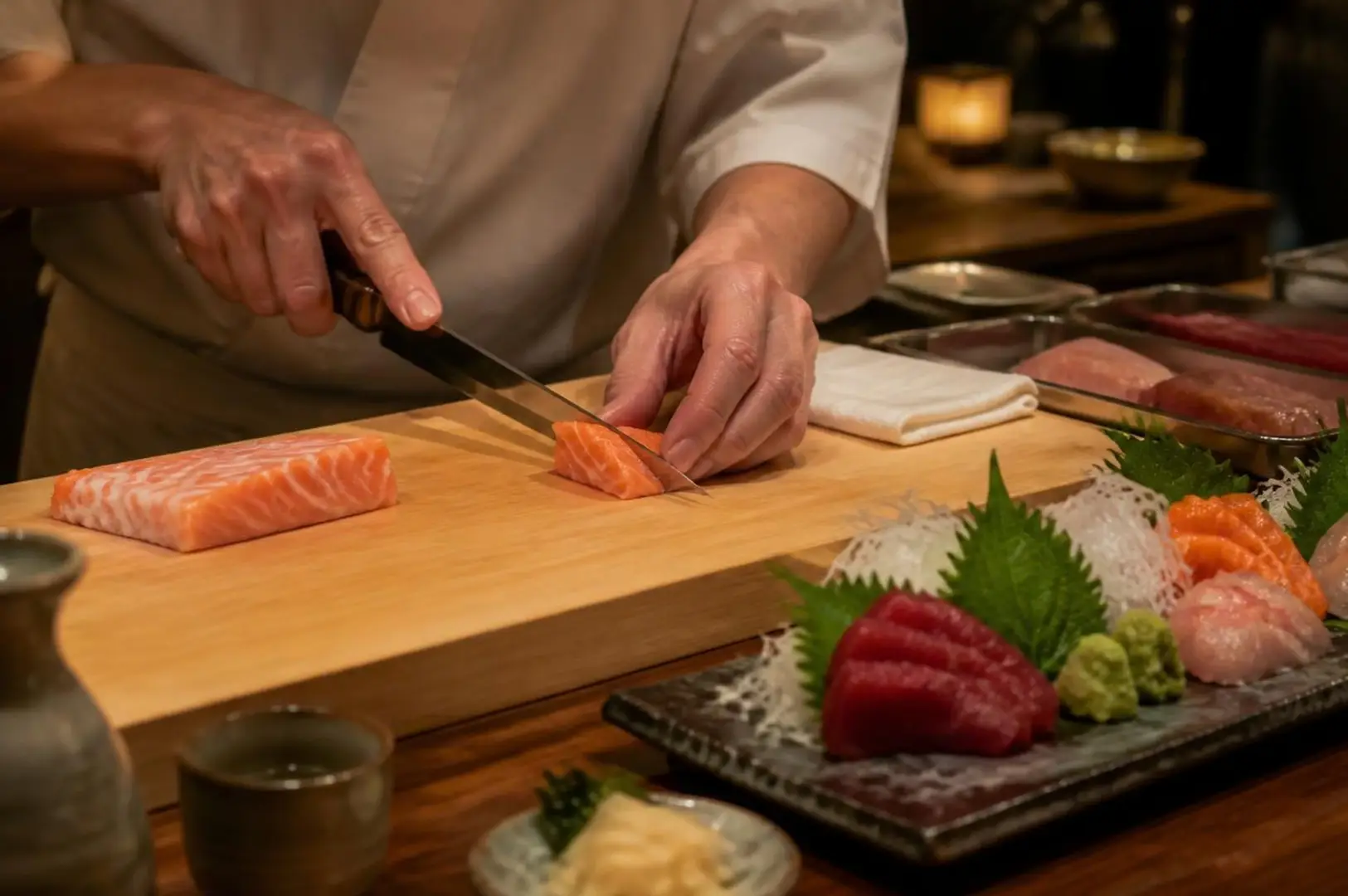
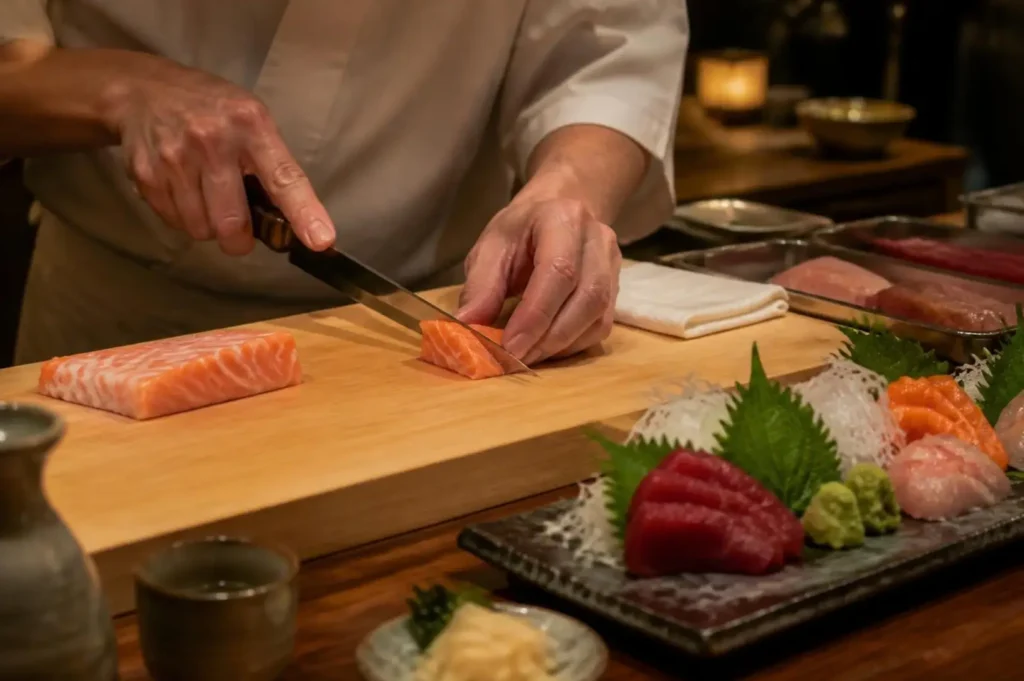
At the counter, the finished plate feels less mysterious. You see the board, the cloth, the trays, the knife moving through fish with very little wasted motion. A piece is cut, checked, placed, adjusted. Then the next one follows.
Nothing about it needs to be dramatic.
That is exactly what makes it interesting.
The Counter Changes What You Notice
From a table across the room, sashimi arrives complete. At the counter, you notice the decisions before the plate reaches you.
Thickness matters. So does direction. A firmer fish does not always receive the same treatment as something softer or fattier. Even without knowing the name of the knife or the anatomy of the fish, you can see that the chef is responding to texture rather than simply producing identical slices.
The cut itself shapes how the fish feels when we eat it.
You also begin to understand why counter seats matter: they turn preparation into part of dinner without making it a performance.
The Work Is Quieter Than Expected
What stays with us is often the repetition.
Wipe. Cut. Place. Adjust.
There may be no speech at all for several minutes. Then someone asks what is good that day, and the answer is brief: perhaps a seasonal fish, a tuna cut, or something that arrived recently.
That small exchange can change the whole order.
This is where an izakaya counter differs from a formal omakase experience. You are close to the preparation, but the evening is still flexible. Sake may be poured. Grilled dishes may follow. Conversation continues around you.
The fish receives attention without requiring silence.
Assorted Sashimi Starts to Look Different
An assorted platter feels more deliberate once you have watched parts of it being assembled.
You notice which fish is cut thicker, which pieces are placed together, and how colour, spacing, and garnish give the plate structure. Presentation is not always elaborate, but it still guides the eye.
That quiet attention to the fish is also what Best Izakaya follows across Singapore’s sashimi-focused izakayas, where each counter offers its own balance of freshness, seasonality, sake, and shared plates.
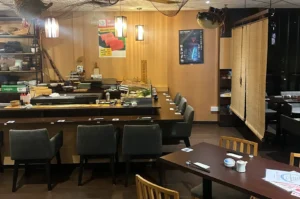
At places such as MoboMoga, where the counter keeps diners close to the kitchen, that proximity can make the meal feel more immediate. You are not simply receiving a plate. You have watched part of the process that led to it.
You Do Not Need Expertise to Notice Care
This is the part we return to.
You do not need to understand knife techniques, fish anatomy, or sourcing terminology to recognise attention.
You notice the pause before a piece is placed. You notice when the chef looks again before sending the plate out. You notice how little movement is wasted.
The sashimi does not necessarily taste different because you watched it being cut.
But you may eat it differently.
A little slower. With more attention.
And sometimes that is enough to change what you remember.