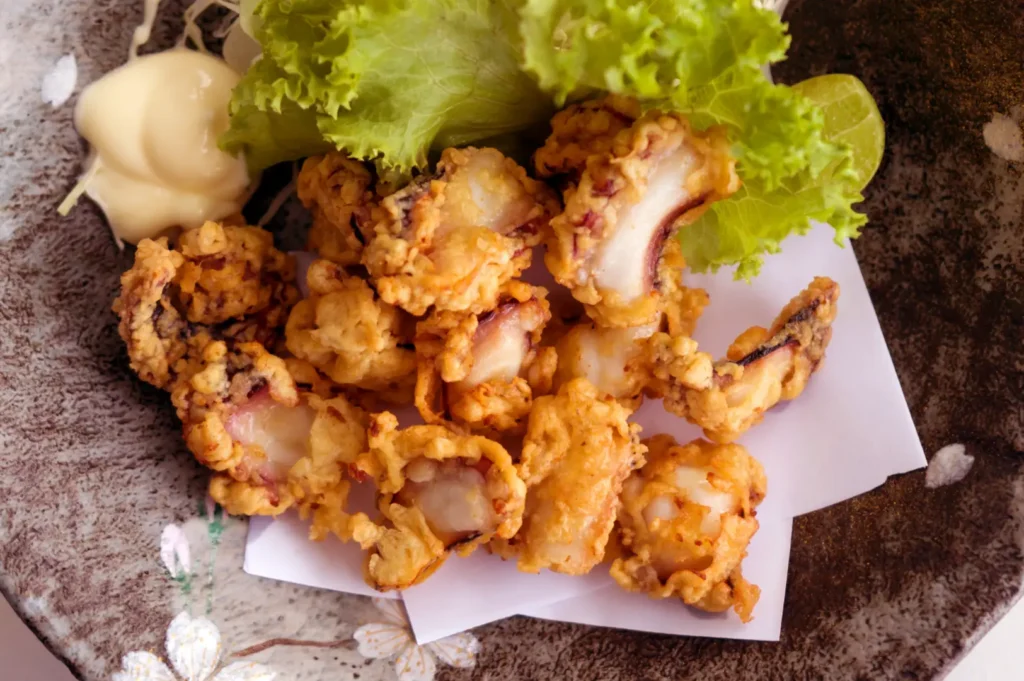
See “takokara” on an izakaya menu and think, “Oh, takoyaki, but maybe crispier?”
Not quite. Same octopus, completely different snack. And if you order expecting those familiar sauce-covered balls, you could be in for a surprise.
Here’s what we’re actually choosing between.
Takokara Puts Octopus First
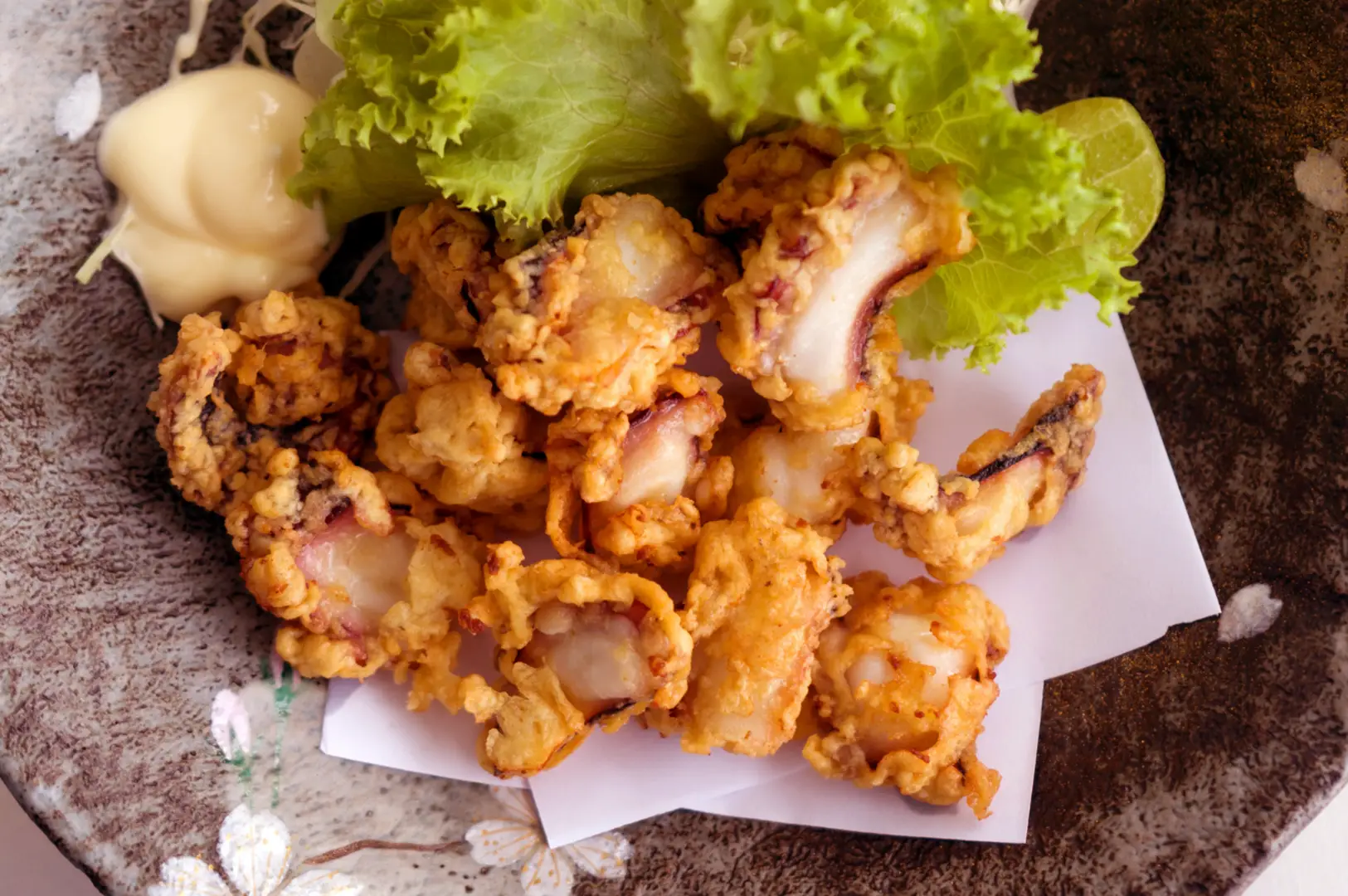
**Takokara is short for tako karaage.** Tako means octopus; karaage refers to a Japanese frying method commonly used for seasoned ingredients.
Instead of hiding octopus inside batter, the kitchen cuts it into pieces, seasons it, coats it lightly with flour or starch, then deep-fries it. Recipes vary, so don’t expect exactly the same coating everywhere.
The result? A crisp outside and an unmistakably chewy centre. You’re tasting octopus in practically every bite, not searching for a little piece of it.
I would choose this when the table wants fried seafood without a thick sauce taking over. It can sit comfortably beside skewers, sashimi or a round of drinks.
Takoyaki Is All About the Batter
Takoyaki takes a different route. Associated especially with Osaka, these round snacks start with a savoury batter, typically made using flour, egg and dashi. Small octopus pieces go inside.
The cook pours the mixture into a special griddle with round moulds, then turns each ball as it cooks. That’s not the same as dropping coated seafood into deep oil.
Inside, takoyaki is usually soft, sometimes almost creamy. Outside, it can be lightly crisp. The finishing touches often include takoyaki sauce, Japanese mayonnaise, aonori and dried bonito flakes.
So yes, there’s octopus. But the batter and toppings do much of the talking.
And one warning: freshly cooked takoyaki can be seriously hot inside. Give it a moment before taking an enthusiastic bite.
The Difference You Notice Immediately
Think about what your fork or chopsticks actually picks up.
With takokara, you’re lifting a piece of octopus with a fried coating. The chew is part of the appeal.
With takoyaki, you’re lifting a batter ball with octopus tucked inside. It’s softer, more filling and often more sauce-forward.
That matters when you are ordering for friends. One person might want the satisfying bite of seafood; another might be expecting the comforting softness of Osaka-style street food.
Both involve oil, but their cooking methods, proportions and textures are not interchangeable. Calling takoyaki “fried octopus” misses most of what makes it takoyaki.
Which One Belongs on Your Table?
Honestly, both can.
For an izakaya order built around seafood and shared plates, I’d pick takokara when we want something crisp and straightforward. Mikoto, included in our Robertson Quay izakaya shortlist, lists takokara, although its exact preparation may differ from other kitchens.
And if Mikoto has you thinking about a full night out by the river, Best Izakaya has the Robertson Quay spots I’d consider for everything from sake and shared plates to late-night sushi.
Takoyaki makes sense when everyone wants a softer snack with toppings and sauce. It’s equally shareable, just a different experience.
My rule is simple: choose by texture, not by the similar names.
Want to actually chew the octopus? Takokara.
Want that warm, savoury batter ball? Takoyaki.
Ordering both isn’t confusion. It’s a comparison worth eating.