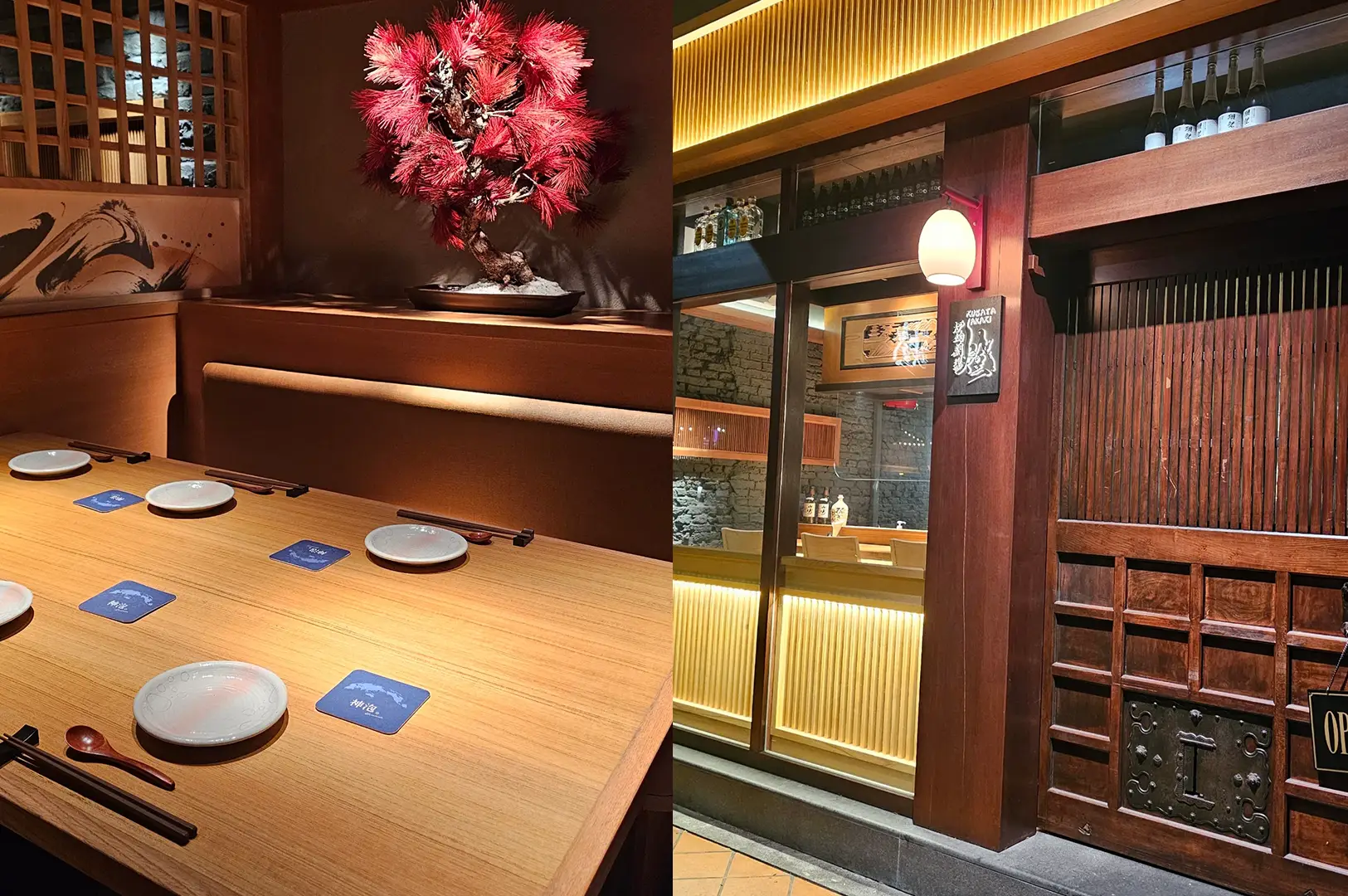
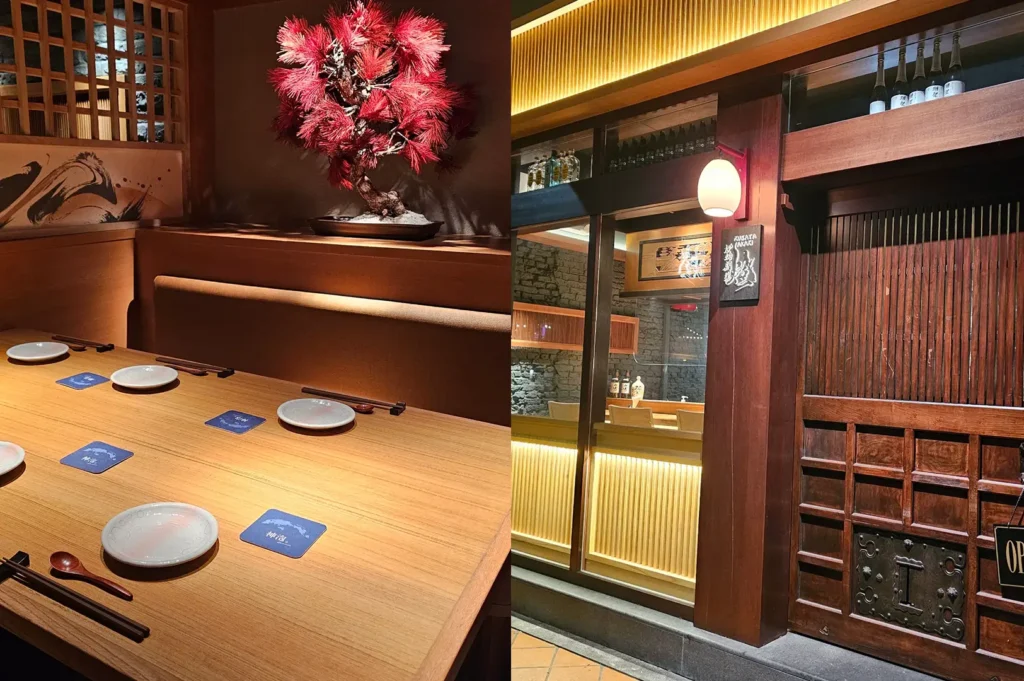
Robata AKARI does not make the table do the grilling.
It makes the fire part of the room.
That difference matters. In Singapore, many diners use “izakaya” to describe any Japanese place with drinks and sharing plates. Robata AKARI needs a more precise reading. It is an izakaya-style Japanese restaurant centred on robatayaki, a traditional charcoal-grilling format where chefs cook ingredients in front of guests around a robata hearth.
So the night begins differently.
Not with a grill placed on your table, and not only with skewers moving through the room. The focus is ahead of you: fire, ingredients, chefs, and the pace of charcoal.
Robatayaki Changes the Centre of the Meal
Yakiniku puts the grill on your table.
Robatayaki puts the chef and the fire in front of you.
That is the clearest distinction. At a yakiniku meal, diners manage the cooking themselves. At Robata AKARI, the cooking is handled by the kitchen, but the process remains visible. Seafood, meat, and vegetables are placed over charcoal, watched carefully, and served when the timing is right.
This gives the meal structure without making it formal.
The table still shares food and drinks. The difference is that the hearth becomes the anchor.
Fire Creates a More Social Counter
Robatayaki works best when diners can see the movement.
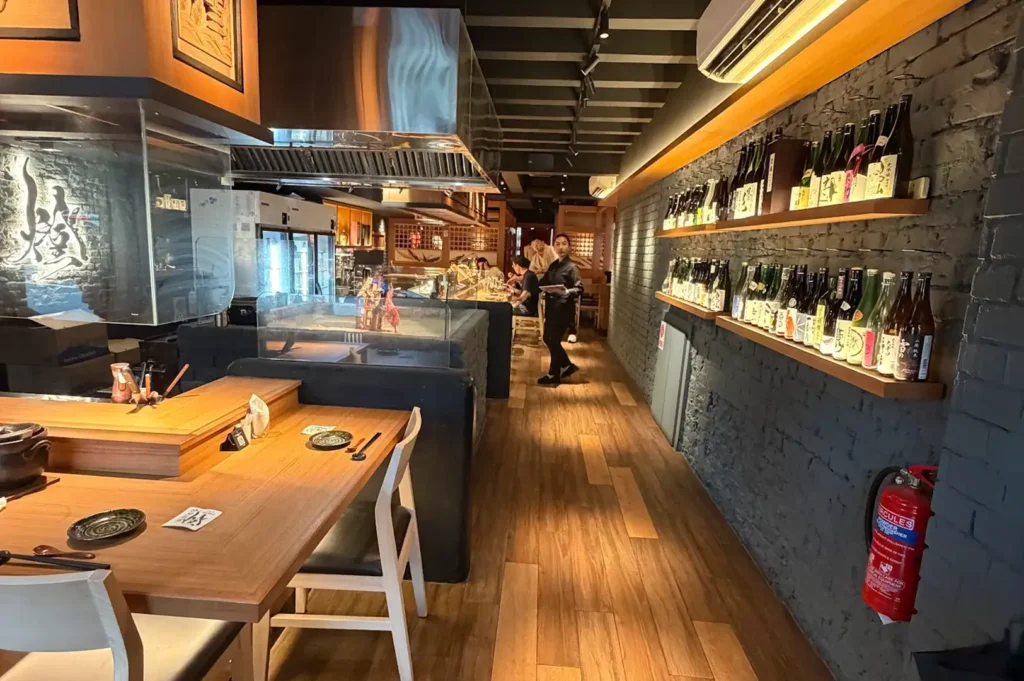
The chef is not hidden behind a closed kitchen. The fire is not background decoration. The counter creates a direct line between cooking and eating, which changes how guests experience the meal.
Robata AKARI’s concept also references the traditional shamoji, or long wooden paddle, used to serve dishes across the counter. It is a small detail, but it explains the format well. Robatayaki is built around reducing the distance between chef and diner.
That interaction is part of the atmosphere.
Premium Ingredients Need Patience
Charcoal grilling is not only about char.
Good robatayaki depends on heat control, moisture, timing, and restraint. Seafood can dry out quickly. Meat can become heavy if overcooked. Vegetables need enough heat to concentrate flavour without losing texture.
This is why robata suits premium ingredients.
The method gives them attention without overcomplicating the plate.
Where It Fits in Singapore’s Izakaya Scene
Robata AKARI belongs in the wider izakaya conversation because it brings food, drinks, sharing, and counter energy together.
It is not a standard tavern built only around beer and small plates. It is more focused, more grill-led, and more chef-facing.
For diners around Duxton Hill, that makes it useful when the night calls for Japanese drinks and atmosphere, but with the fire clearly at the centre.
If you are comparing nearby Japanese drinking spots, our look at Tanjong Pagar’s izakaya and Japanese dining scene gives that Duxton Hill experience a useful neighbourhood context.
That clarity helps diners choose Robata AKARI for the right reason, not treat every Japanese venue alike here.
What the Fire Leaves Behind
Robata AKARI shows that an izakaya night in Singapore does not need one fixed shape.
Sometimes it is skewers and beer. Sometimes it is sake, seafood, charcoal, and a shared view of the hearth.
Here, the fire leads.
The table follows.