They made it to page four before the staff stepped in.
At first, it seemed reasonable.
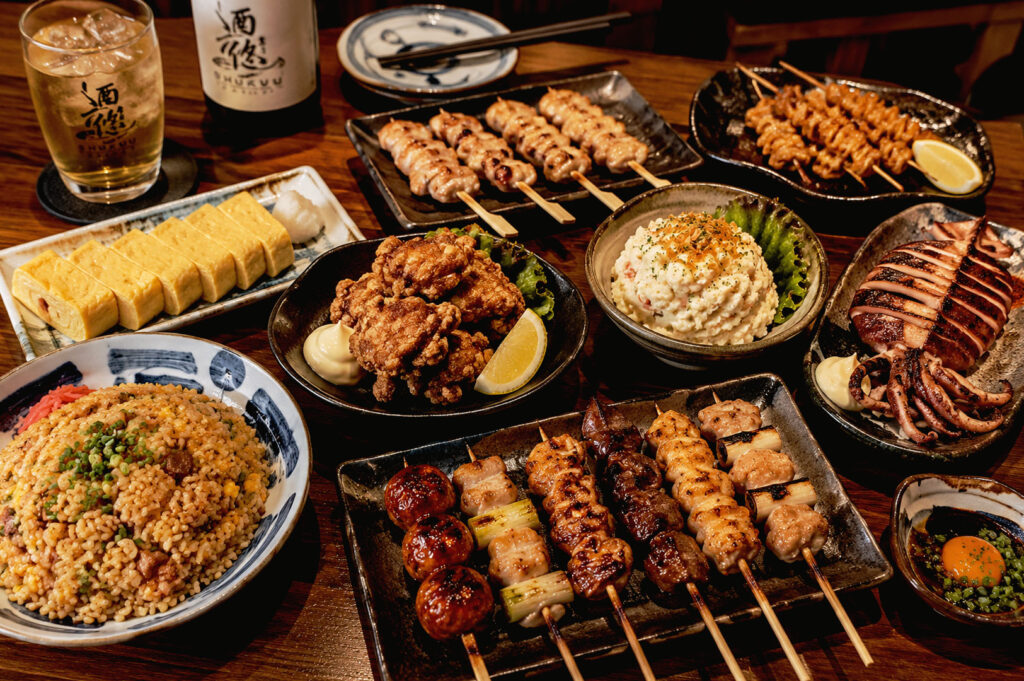
There were six of us at the table, the drinks had already arrived, and the menu felt deceptively manageable. Small plates. Skewers. A few grilled dishes. Nothing looked particularly heavy on its own.
So we kept ordering.
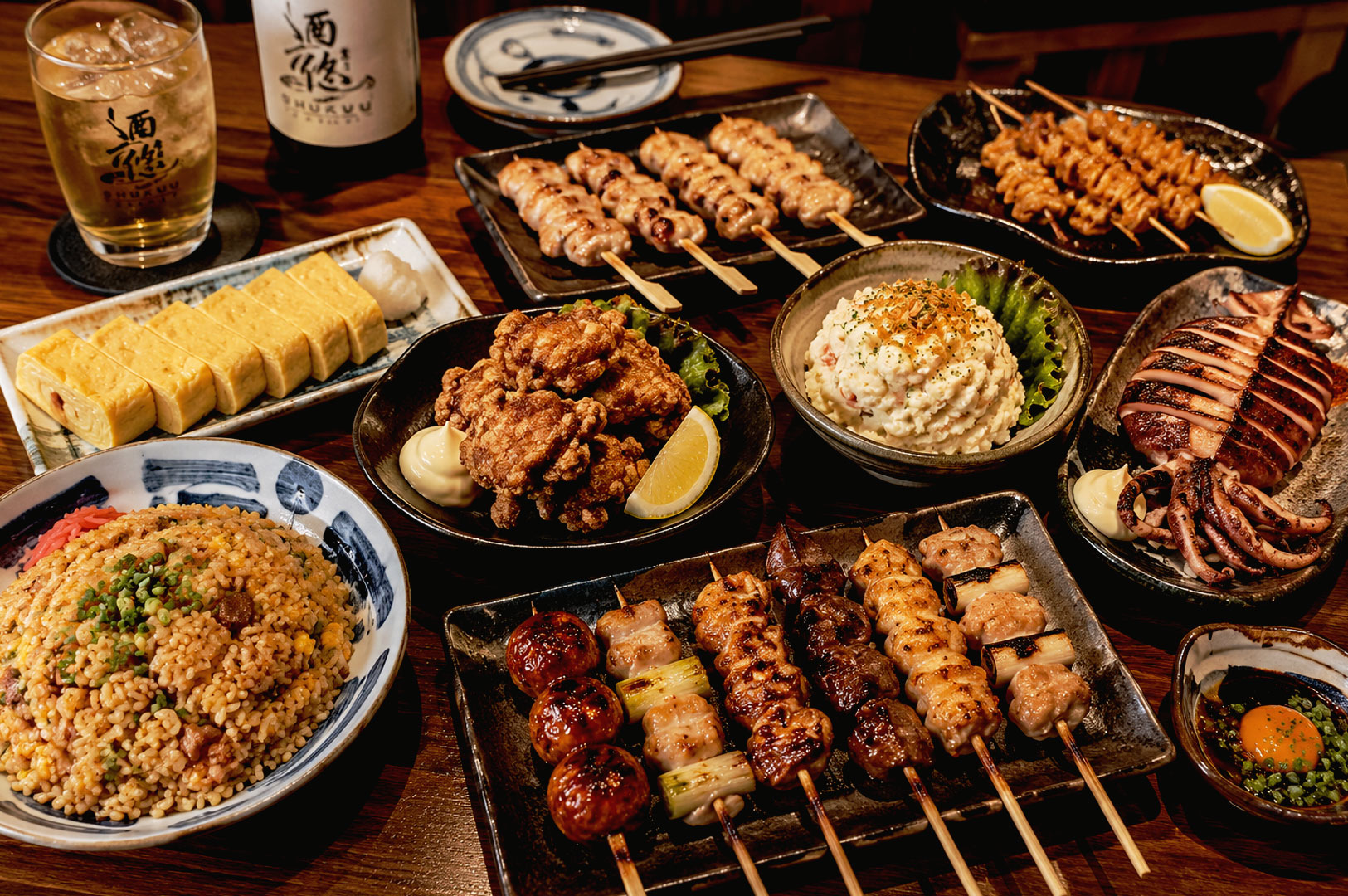
Chicken thigh.
Chicken skin.
Tamagoyaki.
Karaage.
Grilled squid.
Potato salad.
Fried rice.
Then more skewers.
At some point, one of us casually said, “Should we just try everything?”
The staff member paused for a moment before responding carefully:
“Maybe start with this first.”
At the time, it sounded like a polite suggestion.
Looking back, it was probably a warning.
The Menu Started Fighting Back
The first few dishes arrived quickly.
Then the table began to change.
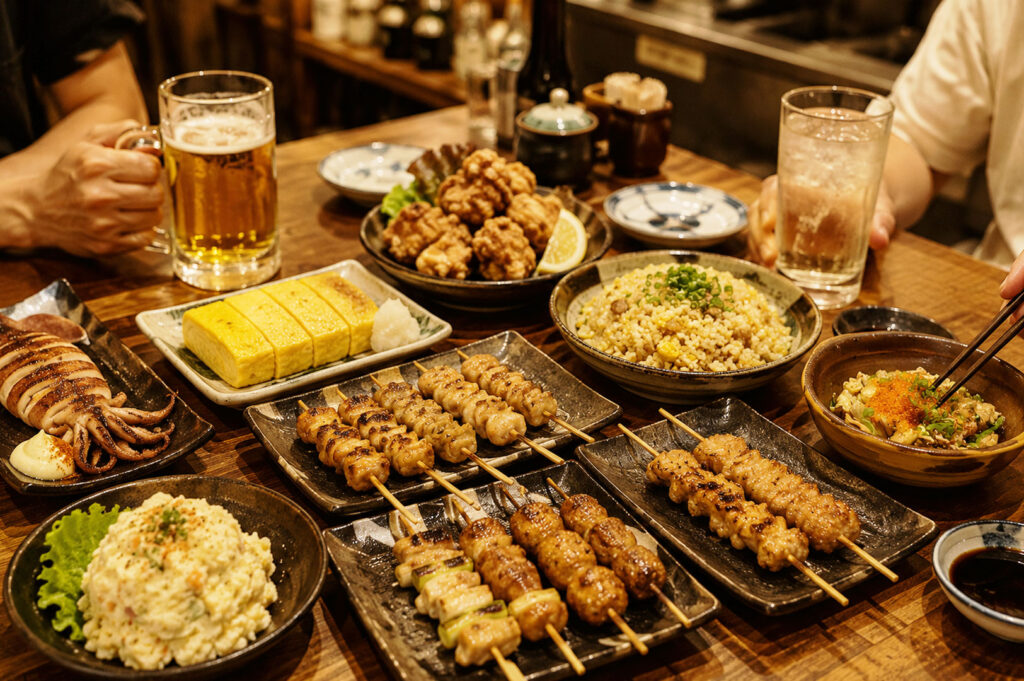
Plates stacked on top of each other. Skewers cooled while newer dishes landed. Someone was still halfway through the karaage while grilled fish arrived unexpectedly beside it.
The pacing disappeared.
Instead of moving through the meal gradually, we were suddenly managing inventory.
And the strange part was this:
The food itself was still good.
The experience just stopped making sense.
Izakaya Menus Are Built Differently
This is the part many first-time diners misunderstand.
An izakaya menu is not designed like a checklist.
It is not meant to be “completed.”
The length of the menu exists for flexibility:
- different moods
- different group sizes
- different drinking styles
- repeat visits over time
A regular customer might visit the same izakaya weekly and still order differently each time.
The menu supports continuity, not completion.
It’s the same reason areas like Somerset are best experienced gradually rather than all at once — especially when exploring guides on **what to eat in Somerset** and deciding what fits the night naturally.
Trying to order everything in one sitting disrupts the structure the kitchen is designed around.
The Kitchen Adjusted Before We Did
What became noticeable after a while was how the kitchen responded.
Some dishes slowed down intentionally.
Heavier items arrived later than expected.
Certain skewers were spaced apart.
At first, it felt inconsistent.
Then we realized the kitchen was trying to restore rhythm to the table.
Because once too many dishes arrive simultaneously, several things happen:
- hot food cools too quickly
- flavors start blending together
- diners stop paying attention to individual dishes
- appetite fatigue arrives much earlier
The kitchen understood this before we did.
The Midway Fatigue
Around halfway through the order, something shifted.
Nobody was excited anymore.
Not because the food was bad, but because there was simply too much of it. The table stopped reacting to new dishes. Even the standout items started feeling repetitive.
Salt. Smoke. Sauce. Fried textures.
Everything blurred together.
This is one of the hidden problems with over-ordering at an izakaya. The issue is rarely quantity alone.
It is sensory fatigue.
The experience works best when dishes arrive in smaller waves, allowing space between flavors, textures, and drinks.
Without that spacing, the meal becomes harder to appreciate.
Why Regulars Order Differently
Regular diners rarely try to maximize the menu.
Instead, they pace the night:
- a few skewers first
- maybe a cold dish
- then something grilled
- then another round of drinks
They adjust as the table evolves.
This creates flexibility. It also allows the kitchen to guide the experience more naturally.
Most importantly, it leaves room for return visits.
Because that is the real structure behind an izakaya menu.
You are not expected to finish it.
You are expected to come back.
The Real Lesson
By the end of the night, several dishes remained unfinished. Not because they were poor choices, but because the meal had stopped flowing long before the appetite ended.
The mistake was not ordering too much food.
The mistake was treating the menu like a challenge instead of a rhythm.
An izakaya works best when the table leaves slightly curious about what they did not order.
That curiosity is part of the design.