No one asked why I was alone.
That was the first relief.
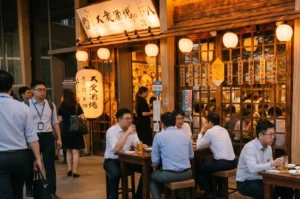
It was after work in Singapore, the hour when office towers release people into streets that still feel warm. Shirts loosened at the collar. Bags pressed against knees on the MRT. Messages arrived, were read, then left unanswered.
I entered the izakaya without a plan to meet anyone.
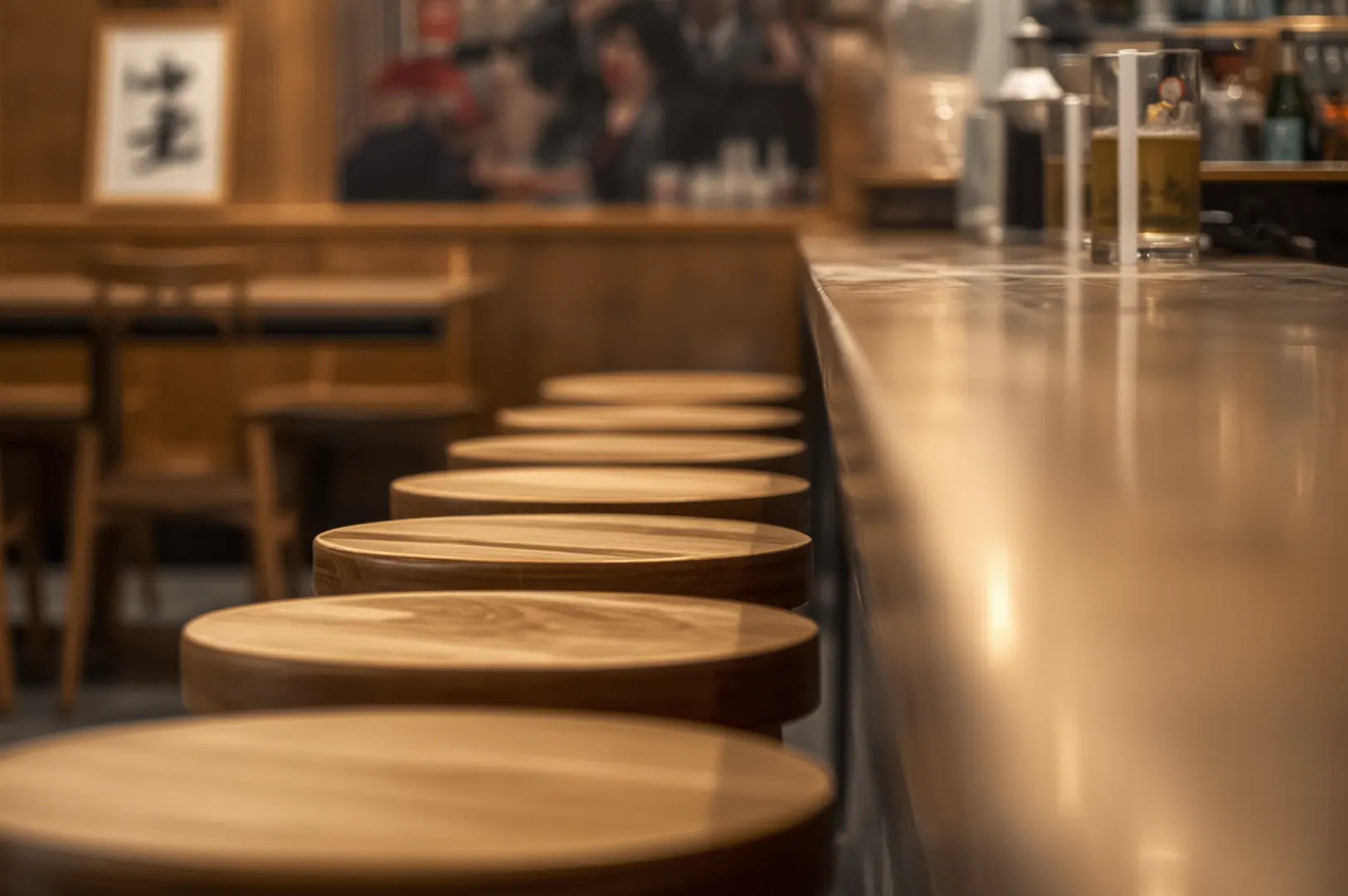
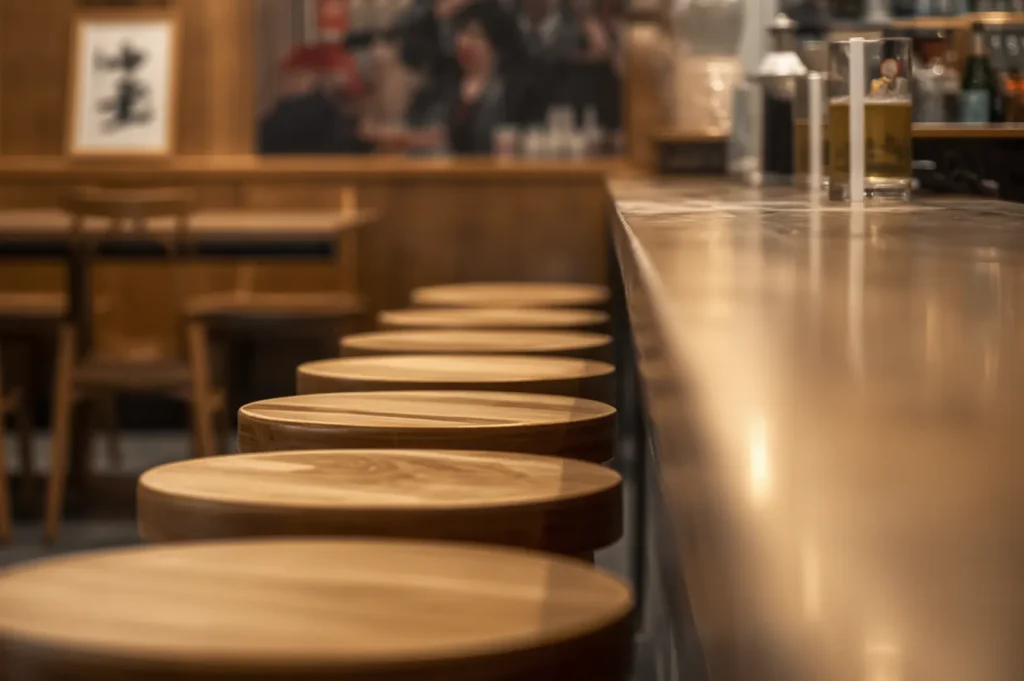
One seat was open at the counter. That seat mattered more than it first seemed, especially once you understand why izakaya counter seats fill up first. The staff pointed to it with the easy calm of someone who had seen this many times before. Not strange. Not sad. Just one diner, one stool, one evening beginning quietly.
That mattered.
The Counter Makes Alone Feel Normal
A table for one can sometimes feel too visible.
At the counter, the attention shifts.
You face the kitchen, not the room. The grill gives your eyes somewhere to rest. Skewers turn slowly over heat. A chef reaches for salt. A server slides a glass into place. The room continues around you, but it does not stare back.
This is why izakayas are gentle spaces for solo diners.
They offer company without demanding conversation.
You can sit near people without needing to explain yourself to them.
Watching the Kitchen Replaces Scrolling
The easiest thing to do alone is look at a phone.
At the counter, I forgot to.
There was enough happening in front of me. The sound of tare brushing against chicken. The brief flare from fat meeting heat. The quiet exchange between chef and staff before a plate was passed across.
These details make solo dining feel less empty.
You are not waiting for someone to arrive. You are participating by noticing.
That is a different kind of presence.
Small Interactions Are Enough
The staff did not perform friendliness.
They simply checked in.
Another drink? More skewers? Was the seat comfortable?
Small questions. Short answers. Nothing forced.
This matters because solo dining works best when service respects the diner’s space. Too much attention can make someone feel exposed. Too little can make them feel forgotten.
A good izakaya finds the middle.
It lets the diner belong lightly.
Dining Alone Has Changed
In a city like Singapore, eating alone no longer carries the same weight it once did.
People work late. Commute across the island. End meetings at odd hours. Sometimes the most practical dinner is the one taken alone, without negotiation, without waiting for a group chat to decide.
An izakaya counter understands that rhythm.
It does not turn solitude into a statement.
It just gives it a place to sit.
Leaving Without Explanation
When I left, the seat was quickly reset.
Another diner would take it. Another quiet evening would begin.
That felt comforting.
For many people now, that small permission is the point. You come in as you are, then leave steadier again.
Not every meal needs a companion to feel complete. Sometimes one seat at the counter is enough: a drink, a few skewers, a warm room, and no explanation needed.