The feeling does not begin with the food.
It begins before that.
Sometimes, it starts with a narrow doorway, a noren curtain shifting slightly as someone enters, or the quiet call of “irasshaimase” from behind the counter. Not loud, not theatrical. Just present enough to mark the change from outside to inside.
In Singapore, where the streets move quickly and dinner often feels scheduled between work, errands, and the next train, this small pause matters. A good izakaya does not need to announce itself as Japanese. It simply changes the rhythm of the evening.
That rhythm is also why the way dishes arrive, drinks settle, and conversations stretch slowly across the table matters so much — something you start to notice when you understand the natural flow of ordering at an izakaya.
That is where the Tokyo feeling begins.
It Is Not About Décor
It is easy to mistake the signs.
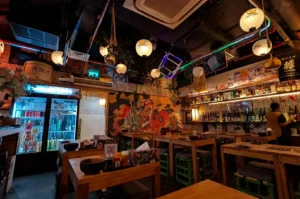
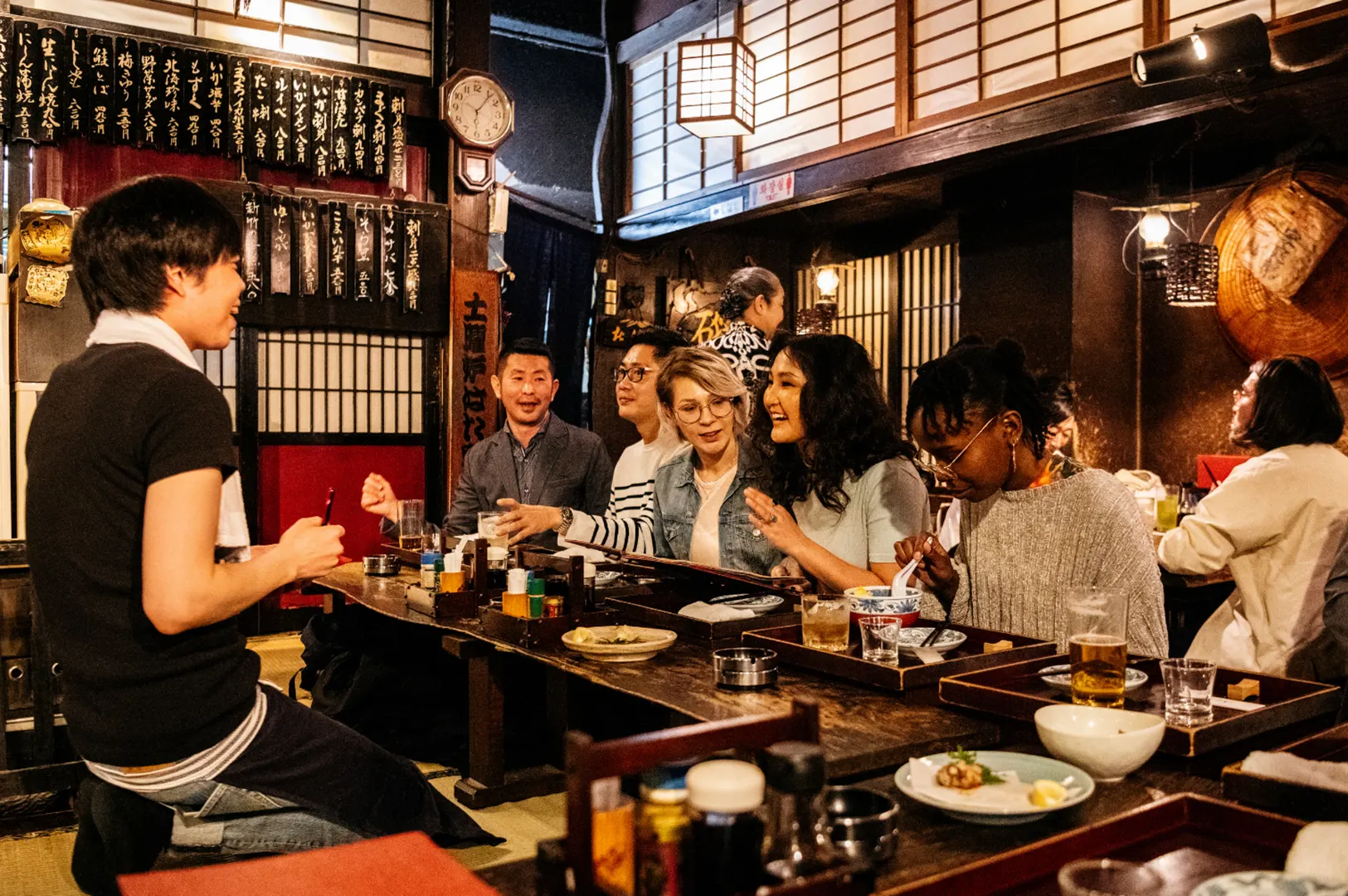
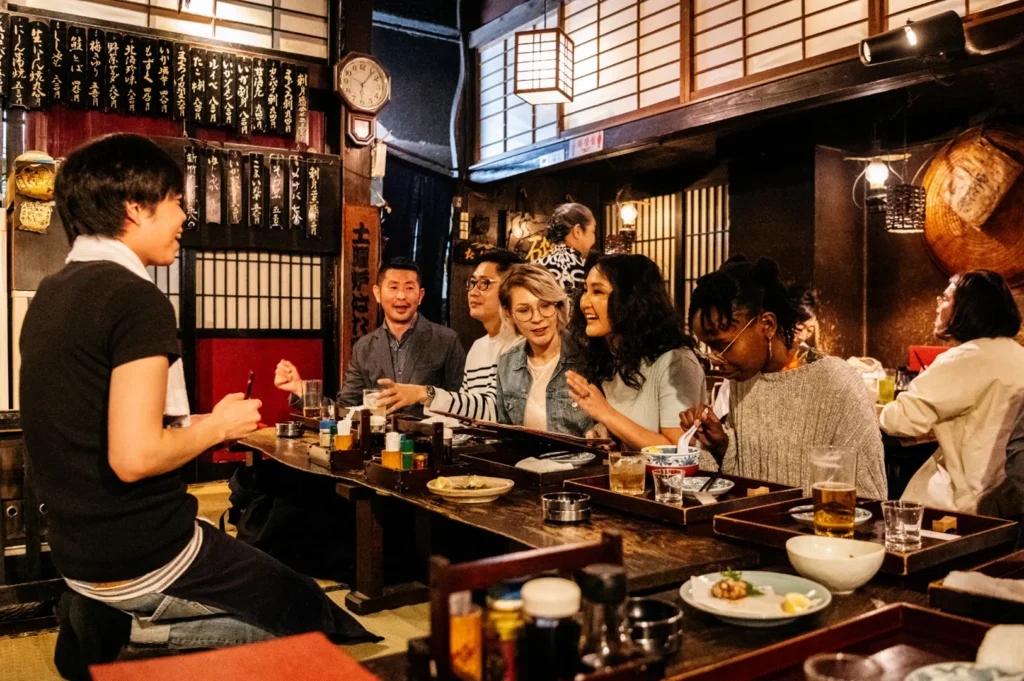
Wooden panels, paper lanterns, sake bottles on shelves, handwritten menus on the wall. These details help create atmosphere, but they are not what make an izakaya feel familiar.
The deeper feeling comes from behavior.
How the staff greet regulars.
How dishes arrive slowly, not all at once.
How the counter feels like a place to settle, not just sit.
In Tokyo, many small izakayas carry this same rhythm. The space may be modest, but the timing feels considered. Singapore’s best izakayas understand this too. The experience is not copied through decoration. It is carried through pace.
The Counter Tells the Story
The counter is often where the room becomes most honest.
At a table, dishes appear and disappear. At the counter, you see the movement behind them. A skewer is turned. A plate is adjusted. A chef glances up, notices a nearly empty glass, then returns to the grill.
Nothing dramatic happens.
That is the point.
The counter creates a quiet closeness between diner and kitchen. You do not need a long conversation for it to feel personal. Sometimes, a short recommendation is enough.
“What is good today?”
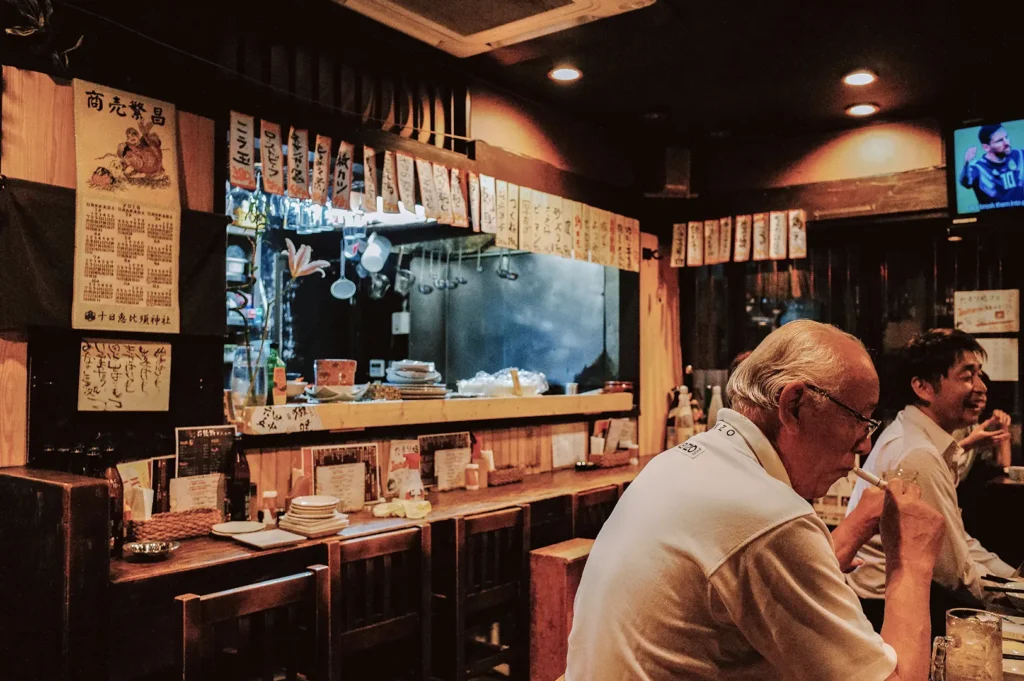
The answer may be a seasonal fish, a simple vegetable dish, or one skewer that has not yet sold out. This small exchange changes the meal. It makes the night feel guided rather than chosen from a list.
Handwritten Menus Carry the Day
A handwritten menu always changes my attention.
It suggests that the evening is not entirely fixed. Something came in fresh. Something may run out. Something may only exist for a few hours.
This is one of the quiet continuities between Tokyo and Singapore izakayas. The menu is not treated as a permanent document. It is closer to a record of the day.
That impermanence gives the meal a different feeling.
You order with slightly more care. You listen when the staff recommends something. You accept that not everything will be available, and that this is not a flaw.
It is part of the rhythm.
Regulars Change the Room
The strongest sign of a good izakaya is often not the food on the table, but the way regulars enter.
They do not need to look around. They already know where to sit. They greet the staff without formality. They order simply, sometimes without opening the menu.
Their ease softens the room.
First-time diners may arrive with uncertainty, but regulars show what the place becomes over time: familiar, steady, quietly generous.
The Feeling That Stays
A little Tokyo feeling in Singapore is not about imitation.
It is not about making the room look like somewhere else.
It is about rhythm. The greeting at the door. The dishes arriving in waves. The handwritten menu. The counter seat. The small gestures that make the evening feel less hurried.
When these details come together, the izakaya becomes more than a restaurant.
It becomes a place where the city slows down for a while.