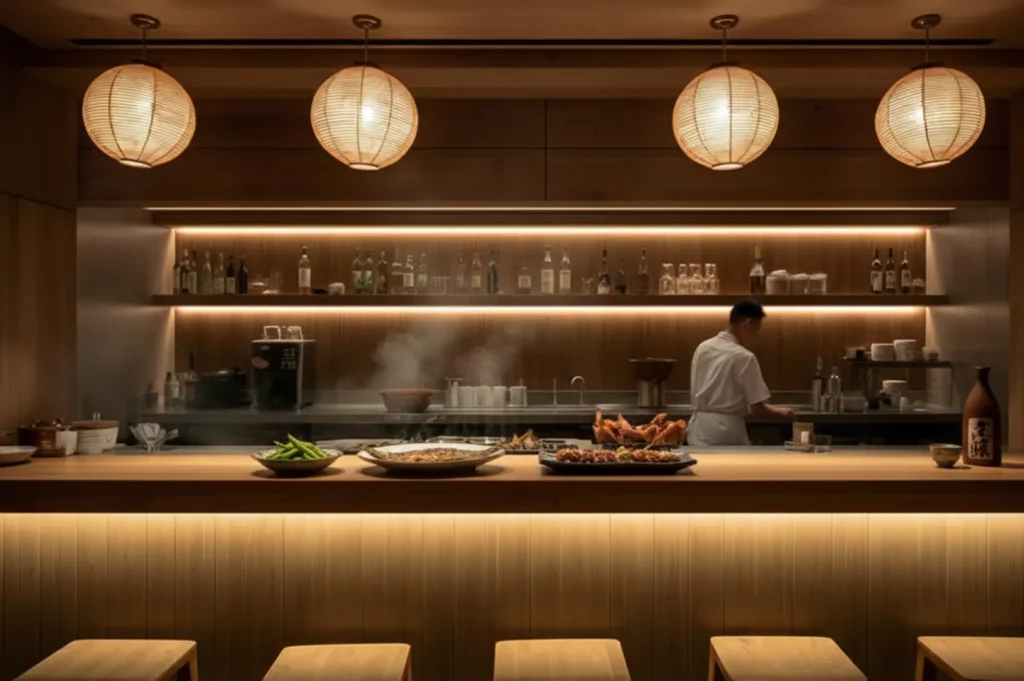
Singapore did not copy the izakaya.
It gave it air-con, group chats, mall corridors, and one friend who still wants rice.
And honestly? It works.
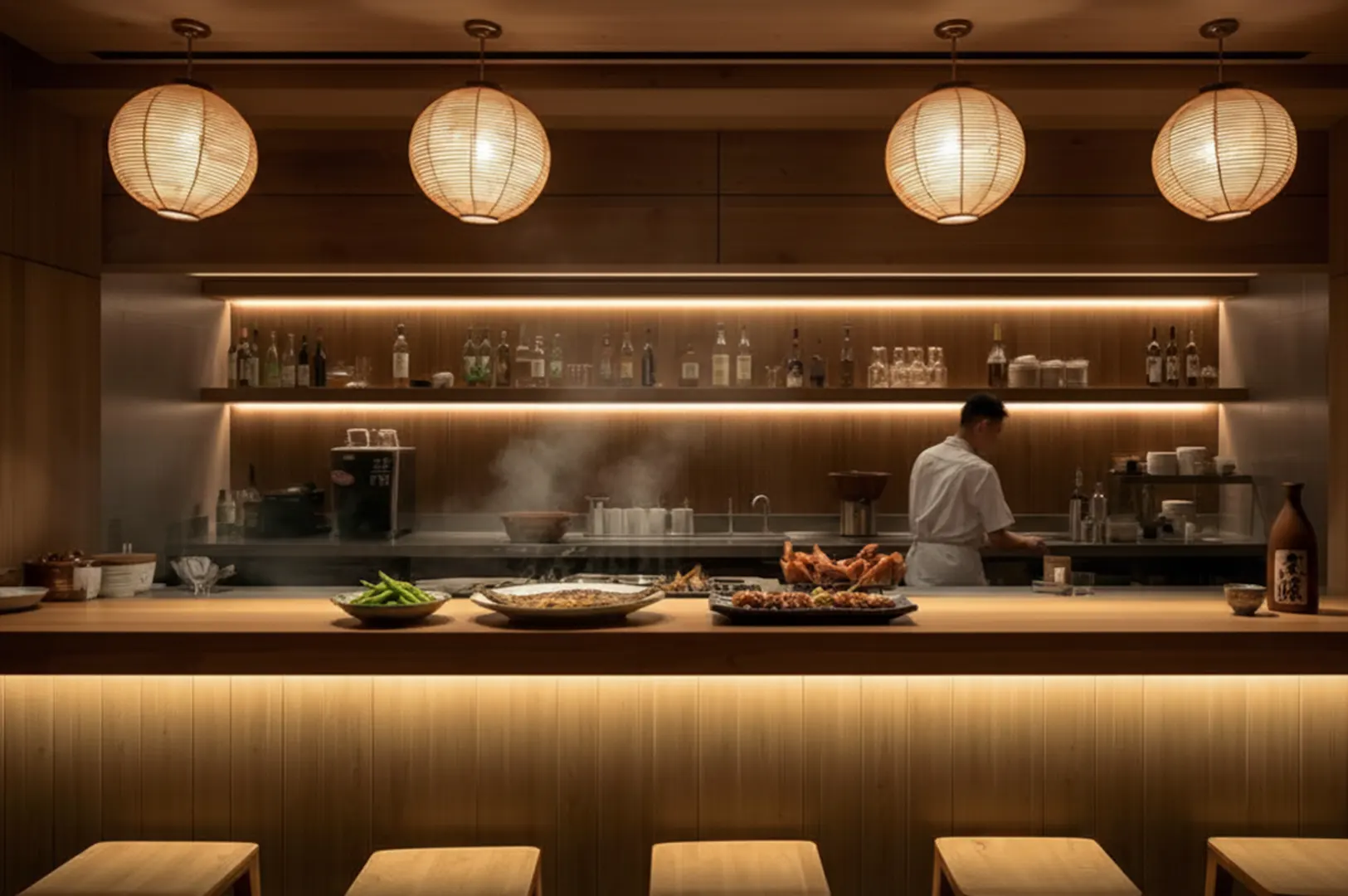
A traditional izakaya in Japan is often compact, counter-heavy, and built around drinking first. You drop in after work, order a drink, add a few small dishes, and let the night move in rounds.
Singapore took that rhythm and stretched it.
Not badly. Just differently.
Here, an izakaya has to handle office groups, birthday dinners, non-drinkers, hungry diners, sake people, highball people, and someone who says, “Can we order something filling?”
That mix of needs is exactly why balancing drinkers and eaters at an izakaya becomes such a big part of how the Singapore version works.
That is the Singapore version.
Same spirit. Different table dynamics.
Bigger Groups Changed the Room
In Tokyo, the counter often feels like the main event.
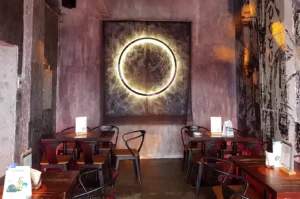
In Singapore, the group table matters more.
We dine in packs. Colleagues after work. Friends meeting in Orchard. Couples joining another couple. Someone brings one extra person because “nearby only.”
Suddenly, the izakaya has to serve more than solo drinkers and small pairs.
That changes the room.
Tables become more important. Sharing becomes louder. Orders get bigger. The meal becomes less about one person’s quiet drink and more about keeping the whole group moving together.
Still izakaya.
Just with more bags under chairs.
Singapore Diners Come Hungry
Here is the big shift.
Many Singapore diners do not treat izakayas as drinking places with food.
They treat them as dinner places with drinks.
That matters.
A table may start with beer or sake, but someone will still want a proper meal. Not just edamame and two skewers. They want karaage, grilled squid, fried rice, ramen, maybe curry if the night is going there.
So Singapore izakayas adapt.
The menu needs drinking bites and dinner anchors. Small plates for pacing. Rice and noodles for closure. Comfort dishes for people who came straight from work and skipped lunch.
Very real behaviour.
Sharing Is the Local Superpower
Singapore diners understand sharing almost too well.
We are built for it.
One plate in the middle? Easy. Everyone takes a bit. Someone reaches across. Someone says, “Try this.” Someone immediately orders another round because the first one disappeared too fast.
That makes izakayas fit naturally here.
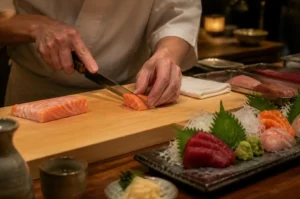
Yakitori, sashimi, fried dishes, grilled vegetables, potato salad, tamagoyaki — everything already wants to be passed around.
The format did not need much translation.
Singapore diners just made it more communal.
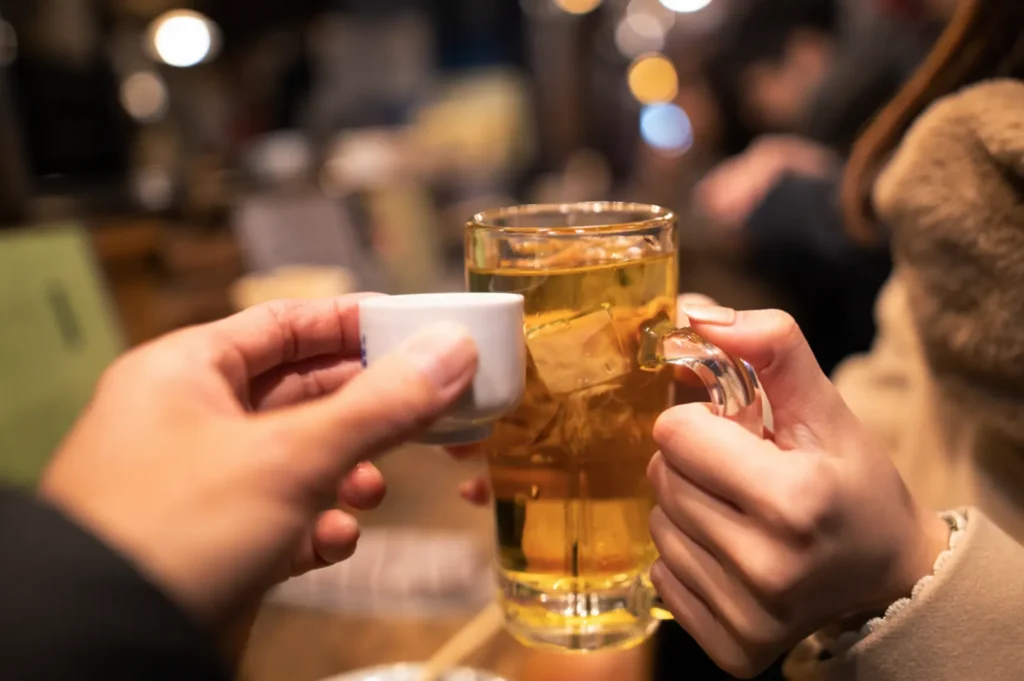
Supper Culture Changed the Ending
Another local twist?
We like a late finish.
An izakaya in Singapore is not always the first stop. Sometimes it is dinner. Sometimes it is drinks. Sometimes it is the “still hungry?” place after another plan ends.
That is why closing dishes matter.
Garlic fried rice. Ramen. Curry. Ochazuke. These dishes help the table land properly, especially when drinks have been moving for a while.
The night does not just fade out.
It gets fed.
The Vibe Survived Because the Rhythm Stayed
So yes, Singapore changed the izakaya.
It made it bigger, more dinner-friendly, more group-driven, and more flexible.
But it did not kill the vibe.
Because the important part is still there: shared plates, drinks in rounds, food arriving in waves, and a table that keeps finding reasons to stay.
That local rhythm is something you’ll keep noticing across Singapore’s izakaya culture.
That is the real izakaya rhythm.
Singapore just gave it a local accent.