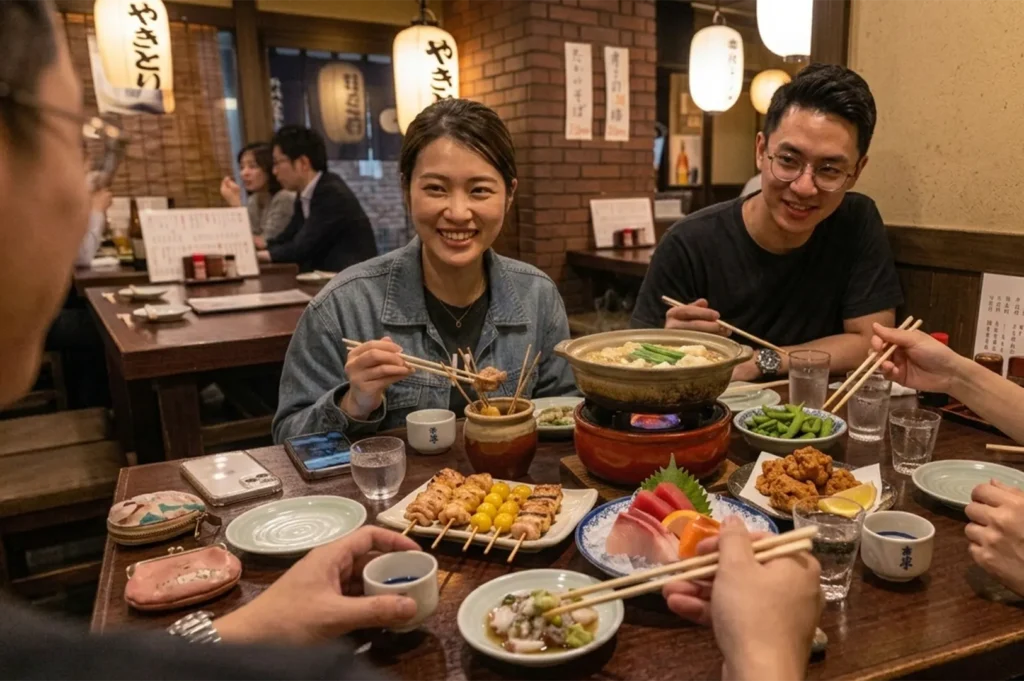
The most awkward part of an izakaya meal is sometimes not ordering.
It is paying.
In Singapore, group dining often looks simple at the start. Everyone shares a few plates, someone orders drinks, another person asks for rice later, and the table keeps adding dishes as the night goes on. By the end, the bill arrives with service charge and GST included, and the easy mood becomes more complicated.
This is not unusual. Izakayas are flexible by design, but that flexibility can create uneven spending.
That tension often starts with the different ways people use the same table, especially when balancing drinkers and eaters at an izakaya becomes part of the night.
Drinkers and Non-Drinkers Spend Differently
Drinks change the bill quickly.
A diner who has beer, highballs, sake, or shochu will usually add more to the total than someone drinking tea or water. When the group splits the bill evenly, non-drinkers may end up paying for alcohol they did not consume.
This can feel minor with one round. It becomes more noticeable with bottles, repeated highballs, or premium sake.
A fair approach is to separate alcohol first, especially when drinking habits differ clearly across the table.
Shared Plates Are Harder to Track
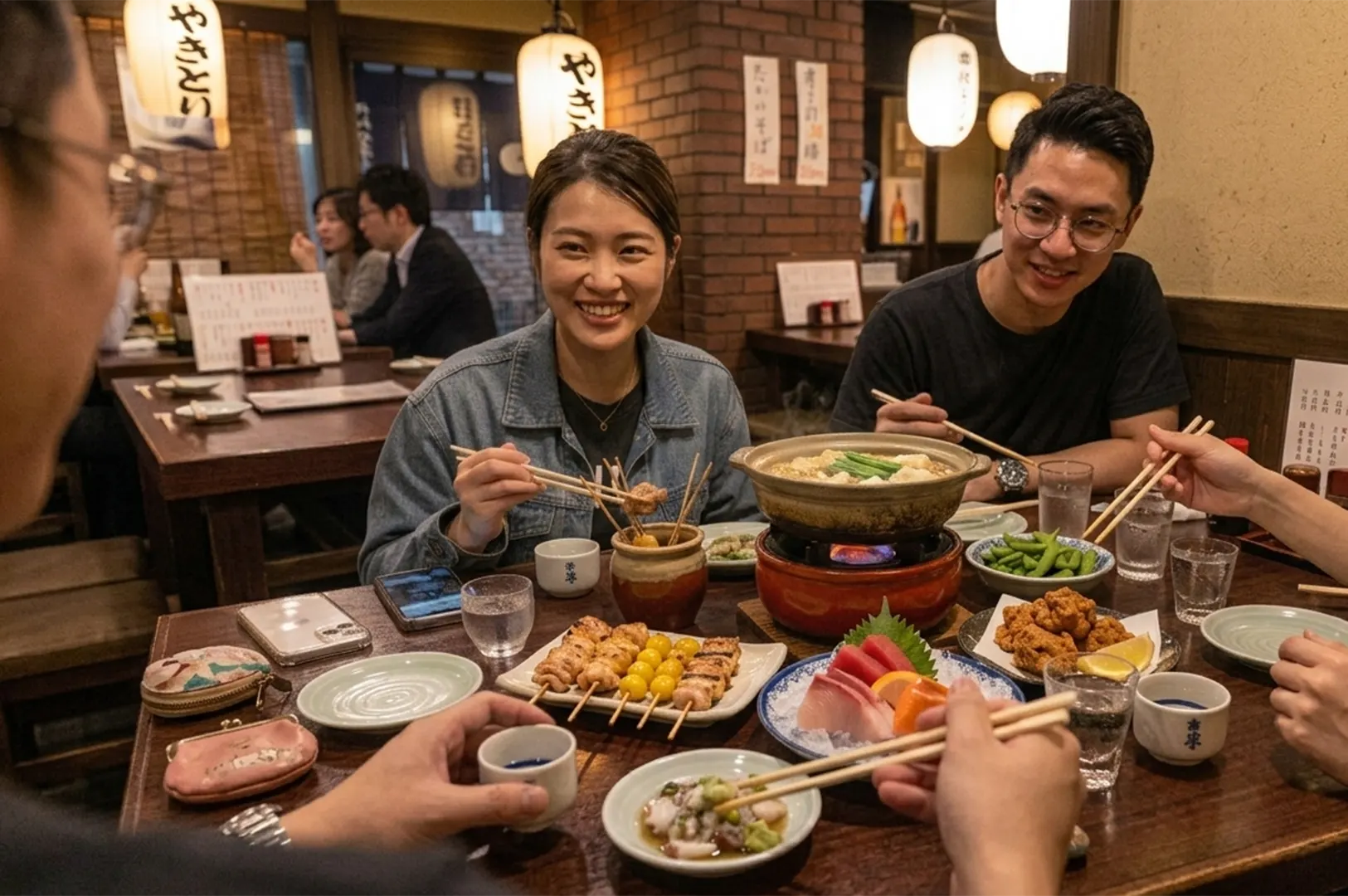
Izakaya food is built around sharing.
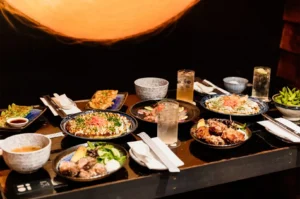
Yakitori, karaage, sashimi, grilled squid, potato salad, and fried rice are usually placed in the centre. Everyone takes some, but not always equally.
This is different from individual mains, where each diner’s cost is easier to identify. Shared plates create a social meal, but they also blur the numbers.
The issue is not the sharing itself. The issue comes when some diners eat lightly while others order heavily, especially across several rounds.
Service Charge and GST Add Up
Singapore diners also need to account for service charge and GST.
A bill may look manageable before these charges are added. Once included, the final amount can be noticeably higher. This matters when one person pays first and the group transfers their share later.
For smoother splitting, diners should use the final payable amount, not the pre-tax subtotal. Otherwise, the person settling the bill may absorb the difference.
Flexible Ordering Creates Uneven Spending
Izakaya meals rarely follow one fixed order.
The table may begin with small plates, add drinks, reorder skewers, then finish with rice, ramen, curry, or ochazuke. This makes the meal enjoyable, but it also means spending develops gradually.
Some diners may stop ordering early. Others may keep adding drinks or food. By the end, an even split may no longer reflect actual consumption.
This is where a quick agreement helps: split food evenly, separate drinks, or let heavy drinkers pay more.
Final Perspective
The bill splitting problem is not a flaw in izakaya dining.
It is a result of shared plates, flexible ordering, mixed drinking habits, and Singapore’s final charges.
The simplest solution is to agree early. If the table is drinking evenly, an equal split may work. If not, separating alcohol from food keeps the ending cleaner.
A good izakaya night should not be remembered for awkward payment math at the doorway later.