
Osaka does not do quiet. It is a city that eats loudly, drinks generously, and treats a good izakaya night as something close to a civic duty. After countless evenings moving between Shinsekai’s neon lights, Namba Station counters, neighbourhood yakitori joints, and quieter Fukushima rooms, we have learned that no two Osaka izakaya deliver the same experience. This list reflects that difference: seven places we would happily send a friend to, each chosen for a very specific reason, from tiny karaage bars to fire-grilled seafood counters and refined seasonal kitchens serving delicious dishes made with fresh ingredients.
If Tokyo is also on the itinerary, Best Izakaya has a separate guide that follows the same idea there: choosing izakayas by the kind of night they actually deliver, not by one narrow definition of the format.
Quick Take: Where Each Place Actually Fits
Spot | Best For | Vibe | Our Call |
|---|---|---|---|
Fried chicken + solo drinks | Tiny, local, chaotic in a good way | Cheap Osaka comfort stop | |
Groups + fun food + photos | Loud, modern, playful | First-night energy | |
Classic izakaya seafood + fire grilling | Lively but grounded | “Proper izakaya” experience | |
Local yakitori + after-work drinks | Neighbourhood regular spot | Hidden gem local hangout | |
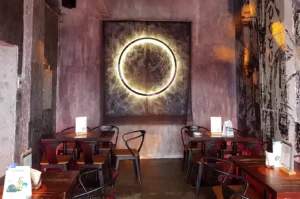
Refined seasonal cooking | Small, calm, food-first | Serious dinner pick | |
Seafood + standing bar chaos | Outdoor, loud, iconic | Most “Osaka” experience | |
Seasonal seafood + sake | Refined, quiet, grown-up | Best slow seafood night |
Osaka Station: A Hub for Izakaya Culture
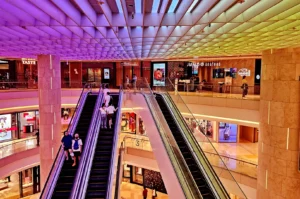
The area around Osaka Station is not only a major transit hub but also a hotspot for izakaya culture. Many izakayas near Osaka Station cater to office workers and travelers alike, offering a mix of standing bars and cozy counter seats perfect for quick after-work drinks or leisurely dinners. The New Umeda Food Street, just a short walk from Osaka Station, is a bustling strip of eateries where you can enjoy classic Osaka dishes like takoyaki and kushikatsu in a lively atmosphere. This accessibility makes Osaka Station an ideal starting point for anyone looking to dive into the city’s vibrant izakaya scene.
Best Izakaya: Exploring Osaka Shi's Culinary Nightlife

Osaka shi is famous across Japan for its vibrant food culture, from street snacks like takoyaki and okonomiyaki to the many izakayas where locals and tourists alike gather to enjoy delicious food and drink. Whether you’re craving crispy fried chicken, grilled chicken skewers, or fresh seafood, the city offers a variety of options that showcase the best of Osaka’s culinary scene.
Fresh Seafood
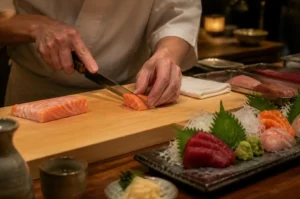
Many izakayas in Osaka shi pride themselves on serving fresh seafood sourced daily. From sashimi to grilled fish, the taste of the sea is integral to the city’s dining experience. At spots like Robatayaki Isshin, fresh-fish warayaki is seared over burning straw, giving a smoky aroma that complements the natural flavors. Izakaya Toyo in Kyobashi offers an outdoor standing bar experience where blowtorch-seared tuna cheek and other seafood delights are main attractions. These dishes highlight the delicate balance of salt and seasoning that enhances the natural sweetness of the seafood.
1. Johnny's Karaage Bar, Shinsekai

Getting there: Ebisucho Station, around 4 minutes from Exit 3 on the Osaka Metro Yotsubashi Line
What we would budget: Around ¥1,000 to ¥1,999 per person for fried chicken, a few sides, and drinks, making it a cheap and fun spot for an average meal
Why we kept it on the list: Very few places turn something as simple as fried chicken into this much of an Osaka night out.
Johnny’s is the smallest and most specialised place here, and that is a large part of why we like it.
Tucked near Tsutenkaku under the neon lights of Shinsekai, it is essentially a karaage bar with barely a dozen seats, a rotating cast of regular Osaka residents, and an owner whose personality becomes part of the evening.
This is not the place for a huge menu of sashimi, robatayaki, or seasonal seafood. It knows what it is good at and stays there: deep fried skewers like crispy fried chicken, bar snacks, and a surprisingly deep drinks selection.
Do not stop at plain karaage.
The Tartar Chicken Nanban is the order we would build the meal around. The chicken stays crisp and juicy underneath the tartar, while the crispy chicken skin makes an easy second plate once the drinks arrive.
Add a Japanese peach sour or beer, and the whole place starts to make sense.
At roughly ¥1,000 to ¥1,999 per person, it is also one of the easiest places on this list to visit without turning dinner into an expensive night.
There are two things to know before going.
First, the room is tiny. Once food-tour groups or larger parties arrive, service naturally slows and solo diners can occasionally feel lost in the shuffle.
Second, bring cash. We would not rely on card payment here.
We would come here for: Fried chicken, casual drinks, solo evenings, couples, and a bit of conversation with the chef.
We would skip it when: We want sashimi, robatayaki, a sprawling sake menu, or enough room for a large group.
Our move: Get there early, order the Chicken Nanban and crispy chicken skin first, then settle in with a fruit sour or beer.
2. Munimuni Umeda

Getting there: Umeda Station, around 6 minutes on foot, directly connected to Osaka Station
What we would budget: Around ¥2,000 to ¥2,999 per person à la carte, or roughly ¥3,480 for some drink-inclusive all you can drink course options
Why we kept it on the list: Munimuni proves that a modern, highly visual izakaya can still be genuinely fun once the food reaches the table.
If Johnny’s is intimate and specialised, Munimuni swings hard in the opposite direction.
It is young, loud, playful, and designed for groups of friends and office workers looking for a fun night out.
This is a modern taishu sakaba where half the table will probably reach for their phones to start taking photos when the food arrives, but that does not mean the dishes exist only for show.
The A5 Wagyu meat temari sushi, at around ¥1,500, is rich enough to justify the spectacle. The Munimona Jumbo, around ¥1,380, arrives overflowing with fresh seafood and ikura, while the Muni Sukiyaki, around ¥1,980, comes to the table with the kind of flame that guarantees everyone looks up.
Yes, it is dramatic.
That is the point.
It is also one of the easier izakayas here for international visitors. QR ordering and some English-speaking staff remove a lot of the uncertainty that can come with walking into a busy local drinking spot.
Our main advice is for groups: check the course menu before ordering à la carte.
Once everyone starts adding the visually tempting signatures and drinks separately, the bill climbs quickly. A drink-inclusive all you can drink course around ¥3,480 can make considerably more sense.
There are a few trade-offs.
Smoking is permitted, popular dishes can disappear later in the evening, and the conditions around some all-you-can-drink packages are worth confirming before ordering.
We would come here for: Friend groups, first nights in Osaka, casual dates, birthdays, and a lively dinner before going out.
We would skip it when: We want understated cooking, traditional pub atmosphere, or enough quiet to talk across the table.
Our move: Go earlier on a weekday, compare the course against à la carte, and order the dishes you actually came to photograph before they sell out.
3. Robatayaki Isshin Namba

Getting there: Namba Station, around 1 minute from Exit 14 on the Osaka Metro Midosuji Line
What we would budget: Around ¥4,000 to ¥4,999 per person once seafood, grilled dishes, and drinks are involved
Why we kept it on the list: This is one of the clearest examples here of the fire, fresh seafood, and sake combination people imagine when they picture a proper Osaka izakaya.
This is where we would send someone who tells us, “I just want a proper izakaya.”
Isshin combines robatayaki with dramatic warayaki, where fresh ingredients are seared over burning straw. The room has enough warmth and energy to feel lively without tipping into party-bar territory.
More importantly, the cooking still leads.
The fresh-fish warayaki is what we would build the meal around. A full portion runs around ¥3,828, while the half portion is roughly ¥2,068.
Then we would add the whole charcoal-grilled fatty mackerel at ¥2,178 and, if the table is still hungry, the unagi shirayaki at ¥2,398.
Sashimi starts at around ¥1,078, while the pork-wrapped vegetable rolls, generally around ¥319 to ¥429 each, are exactly the kind of smaller plates that keep a robatayaki meal moving.
This is not a ¥2,000 drinking stop.
Once good fish and several rounds of drinks start arriving, expect the bill to land closer to ¥4,000 to ¥4,999 per person.
A couple of dishes can also run salty depending on your palate, and sashimi portions may look restrained beside the price.
We would still come back.
Being almost directly outside Namba Station helps, and the earlier weekend opening gives you a useful way to get ahead of the evening crowds.
We would come here for: A first proper izakaya experience, fresh seafood, couples, and anyone who wants to watch the grill doing some of the work.
We would skip it when: Our main objective is the cheapest possible night of beer and snacks.
Our move: Ask for counter seats. If you are coming for warayaki, you might as well sit where you can actually watch the fire.
4. Cooo+, Yodogawa

Getting there: Nishinakajima-Minamigata Station, around 5 minutes on foot on the Osaka Metro Midosuji Line
What we would budget: Around ¥3,001 to ¥4,000 per person, with happy-hour drinks bringing the total down
Why we kept it on the list: Cooo+ gives this list something the central Osaka favourites cannot: the feeling of finding a local drinking spot you could actually become a regular at.
Cooo+ is our neighbourhood pick.
It is the kind of yakitori place most visitors would never specifically search for, yet the sort of place we would happily return to after a long day around Shin-Osaka.
The food moves between classic Japanese drinking fare and unexpected Western-leaning dishes.
The centrepiece is Daisen chicken cooked quickly over binchotan charcoal, but the dish we would make sure not to miss is the house-made tori ham.
It is treated as a specialty here and is easy to overlook when everyone immediately starts pointing at grilled chicken skewers.
Order it first.
The fried chicken with tartar sauce is another easy plate to share, while the house curry has more credibility than the usual izakaya afterthought thanks to the kitchen’s curry-shop experience.
The real value window is between 5pm and 7pm.
During happy hour, highballs can drop to around ¥308 and draft beer to approximately ¥418, which makes this an unusually easy place to settle into for a few rounds.
Now for the dealbreakers.
The entire venue permits smoking.
It also does not admit anyone under 20, even when accompanied by adults.
Those two details immediately rule Cooo+ out for some travellers, and they are worth knowing before making the journey.
We would come here for: Yakitori, low-key drinking, small groups, and an after-work-style evening away from Namba and Umeda.
We would skip it when: Cigarette smoke bothers us, we are travelling with anyone under 20, or central nightlife matters more than neighbourhood atmosphere.
Our move: Arrive during happy hour and order the tori ham before the skewers start taking over the table.
5. Izakaya Tokitame, Fukushima

Getting there: JR Fukushima Station, around 5 minutes on foot
What we would budget: Around ¥5,000 to ¥7,999 per person for a fuller food-led dinner with drinks
Why we kept it on the list: Tokitame shows what happens when the relaxed structure of an izakaya meets cooking with considerably more refinement behind it.
Of everything here, Tokitame is one of the places where we would tell you to pay closest attention to the food.
It has earned Michelin Bib Gourmand recognition, but the room itself does not feel stiff or overly serious.
There are only around 18 seats, including eight at the counter, and the owners give the place the warmth of somewhere being run personally rather than institutionally.
We would start with the Obanzai Moriawase.
It is a collection of seasonal, home-style dishes that gives you the rhythm of the kitchen before moving into stronger flavours.
From there, sashimi, grilled yam, fried chicken, and dishes such as mapo tofu show how comfortably Tokitame moves between Japanese foundations and occasional Chinese or Western influences.
Budget around ¥5,000 to ¥7,999 per person.
That makes it considerably more expensive than Johnny’s or Munimuni, but this is not really competing with them. Tokitame is for an evening when the cooking matters more than getting through as many cheap drinks as possible.
The biggest difficulty is language.
There may not be an English menu available, and making a reservation can be harder for visitors who do not speak Japanese.
We would still make the effort.
A translation app helps, and getting the booking sorted before the evening removes most of the stress.
We would come here for: Food-first dinners, couples, sake, and travellers comfortable venturing beyond tourist-friendly menus.
We would skip it when: We need an English-first experience or want to wander in somewhere spontaneously.
Our move: Ask for counter seats if there are two of you, begin with the Obanzai Moriawase, then let the meal get richer from there.
6. Izakaya Toyo, Kyobashi

Getting there: Kyobashi Station, around 1 to 3 minutes on foot
What we would budget: Roughly ¥1,000 to ¥3,500 per person, depending on how far you go into the seafood; premium sets can reach around ¥3,200
Why we kept it on the list: Toyo is not simply somewhere to eat seafood. It is one of those places where the format, chef, and neighbourhood all become part of the meal.
Nothing else on this list feels quite like Toyo.
It is an outdoor tachinomi, or standing bar, in Kyobashi. You gather around communal tables, sort out your drinks, and watch the chef take a blowtorch to tuna cheek until the surface chars and caramelises.
That tuna is the order everybody talks about, and for once we agree with the obvious choice.
The blowtorch-seared tuna cheek can cost around ¥450 for a half portion, making it one of the best-value signature dishes in this entire guide.
Then start looking at the seafood.
Uni, ikura, tuna, and grilled eel can turn a quick stop into a surprisingly serious seafood session. A larger premium seafood combination can run around ¥3,200.
The showmanship gets plenty of attention, but we would not dismiss the food as merely theatrical.
The seafood holds up.
You just need to understand the format before arriving.
There are no comfortable chairs waiting for you. It is standing-room, crowded, exposed to the weather, and frequently busy.
Queues build, and sought-after seafood can sell out before the official end of service.
This is not somewhere we would casually arrive late.
We would come here for: Seafood, first trips to Osaka, solo visits, and a drinking experience that feels unmistakably tied to the city.
We would skip it when: We need chairs, climate control, reservations, or a slow, quiet dinner.
Our move: Go close to opening on a weekday and order the tuna cheek and any premium seafood you care about before settling into the rest of the menu.
7. Binbiya, Kitashinchi

Getting there: Kitashinchi Station, around 2 minutes on foot
What we would budget: Around ¥6,000 to ¥7,999 per person for seasonal seafood and sake
Why we kept it on the list: Binbiya is our reminder that an izakaya can become highly refined without losing the warmth and flexibility that make the format appealing in the first place.
We are closing with the most refined seafood night on the list.
Binbiya takes its name from a Tokushima dialect word for fish, and that tells you almost everything you need to know about the priorities here.
Seasonal seafood leads.
The menu moves through assorted sashimi, grilled seasonal fish, simmered fish, tempura, and sake, with the exact direction changing according to what is good at the time.
This is not somewhere we would walk into determined to order salmon and tuna simply because they are familiar.
The point is to see what the kitchen wants to serve now.
That approach has helped Binbiya earn repeated recognition in Tabelog’s Izakaya WEST 100, including the 2025 selection.
Expect around ¥6,000 to ¥7,999 per person.
That puts it at the expensive end of this guide, but we think it makes sense for a quieter date, a seafood-focused dinner, or the night when you want to see how far the izakaya format can stretch.
Service is warm, though English support can be limited.
Reservations may also take more work than at tourist-oriented restaurants, and the restaurant closes on some Saturdays, so this is one we would organise rather than leave to chance.
We would come here for: Seasonal fish, sake, quieter dates, and a more grown-up izakaya dinner.
We would skip it when: Cheap drinks, English-first ordering, or rowdy nightlife are the priority.
Our move: If you are not sure what fish to order, stop guessing. Let the kitchen choose for you and follow the season.
So, Where Would We Start?
Seven places, seven very different Osaka nights.
If this is your first trip and you want somewhere that immediately feels like Osaka, we would start with Izakaya Toyo. The standing bars, blowtorch tuna, and Kyobashi setting are difficult to reproduce anywhere else.
For a more complete traditional izakaya dinner, Robatayaki Isshin is the easier recommendation. There is fire, fresh seafood, sake, and enough variety to build the night plate by plate.
If the group wants something louder and more modern, Munimuni is the obvious choice.
For fried chicken and a tiny-bar atmosphere, go to Johnny’s.
When food matters more than noise, we would move towards Tokitame. When seafood and sake are the entire point of the evening, Binbiya is where we would spend more.
And if you are staying around Shin-Osaka and want a place that feels more like someone’s neighbourhood regular than another stop on a tourist route, Cooo+ earns the detour.
That is really the point of Osaka izakaya culture.
There is no single version of the perfect night.
Sometimes it is standing outside with tuna and a beer. Sometimes it is twelve seats and a plate of karaage. Sometimes it is a quiet counter where the fish changes with the season.
Pick the room that matches the night you actually want, order in rounds, and do not rush the meal.
Osaka will handle the rest.