Beer tower confidence is dangerous.
You know the moment.
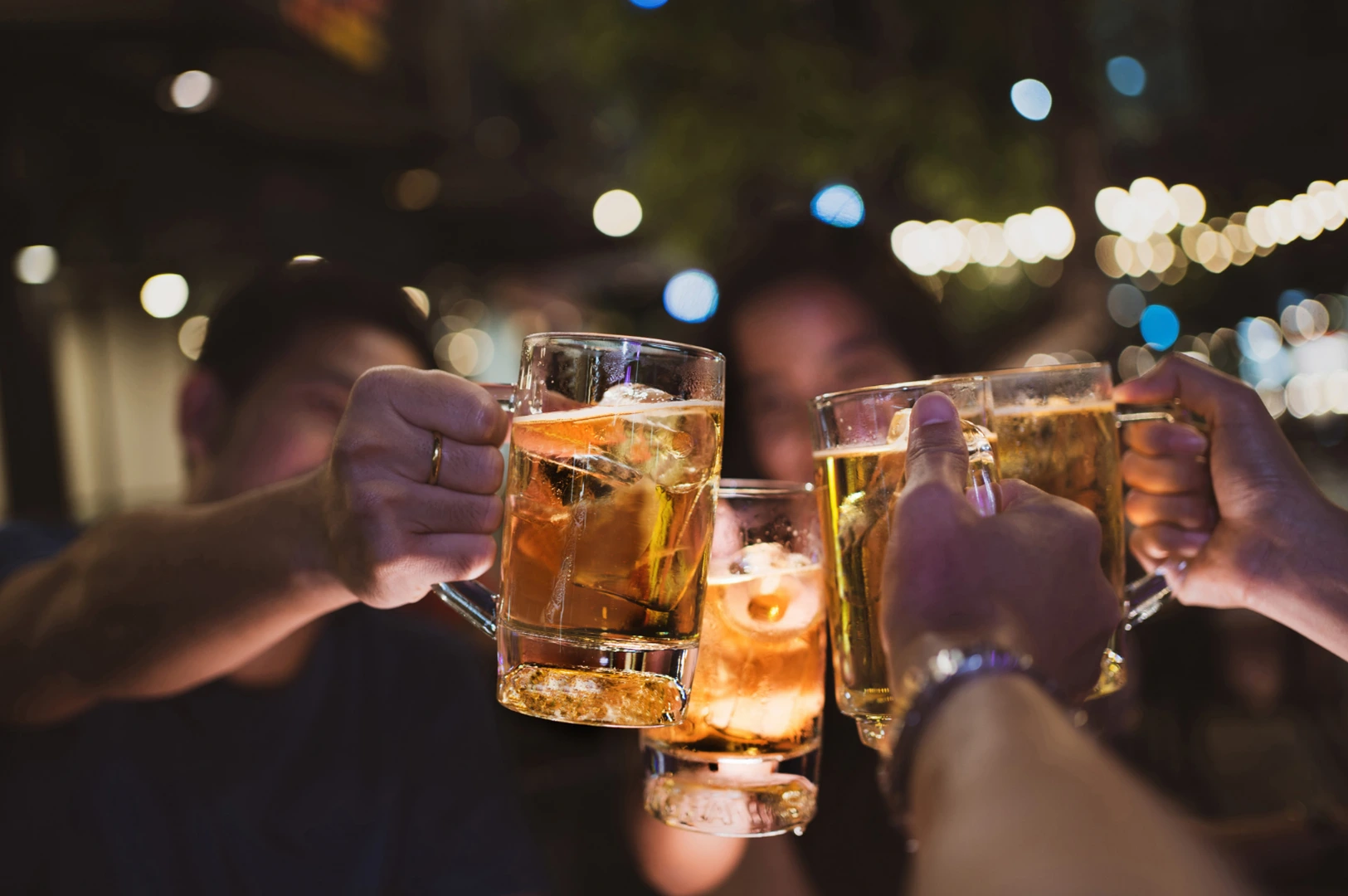
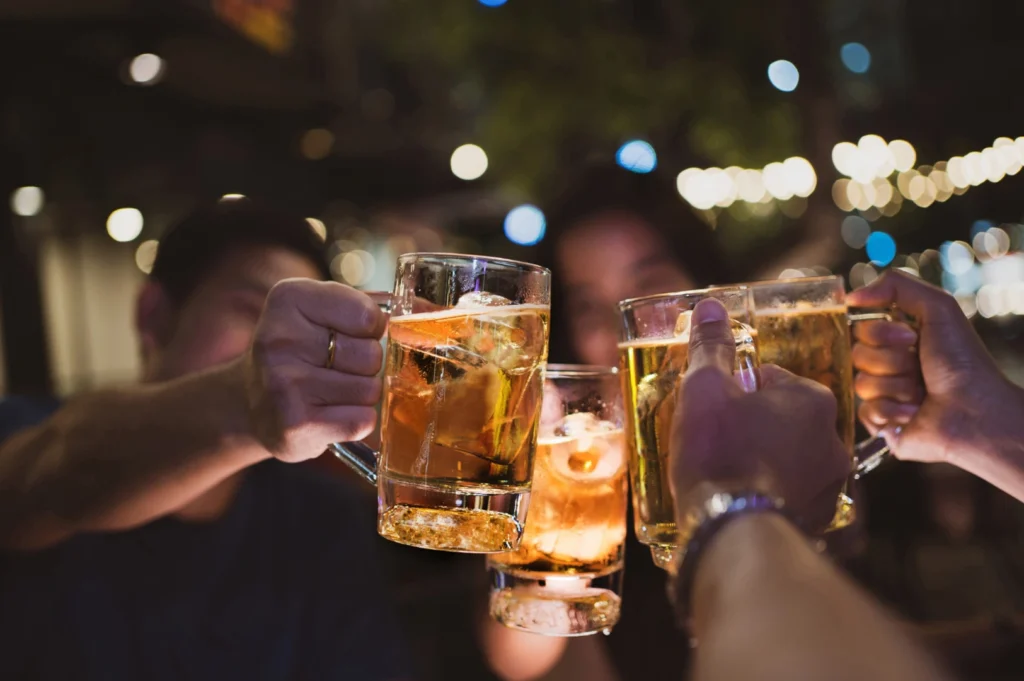
The tower lands in the middle of the table looking tall, cold, and way too powerful. Everyone suddenly becomes generous. Glasses get filled too high. Someone says, “Okay, this one can last.”
Please.
It will not last.
In Singapore izakayas, a beer tower can make a group feel like the night is already in full swing before the food has even caught up. That false confidence is exactly what makes the second drink at an izakaya so dangerous, especially when the table starts moving faster than the kitchen. The table is getting louder. The first person is already asking for another round of cups.
Meanwhile, the yakitori is still on the grill doing actual work.
That’s the reality check.
Beer Moves Faster Than Fire
Here’s the thing.
Beer is instant. Yakitori is not.
A beer tower hits the table and everyone can start immediately. But chicken skin needs time to render. Tsukune needs to cook through. Thigh skewers need turning, smoke, salt, and attention.
Good grilled food does not care that your table is feeling confident.
It has its own timing.
And that’s where groups get into trouble. The drinks move first, the food trails behind, and suddenly everyone is drinking on an empty stomach while pretending this is fine.
It is not fine.
It is fun for about twelve minutes.
Then someone gets too hungry.
Salty Skewers Save Everyone
This is why yakitori matters.
Not as decoration. Not as “later lah.”
As balance.
A shio chicken thigh skewer does real work. Chicken skin with crisp edges? Also work. Pork belly, grilled squid, mushrooms with salt, tsukune with tare — all of it helps pull the table back from beer chaos.
Salt keeps the appetite awake. Fat slows the drinking down. Smoke gives everyone something else to focus on besides refilling the glass every three minutes.
That is the izakaya rhythm.
Drink. Bite. Talk. Repeat.
Not drink, drink, drink, panic-order karaage.
Although yes, we have all been there.
Karaage Is Emergency Support
If the grill is taking time, do not just sit there watching the beer level drop.
Order fried food.
Karaage is the obvious hero. Croquettes work. Fried squid works. Tempura works if the table still has some dignity left.
Fried food lands faster than skewers in many places, and it gives the group exactly what it needs: crunch, salt, heat, and something to grab between pours.
This is not just snacking.
This is table management.
A good plate of karaage can calm a beer tower table better than any responsible friend.
Order Before the Confidence Starts
Here’s my move.
Food first. Tower second.
Or at least order both at the same time.
Start with fast dishes: edamame, potato salad, pickles, cold tofu, sashimi. Then send your yakitori order early. Add karaage if the group has big-drink energy.
Do this and the night stays fun.
Ignore it and the beer becomes the group leader.
Never let the beer become the group leader.
Final Pour
Beer towers are not the problem.
Bad timing is.
Order the tower. Enjoy the tower. Take the photo if you must.
But respect the grill.
Yakitori takes time because it is supposed to. And when the skewers finally arrive hot, smoky, and properly salted, they do exactly what they came to do.
They save the table from itself.
It Mirrors the Rhythm of Drinking
An extensive menu also supports the pacing of alcohol.
Unlike tasting menus, izakayas do not dictate a fixed progression. The length allows diners to build their meal gradually, ordering in waves.
Start with something light. Add skewers. Perhaps something fried midway. End with rice.
A short menu would force decisions too quickly. A long one gives breathing room. It encourages staying.
The design is psychological.
You do not feel pressured to finish. You feel invited to continue.
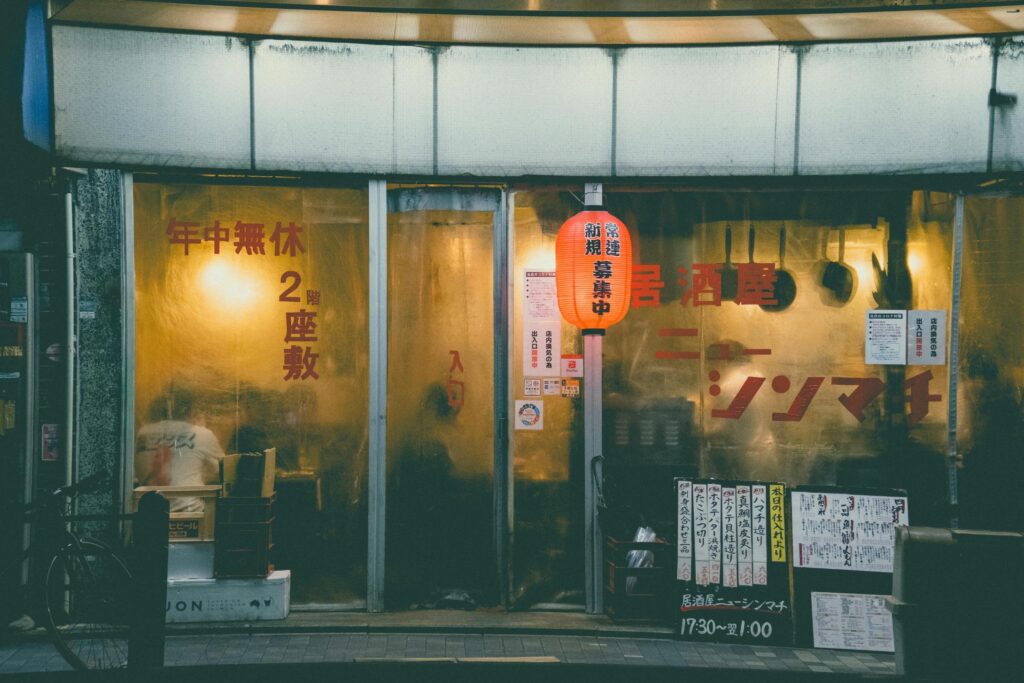
Familiarity Without Boredom
There is another reason izakaya menus remain expansive: familiarity thrives on options.
If a place becomes part of your routine, repetition must not become monotony. The variety ensures that comfort does not turn into predictability.
I have returned to certain izakayas in Singapore enough times to recognise this pattern. The menu feels reassuringly consistent, yet there is always something I have not tried. A new cut of fish. A seasonal vegetable. A limited skewer.
The length creates a sense of abundance without urgency.
You do not need to conquer it in one visit.
You are meant to grow into it.
Simplicity Within Abundance
Ironically, the long menu does not signal chaos in the kitchen.
In fact, most izakaya dishes share foundational techniques: grilling, simmering, frying, slicing. The variation comes from ingredients and seasoning rather than entirely separate systems.
This allows the kitchen to maintain consistency while offering breadth.
It is an ecosystem rather than a collection.
The Menu as a Relationship
When I now hold an izakaya menu, I no longer see excess.
I see an invitation.
An invitation to return. To evolve my order. To build familiarity with the staff and the space. To discover that the best nights are rarely the ones where you try everything, but the ones where you try just enough — and know you can come back for more.
The length of the menu is not about overwhelming you.
It is about ensuring that no two evenings need to feel the same.
And perhaps that is the quiet genius of izakaya culture: it does not ask for one perfect meal.
It offers you a relationship instead.
If you enjoy understanding the quiet details behind izakaya culture, you’ll find more stories like this at Best Izakaya Singapore.