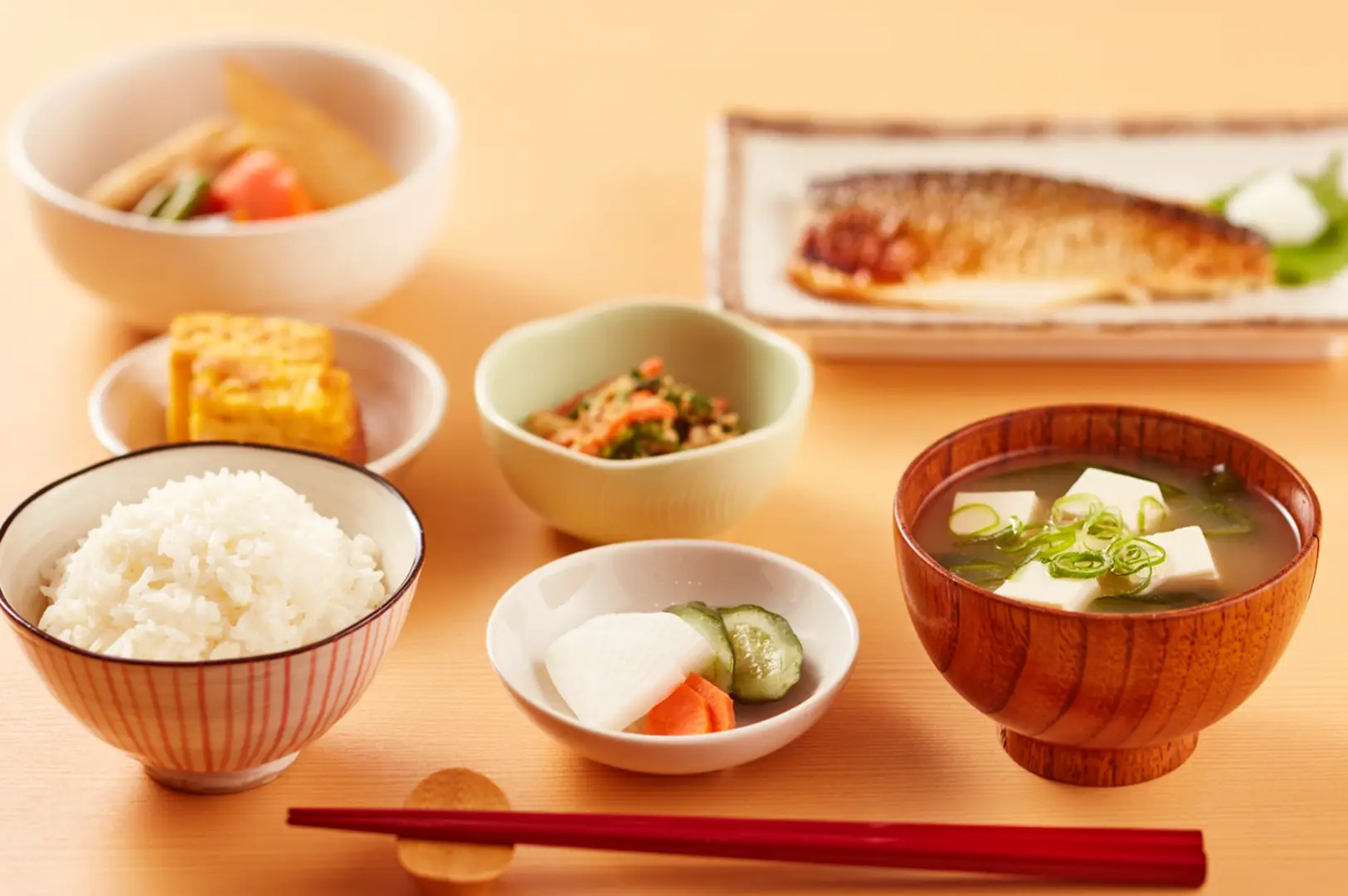
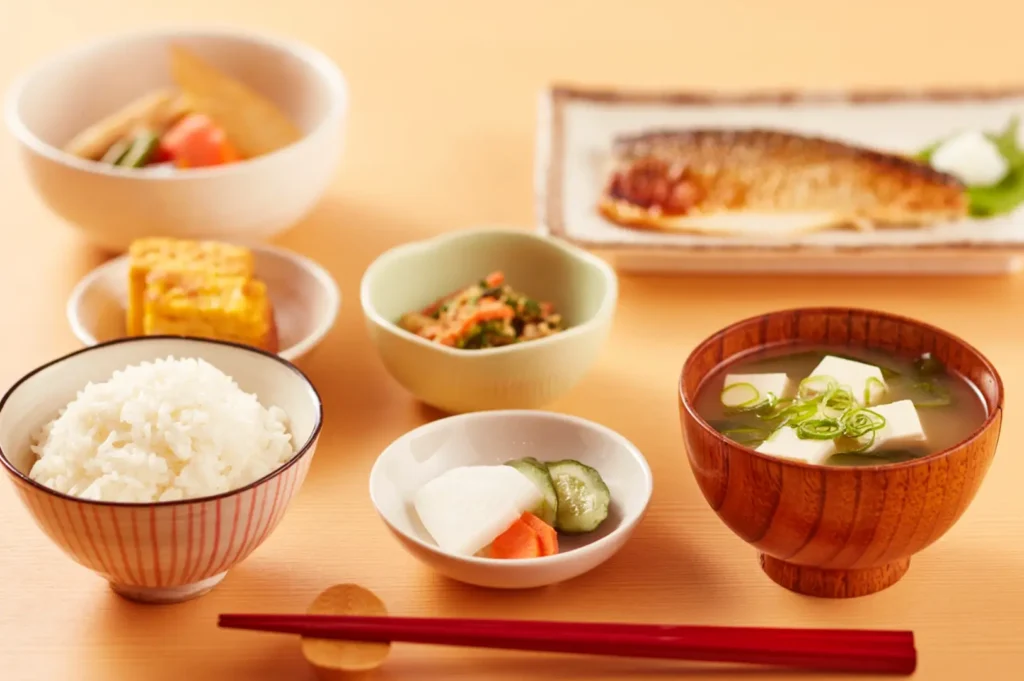
Two Japanese lunch sets arrive with rice, soup, a main dish and several sides. One is called teishoku. The other is labelled gozen. Is the second meal automatically more elaborate, or simply more expensive?
Not necessarily. These terms overlap in everyday practice, and restaurants do not apply them according to one universal rule. We find it more useful to understand what each name usually suggests, then examine what the menu actually includes.
Teishoku: A Complete Everyday Meal
Teishoku means a set meal. A typical arrangement combines rice, soup, a main dish and small accompaniments, often including pickles or vegetables. The main could be grilled fish, chicken katsu, pork yakiniku or aji fry, which is breaded, fried horse mackerel.
Everything is intended to work as one meal. Rice provides the staple, while soup and sides complement the central dish. Unlike an assortment of separately ordered izakaya plates, the diner knows the basic composition before ordering.
That makes teishoku particularly practical at lunchtime, although it is not restricted to lunch or inexpensive restaurants. A premium ingredient can make a teishoku costly too.
Gozen: A Name With Broader Associations
Gozen can refer to a meal or dining tray and frequently appears in names for composed Japanese meals. Restaurants may use it for arrangements featuring several coordinated dishes, sometimes with more elaborate presentation.
A gozen might include rice, miso soup, a main dish, salad, appetisers and chawanmushi, a savoury steamed egg custard. Some versions include dessert. Others look remarkably similar to an ordinary teishoku.
The label alone does not establish how many dishes are included, whether they arrive together, or whether formal Japanese dining traditions are being followed. Menu descriptions matter more than assumptions.
Why Neither Name Guarantees Better Value
It is tempting to interpret gozen as the premium choice and teishoku as the economical one. That distinction is too simple.
A grilled fish teishoku may provide a substantial main with familiar accompaniments. A gozen may offer greater variety through smaller portions. Depending on the restaurant, either could cost more or be more satisfying.
We recommend comparing the main dish, portion sizes, included sides and final listed price. An extra bowl of soup or decorative tray does not automatically make a meal better value.
The same principle applies when choosing budget-friendly Japanese dining spots in Singapore, where a complete rice or noodle set may offer better value than ordering several small plates separately.
Reading These Terms in Singapore
At Millenia Walk, Sandaime Hiraki offers complete Japanese sets, including aji fry and grilled fish options. They illustrate the practical set-meal structure commonly associated with teishoku.
Issho Izakaya at Marina One uses the name gozen for selected composed meals. Its offerings provide another example of how restaurants present several components within one order. Neither example establishes a rigid distinction between the terms.
Look Beyond the Label
When comparing menus, check whether rice, soup, sides, chawanmushi or dessert are included. Confirm the listed price and any additional charges.
Ultimately, teishoku and gozen describe overlapping approaches to complete Japanese meals. The name offers context, but the actual food determines what you receive.