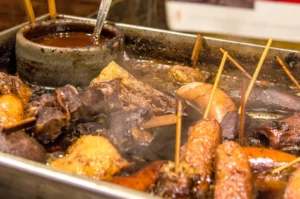
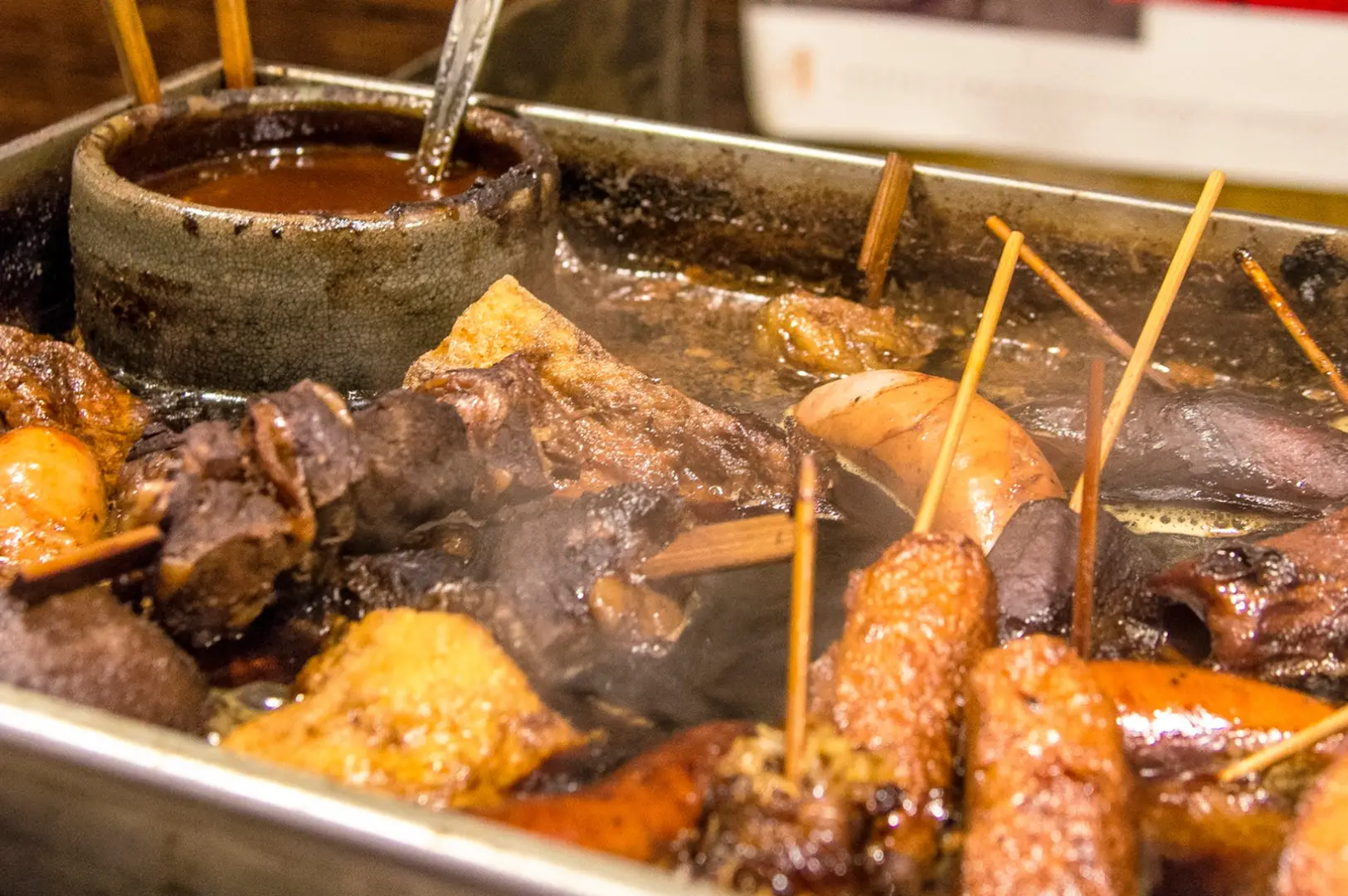
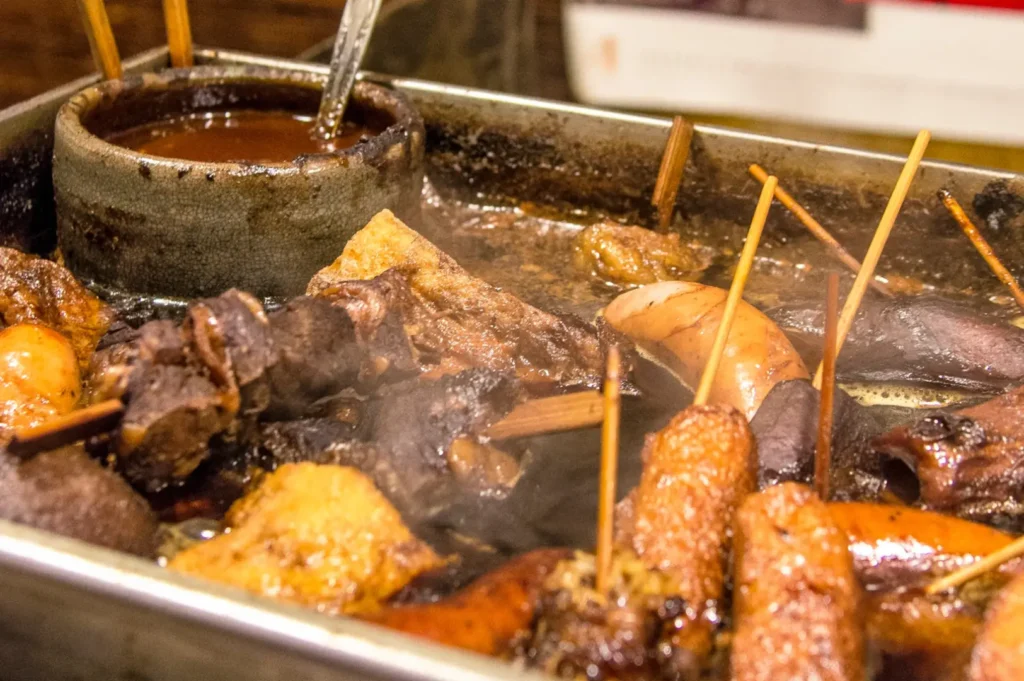
The first surprise is the colour. If you know oden as daikon, eggs and fish cakes sitting in a pale broth, Shizuoka’s version might make you hesitate. The liquid is dark. Many ingredients arrive on skewers. There may be a dusting of green and brown seasoning over everything.
It is still oden. But it carries the habits of a particular place, and those habits are worth understanding. That contrast matters especially when we assume **Japanese comfort food must follow one familiar recipe everywhere.**
The Dark Broth Is Only the Beginning
In Shizuoka City, oden traditionally draws flavour from beef tendon, dashi and seasonings such as soy sauce. As ingredients simmer, the broth can take on a deep colour. Yet **dark does not automatically mean aggressively salty.** The result can be rounded and savoury rather than overwhelming.
We often decide what food will taste like before trying it. Here, the broth asks us to reconsider that first impression. The same daikon that seems familiar may arrive carrying a different depth of flavour.
The Fish Cake That Belongs to Shizuoka
Then there is **kuro hanpen, the greyish fish cake** that appears in traditional Shizuoka oden. Unlike the white, airy hanpen some diners recognise, it is made using fish such as sardines and mackerel, including parts that contribute to its darker colour and firmer texture.
It is a practical expression of regional food culture. Fish available around Shizuoka helped shape an ingredient that became ordinary enough to be missed only when it was absent.
We might notice its appearance first. Someone raised with it may simply recognise dinner.
Skewers, Powder and Small Choices
Shizuoka oden is commonly served with ingredients threaded onto skewers. Daikon, konnyaku, eggs, fish cakes and beef tendon can be chosen individually, making a simmering pot something people approach one piece at a time.
Before eating, diners may add dashi powder, often made from dried fish, and aonori, a green laver. These are not merely decorative. They add savoury flavour and a gentle marine aroma over the broth-soaked ingredients.
The finishing touches tell us something important: regional cooking is shaped as much by how food is served as by what goes into the pot.
Before It Was an Izakaya Order
Perhaps the most revealing detail is where people have eaten it. In Shizuoka, oden has long appeared in dagashiya, small shops selling inexpensive sweets and snacks. Children could buy a skewer after school. It was not reserved for cold weather or evenings with sake.
Today, oden also belongs comfortably in drinking places. But its history reaches into neighbourhood shops, ordinary afternoons and home meals.
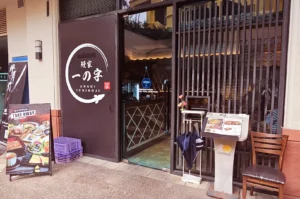
Singapore diners may encounter Shizuoka-style oden on a sake-bar menu, including at MoboMoga near Robertson Quay. That does not mean every version uses identical ingredients or garnishes.
Among the Japanese sake bars and riverside dining spots around Robertson Quay, MoboMoga offers a glimpse of how a regional dish like Shizuoka oden can find a place in Singapore’s evening dining culture.
The darker broth draws our attention. The more lasting difference is knowing that, somewhere else, this unfamiliar-looking bowl has long been everyday food.