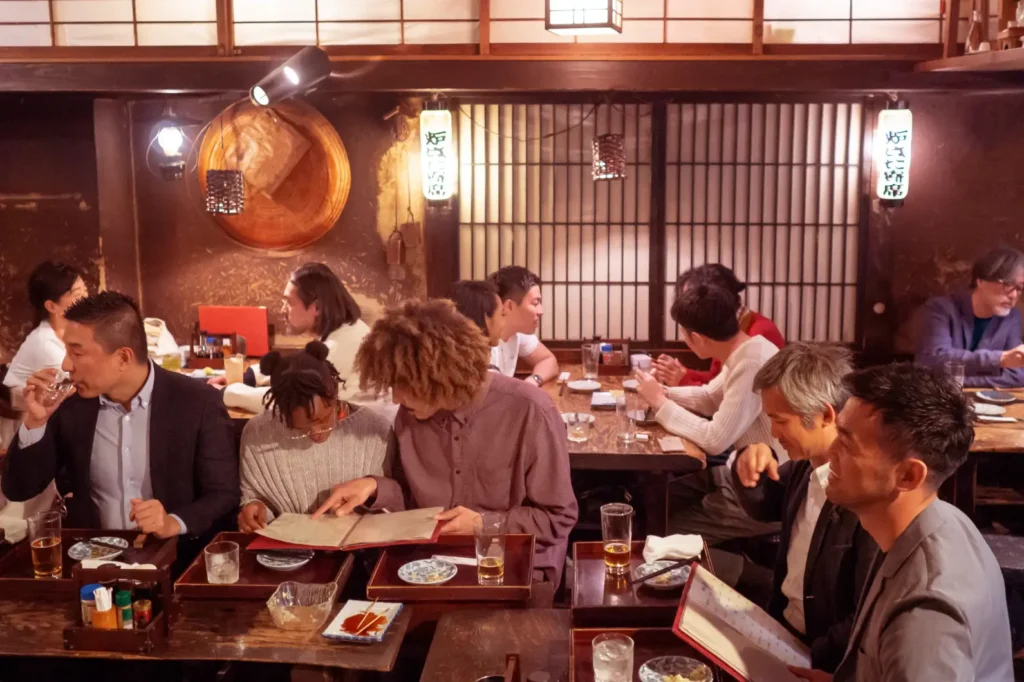
Calling a restaurant “izakaya-inspired” can sound vague. Sometimes it is useful. Sometimes it is little more than a design cue attached to Japanese small plates and a bar.
The distinction matters because an izakaya is not defined by lanterns, sake bottles, or yakitori alone. It is defined by how the evening works.
What Makes an Izakaya an Izakaya?
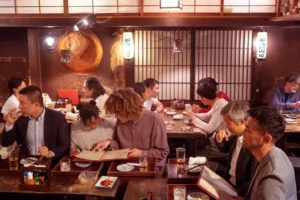
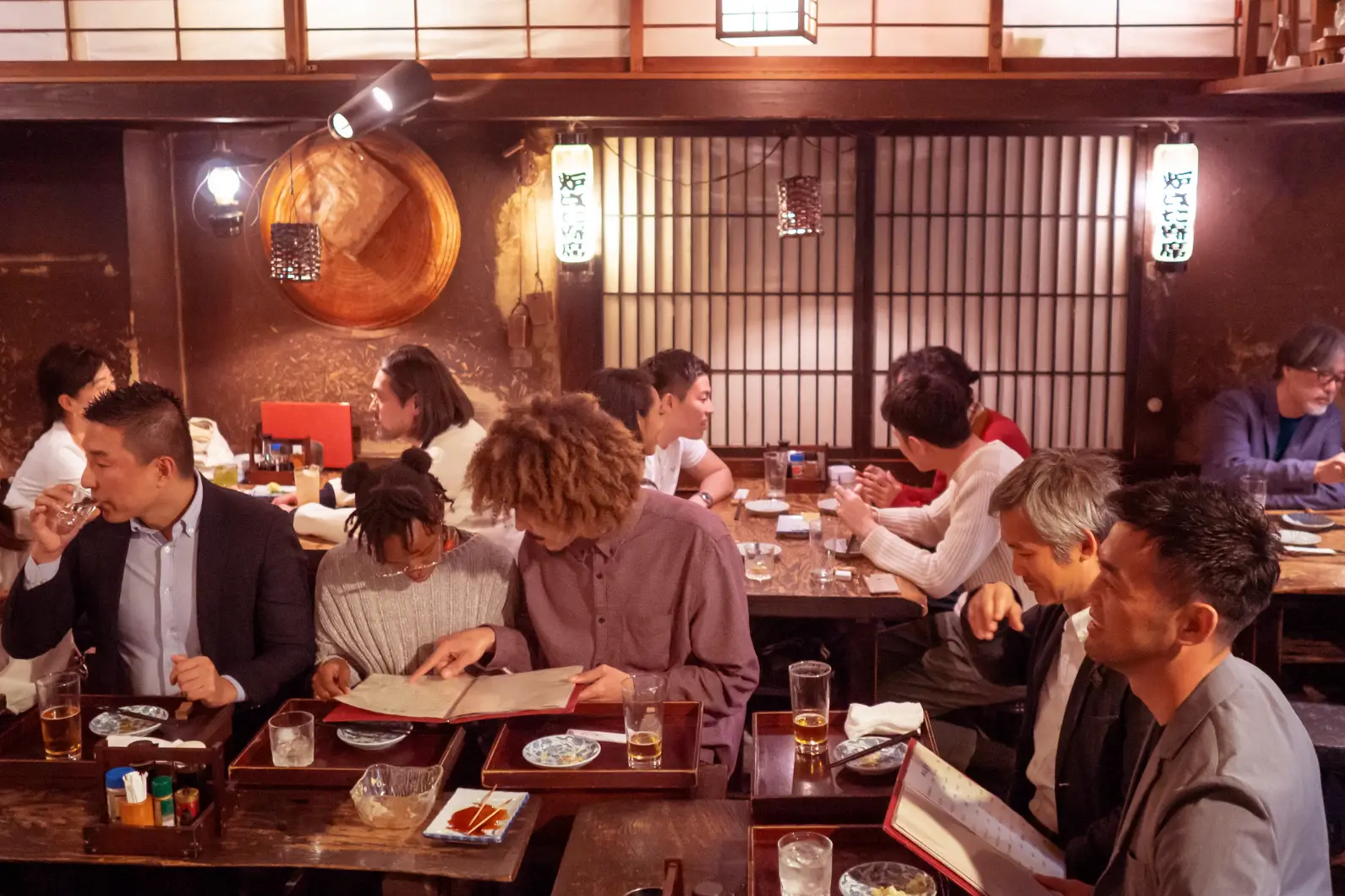
A traditional izakaya is built around drinking and eating together. Drinks often arrive first, followed by small dishes ordered gradually rather than as a formal sequence.
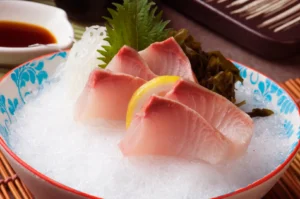
The table may move from sashimi to kushiyaki, grilled skewers, then fried dishes, vegetables, rice, or noodles. Sharing is common, and there is usually no pressure to order everything at once.
That flexible rhythm is central to the format. The food matters, but so do pacing, conversation, and the option to stay for another round.
Where “Izakaya-Inspired” Changes the Formula
An izakaya-inspired restaurant usually borrows that social structure without trying to reproduce a traditional Japanese drinking house exactly.
The room may be polished. Cocktails may sit beside sake and beer. Music can be louder. The kitchen might combine robata grilling, sashimi, fried dishes, or kushiyaki with flavours and techniques that would not normally appear on a conventional izakaya menu.
That does not make the concept less valid. It simply means the reference point has changed.
We find the term most useful when it prepares diners for a restaurant that keeps the shared-plate, drinks-led spirit of an izakaya while adapting the food and atmosphere for a contemporary audience.
For a practical example of how these formats differ within one neighbourhood, see the comparison here, where izakaya-style venues sit alongside ramen, sushi, and other Japanese dining options.
Traditional, Modern, or Inspired?
A useful distinction is:
- Traditional izakaya: casual, drinks-led, and centred on familiar Japanese small dishes.
- Modern izakaya: keeps the izakaya structure but may use more contemporary cooking, presentation, or interiors.
- Izakaya-inspired restaurant: borrows selected parts of the format while allowing greater freedom in food, drinks, music, and design.
These categories overlap. They are guides, not rigid rules.
A restaurant can serve yakitori and sashimi yet still feel more like a conventional Japanese restaurant if the meal is structured around individual mains. Equally, a cocktail-led venue can feel strongly izakaya-like when the table is built around sharing, drinking, and ordering in rounds.
Why the Label Matters
Expectations shape the experience.
A place such as Neon Pigeon makes more sense when approached as izakaya-inspired rather than compared directly with a smoky Tokyo counter. Its creative plates, cocktails, and louder energy belong to a different interpretation of the same social idea.
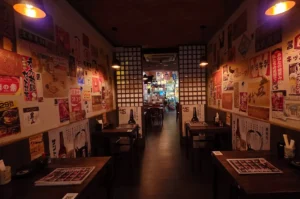
The potential weakness is when a restaurant borrows only the surface details. Lanterns, Japanese signage, and skewers do not automatically create izakaya culture.
The stronger versions preserve what matters underneath: a flexible table, shared food, drinks that stay part of the meal, and a sense that ordering one more dish is completely normal.
That is the useful test.
An izakaya-inspired restaurant does not need to recreate Tokyo perfectly. It needs to make clear what kind of night it is offering before you sit down.