

Orchard Plaza does not give Japan to you in one piece.
It gives it floor by floor, doorway by doorway, sometimes behind a sign you almost miss. That is part of its appeal. From the outside, the building belongs clearly to Orchard Road: traffic, shopping bags, late escalators, the familiar brightness of the city. Inside, the feeling changes.
Not into one neat version of Japan.
Several.
A small counter. A pot of oden. A plate of obanzai. Oysters opened carefully. Tempura lifted from oil. A drink poured while the room is still deciding how the night should move.
This is why Orchard Plaza works as more than a list of restaurants.
It behaves like a small Japanese dining cluster, something that becomes clearer when you begin to notice how each Orchard Plaza izakaya carries its own rhythm rather than repeating the same idea.
Regional Comfort at a Smaller Counter
At MOMOYA, the experience leans toward regional comfort cooking.
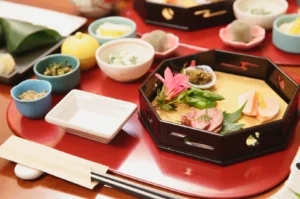
Obanzai refers to Japanese home-style small dishes, often prepared simply and served in modest portions. In Orchard Plaza, that kind of food feels especially suited to a quieter table. Simmered vegetables, rolled omelettes, braised items, and small plates give the meal a different pace from a grill-heavy izakaya.
It is not food that hurries the evening.
It asks diners to notice softness, balance, and the comfort of familiar preparation.
Modern Energy Without Leaving the Building
Bisco Sakaba gives Orchard Plaza another tone.
It is still connected to Japanese drinking culture, but the mood is more modern, with a bistro-izakaya feel rather than a strictly traditional one. The room moves differently. The menu feels more compact. The energy is lighter, sharper, and more social.
This matters because Orchard Plaza is not preserved in one era.
It changes with the people who eat there.
Oden and the Slower Drinking Rhythm
At Apollon and AM-Bar, oden becomes part of the building’s quieter appeal.
Oden is a Japanese simmered dish, usually built around ingredients such as daikon, egg, tofu, fish cake, and meat items held in broth. It changes the table’s rhythm. Instead of crispness or smoke, it offers warmth and repetition: one piece, one sip, another piece, another drink.
In a place like Orchard Plaza, that kind of steady food makes sense.
It gives the night somewhere to settle.
Seafood, Tempura, and a Sharper Finish
Sakutto Tempura & Oyster adds another version.
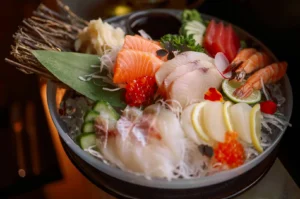
Here, the focus moves toward oysters, seafood, and tempura. The meal feels brighter and more textural. Tempura brings crispness; oysters bring freshness and brine. It is still suitable for drinks, but the mood is more seafood-led than pub-like.
This variety is important.
It prevents Orchard Plaza from becoming one fixed idea.
Several Doors, One Reason to Return
The strength of Orchard Plaza is not that every Japanese restaurant feels the same.
It is that each one offers a different entry point.
Obanzai for comfort. Oden for warmth. Tempura for texture. Oysters for freshness. Drinks for the slow middle of the night.
Together, they explain why this building remains useful to diners looking for Japanese food beyond Orchard’s polished surface.
Orchard Plaza holds several versions of Japan.
That is why one visit rarely feels like enough.